Key Principle
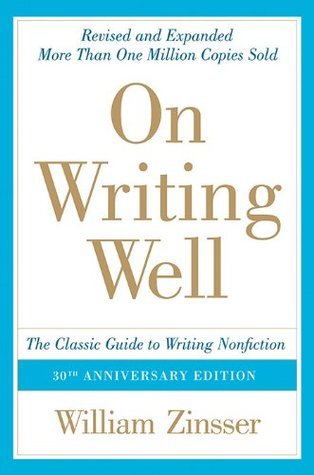
Good nonfiction writing is a personal transaction: the writer's real self — genuine enthusiasm, authentic judgment, human warmth — is the actual product being sold, not the subject alone. Clear prose is the surface expression of clear thinking. Because clutter accumulates from unresolved thought and social performance, rewriting is the mechanism by which thinking becomes clear and the false self is stripped away, leaving the true one.
Why This Matters
Most writers believe their job is to disappear behind the subject — to be accurate, thorough, and impersonal. The result is technically correct prose that is forgettable and easily replaced by any other account of the same subject. "Ultimately the product that any writer has to sell is not the subject being written about, but who he or she is." (Chapter 1: The Transaction) The reader follows a person, not a topic. When writers suppress themselves, they remove the only element that makes their account worth reading.
The second failure mode compounds the first: when writers sit down to produce what they imagine is "an act of literature," a stiff, performative self emerges on the page — more formal, less alive than the person who sat down. This happens because the act of writing triggers self-monitoring that speech does not. The fix for both problems is the same: strip away the false self through revision until what remains is both clearer and more distinctly the writer's own. Rewriting is not optional polish; it is the mechanism by which this happens.
Good Examples
The personal transaction in action: E. B. White's piece on a hen, described in Chapter 5, works not because hens are inherently interesting but because the specific details — the Laced Wyandotte, the brooder house, the love affair with poultry dating to 1907 — simultaneously establish credibility about the subject and reveal who the writer is. The reader doesn't need to be told White is warm and humane; the details perform that characterization. (Chapter 5: The Audience)
Rewriting as discovery: Zinsser's own manuscript pages show four or five rewrites before a chapter reached final form. The early drafts are not bad writing corrected into good writing — they are unresolved thinking revised into clear thinking. "With each rewrite I try to make what I have written tighter, stronger and more precise, eliminating every element that's not doing useful work." (Chapter 2: Simplicity)
The two-question revision loop: Before writing, ask "What am I trying to say?" After writing, ask "Have I said it — as a naive first-time reader would encounter it?" These two questions address both levels of failure: unresolved thinking (first question) and execution gaps (second question). A sentence can fail either test independently.
Counterpoints
The "let it all hang out" fallacy: Dr. Brock's position in the Chapter 1 dialogue — that whatever form sentences first take most naturally reflects the writer — inverts the true mechanism. Voice is not found in first drafts; it is found by revising until the stiff, performative self is gone. "Nobody told all the new e-mail writers that the essence of writing is rewriting." (Introduction)
Solving fear without solving craft: Digital tools removed the formalities that triggered writing avoidance, revealing that avoidance was never purely cognitive. But the same tools created a new problem: spontaneous output looks polished on screen, so writers mistake production for quality. Good writers used word processors to revise more efficiently; bad writers used them to produce more unrevised prose.
Writing impersonally to sound serious: Writers inflate language to sound authoritative (the university president who writes "very considerable potentially explosive expressions of dissatisfaction on issues only partially related" instead of "students had been hassling them about different things") and suppress personality to sound serious. Both moves are defensive and produce worse writing for the same reason: they serve the writer's social needs at the reader's expense. (Chapter 2: Simplicity)
Key Quotes
"Rewriting is the essence of writing." — William Zinsser, Chapter 1: The Transaction
"Ultimately the product that any writer has to sell is not the subject being written about, but who he or she is." — William Zinsser, Chapter 1: The Transaction
"Clear thinking becomes clear writing; one can't exist without the other." — William Zinsser, Chapter 2: Simplicity
"Writing is a craft, not an art, and the man who runs away from his craft because he lacks inspiration is fooling himself." — William Zinsser, Chapter 1: The Transaction
Rules of Thumb
- Ask "What am I trying to say?" before writing the sentence; ask "Have I said it?" after — as a first-time reader would encounter it.
- If your prose sounds stiffer than you speak, you are suppressing yourself. Find the place where you first sound like yourself and cut everything before it.
- The reader follows you, not your subject. Genuine enthusiasm for material is perceptible; its absence is equally perceptible.
- Treat every revision pass as an opportunity to strip the false self, not just to correct errors.
- Writing is a craft with learnable tools — not an innate talent. If writing is hard, it is because clear thinking is hard, not because you are not a writer.
Related References
- Clutter and Compression: The Bracketing Technique - the operational technique for stripping clutter from prose
- Style and Voice: The Organic Identity - how the true self emerges once the false self is stripped
- Process and Confidence: Fear, Enjoyment, and the Craftsman's Ethic - managing the fear and performance demands of writing
- Micro Tools: Active Verbs, Punctuation, and Daily Compression - sentence-level tools that implement the stripping principle