Key Principle
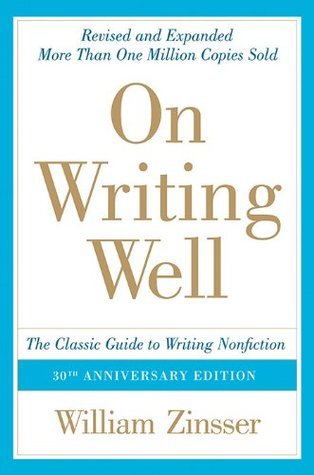
Every word earns its place through both meaning and function. Active verbs are the primary engine of energetic prose — they push the sentence forward, maintain the actor in the sentence, and make the action clear. Each modifier (adverb, adjective, qualifier) is tested by a single question: does this word do work that nothing else in the sentence is already doing? If not, it is not neutral — it actively dilutes the strong word it attaches to. "The difference between an active-verb style and a passive-verb style — in clarity and vigor — is the difference between life and death for a writer." (Chapter 10: Bits & Pieces)
Why This Matters
Passive constructions hide agency. "He was seen by Joe" is not just longer — it is ambiguous in frequency, and inert. Weak verb + preposition constructions ("stepped down," "set up a business") destroy the precision that lets the reader visualize the action: did he resign, retire, or get fired? The passive voice tends to pull writers toward Latinate vocabulary, compounding opacity.
Qualifiers are a confidence problem, not just a style problem. Each one — "a bit," "sort of," "rather," "quite" — erodes a fraction of reader trust. They signal that the writer is not prepared to be held accountable for the claim. Readers want an authority; hedged prose destroys that relationship. Redundant adverbs produce the same effect through a different mechanism: "blared loudly" doubles the content without adding information, which dilutes the verb precisely when it should be doing its full work.
Punctuation marks are instruments with specific pacing effects, not interchangeable options. Choosing the wrong mark imports the wrong rhythm or emotional register into prose.
Good Examples
Active verb revision: "He resigned" replaces "He stepped down." "They bombed" replaces "They engaged in a reinforced protective reaction strike." Precision and energy are the same thing.
Purposeful punctuation:
- Period: maximum stop. Reach it sooner than you think you need to. Most uncontrollable sentences are carrying two dissimilar thoughts — break them.
- Dash: forward push; amplifies or explains without slowing. Single dash justifies the second half; paired dashes dispatch a parenthetical without a separate sentence.
- Exclamation point: nearly always eliminable. "Humor is best achieved by understatement, and there's nothing subtle about an exclamation point." (Chapter 10: Bits & Pieces)
Mood changers: Front-load direction signals so readers process the sentence correctly: "But," "Yet," "However" (but not at sentence start — it "hangs like a wet dishrag"), "Nevertheless," "Therefore," "As a result." "Yet he decided to go" replaces "Despite the fact that all these dangers had been pointed out to him, he decided to go." The compression is not stylistic — it prevents confusion.
Counterpoints
Qualifier accumulation: "I've become a bit concerned about the rather urgent need to address the somewhat problematic situation..." Each qualifier independently seems harmless; together they produce prose that commits to nothing. The rule is not "be less careful" but "be more precise": commit to a claim or rethink it.
Decorative adjectives: The rule is not "use few adjectives" but "use only adjectives that change the reader's understanding." Decorative adjectives ("yellow daffodils," "precipitous cliffs") spend the reader's attention without return. When every modifier is decorative, readers learn to ignore them — including the ones that matter. The test is information delta: does this modifier tell the reader something the noun does not already carry?
Semicolon overuse: Semicolons carry Victorian mustiness; they slow modern prose. Prefer period or dash. Colons are unbeatable for lists; otherwise increasingly antique.
Key Quotes
"Verbs are the most important of all your tools. They push the sentence forward and give it momentum." — William Zinsser, Chapter 10: Bits & Pieces
"Don't hedge your prose with little timidities. Good writing is lean and confident." — William Zinsser, Chapter 10: Bits & Pieces
"The adjective that exists solely as decoration is a self-indulgence for the writer and a burden for the reader." — William Zinsser, Chapter 10: Bits & Pieces
"Every little qualifier whittles away some fraction of the reader's trust." — William Zinsser, Chapter 10: Bits & Pieces
"Always make sure your readers are oriented. Always ask yourself where you left them in the previous sentence." — William Zinsser, Chapter 10: Bits & Pieces
Rules of Thumb
- Replace every "was [verb]ed" with "[subject] [verb]ed" — passive voice almost always has an active alternative.
- Scan for weak verb + preposition constructions: "stepped down," "set up," "looked into." Replace with precise single verbs.
- Cut every adverb that restates the verb. ("Blared loudly" → "blared.")
- Cut every qualifier unless marking a genuinely important degree. ("Rather tired" → "tired" or "exhausted.")
- Break any sentence that is hard to control — it is usually carrying two dissimilar thoughts.
- Never use an exclamation point for effect. Let the sentence produce the feeling.
- "But" can start a sentence. School prohibition is a myth. It's the strongest available contrast signal.
- "However" belongs after the subject, not at the sentence start.
- "That" vs. "which": if the clause needs a comma, it probably needs "which." If no comma, "that."
Related References
- Clutter and Compression: The Bracketing Technique - the macro compression discipline that micro-tools implement
- Structure and Decisions: Linear Logic and the Writer's Craft - how micro decisions compound into macro structure
- Implementation Playbook: From Draft to Finished Piece - the full revision protocol