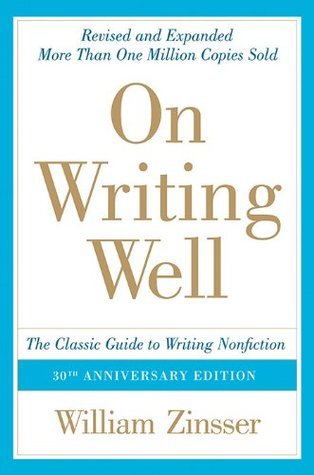
Key Principle
Writing well is a sequence of recoverable decisions across five stages: pre-writing (locking unities and scope), drafting (generating without self-censoring), revision (stripping and compressing), structural testing (lead, ending, threading), and word-level iteration (defeating banality). Each stage has its own discipline. The most common failure is conflating them — trying to revise while drafting, or polishing while structure is still unresolved.
Why This Matters
Most writers' problems are misdiagnosed as talent deficits. The actual source is process confusion: the writer who revises while drafting never builds enough momentum; the writer who polishes before structural decisions are made wastes effort on prose that will later be cut. A clear process separates the stages and gives each the undivided attention it requires.
Stage 1: Pre-Writing
Lock the three unities before writing a word.
- Pronoun — who is speaking? First person, third person, or direct address? Choose one and commit.
- Tense — what is the primary temporal frame? Choose one and commit.
- Mood — what is the writer's emotional register? Casual, formal, intimate, authoritative? Choose one and commit.
These cannot be fixed in revision without rewriting the entire piece. Resolve them first.
Resist the definitiveness complex. You cannot write "about" something. Every piece must be reduced before drafting begins. "Nobody but a Chinese-American woman could have made me feel what it's like to be a Chinese girl plunked down in an American kindergarten." Scope says how much territory to cover; single point says what one thing the reader should leave thinking. Not two thoughts — one.
Ask the editorial focus question: What is this piece really about? Separate the topic (what it covers) from the purpose (what it's for). Everything in the draft will be tested against this.
Stage 2: Drafting
Write warm-up paragraphs knowing you'll cut them. The first 3-4 paragraphs typically carry the heaviest anxiety load — the writer is performing for an imagined audience. The real voice surfaces around paragraph 3 or 4 as anxiety releases. Write them anyway. Cut them in revision.
Write the lead last, or plan to rewrite it. The lead is disproportionately important — it costs as much effort as the rest of the piece combined to get right. In the first draft, its job is to get you started, not to be the final version.
Don't stop to research mid-draft. Gather surplus research before drafting begins; then commit to writing from what you have. Perpetual gathering produces paralysis.
Stage 3: Revision — Stripping
Apply the bracketing protocol.
- Read the draft sentence by sentence.
- Bracket every word that may not be doing necessary work.
- Read each sentence without the bracketed material.
- Cut everything whose absence makes the sentence stronger.
- Target 50% reduction from first draft.
Clutter audit — seven patterns to scan for:
- Prepositions appended unnecessarily to verbs ("head up" → "head")
- Adjectives restating nouns ("end result," "future plans")
- Long words with short equivalents ("utilize" → "use")
- Professional pomposity ("experiencing discomfort" → "hurts")
- Meta-explanatory clusters ("It should be noted that...")
- Qualifiers ("rather," "quite," "sort of," "a bit")
- Redundant adverbs (verbs that restate what the verb already says)
Active verb scan. Replace every passive construction with an active one. Replace every weak verb + preposition ("stepped down") with a precise single verb ("resigned").
Stage 4: Structural Testing
Test the lead. Does the first sentence compel the reader to proceed to the second? Is each subsequent sentence in the opening paying off the previous one? Does it arrive at interesting material without preamble? Good leads come from research discipline, not stylistic cleverness — the most distinctive leads come from sources no other writer consulted.
Test the ending. Have you continued past the true climax to provide a summary the reader doesn't need? Look for: "In sum, it can be noted that..." That sentence appears when the writer is past the ending. Stop at the emotional or thematic peak. The ending should "take your reader slightly by surprise and yet seem exactly right."
Test the paragraph-to-paragraph thread. Does the first sentence of each new paragraph grow out of the last sentence of the preceding one? If there is a gap, the reader has an exit opportunity.
Ask the structural question. One story or three? "I couldn't fit all those stories under one small roof." If the piece contains more than one story type (memoir + investigative reporting + personal essay), it needs to be decomposed, not revised.
Stage 5: Word-Level Iteration
Fight banality at the word level. Serviceable language is invisible in the bad way — forgettable. When a phrase is dull-but-accurate: test synonyms, proper names, metaphors, verb images. Stop when a word produces pleasure. "No writing decision is too small to be worth a large expenditure of time." (Chapter 23: A Writer's Decisions)
Prose as music test. Read the draft aloud. Rhythm problems invisible on the page become audible when spoken — monotony, uniform sentence length, dead endings. The fix: vary sentence length, reverse sentence order, swap in fresher words.
Common Pitfalls
| Pitfall | Diagnosis | Fix |
|---|---|---|
| Breakfast-to-bed structure | Writing events in full chronological sequence without selection | Find the true entry point — what's interesting — and start there |
| Definitiveness complex | Trying to cover an entire subject | Reduce before drafting: scope + single point |
| Compression-resistance error | Including material because you gathered it | Ask "What is this piece really about?" and cut everything else |
| Section III trap | Summarizing what was just argued | "When you're ready to stop, stop." Take the nearest exit. |
| Squandering the self | Adopting institutional voice | Write the first draft with "I" even if you remove it later |
| Product-fixation | Visualizing the published article before discovering its shape | Focus on intention, quest, and process — the product follows |
Key Quotes
"Rewriting is the essence of writing." — William Zinsser, Chapter 1: The Transaction
"The most important sentence in any article is the first one. If it doesn't induce the reader to proceed to the second sentence, your article is dead." — William Zinsser, Chapter 9: The Lead and the Ending
"When you're ready to stop, stop. If you have presented all the facts and made the point you want to make, look for the nearest exit." — William Zinsser, Chapter 9: The Lead and the Ending
Rules of Thumb
- Never draft before fixing pronoun, tense, and mood.
- Write warm-up paragraphs; cut them in revision.
- Surplus research enables selection; under-research forces deployment of whatever you have.
- Bracket and cut to 50% before polishing any word.
- Read aloud before calling the piece done.
Related References
- Clutter and Compression: The Bracketing Technique - bracketing technique and 50% rule in depth
- Leads and Endings: The Chain and the Curtain Line - structural testing for lead and ending
- Structure and Decisions: Linear Logic and the Writer's Craft - word-level iteration protocol
- Style and Voice: The Organic Identity - three unities and pre-writing decisions