Key Principle
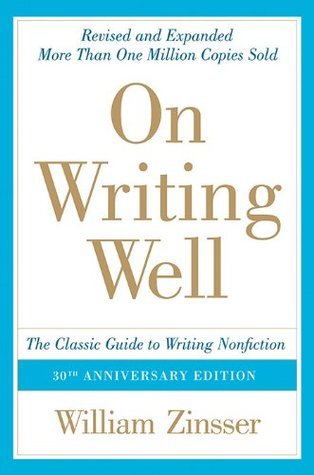
Style is not a technique applied to prose — it is the natural projection of the writer's character onto the page. It cannot be constructed or purchased; it emerges by stripping away the false self. "There is no style store; style is organic to the person doing the writing, as much a part of him as his hair." (Chapter 4: Style) The sequence is: strip down first, build up second — and the result will be recognizably yours. Authentic voice is also the only audience strategy that actually works: writing that tries to please a generalized readership pleases no actual person.
Why This Matters
Writers become rigid on the page when the act of writing triggers self-consciousness. They imagine a critical audience and pre-edit their personality out of the prose. The result is a gap between the person who sat down to write and the self who appears on the page — always stiffer, more formal, less alive. This is the same mechanism as clutter: just as writers inflate language to sound important, they suppress personality to sound serious. Both are defensive moves that produce worse writing, and both are fixed by the same operation: strip the false self away.
Trying to construct a style produces what Zinsser calls the toupee problem: something that looks right at first glance but triggers a second look that reveals the seam between self and performance. Celebrated maximalist writers (Wolfe, Mailer) mislead developing writers into believing complexity is the goal. The carpentry principle corrects this: "If your verbs are weak and your syntax is rickety, your sentences will fall apart." (Chapter 4: Style) Ornamentation belongs only after nails hold and saws cut cleanly.
Good Examples
The warm-up paragraphs diagnosis: Opening paragraphs carry the heaviest anxiety load — the writer is performing for the imagined audience. The real voice typically surfaces around paragraph 3 or 4 as anxiety releases. "It's amazing how often an editor can throw away the first three or four paragraphs of an article, or even the first few pages, and start with the paragraph where the writer begins to sound like himself or herself." (Chapter 4: Style) When stuck, locate where you first sound like yourself and cut everything before it.
"I-ness without I": Institutional contexts that prohibit first-person still require the writer to project a distinct human presence. The pronoun is not the mechanism — the sensibility behind it is. Think "I" while writing, or write the first draft in first person and remove the pronouns in revision. Organizations that refuse to reveal who they are produce brochures that "sound remarkably alike" regardless of their distinct origins.
The three unities (Ch. 8): Before drafting, fix three structural decisions and hold them throughout: (1) Pronoun — who is speaking (first/second/third)? (2) Tense — what is the primary temporal frame? (3) Mood — what is the writer's emotional register? "Unity is the anchor of good writing." (Chapter 8: Unity) Without it, readers sense the writer has lost control — and they disengage before they can identify why.
Counterpoints
Hedging as identity failure: Accumulated hedges ("I think," "on balance," "in a sense") produce sentences that carry no load-bearing content. Elliot Richardson's sentence — "And yet, on balance, affirmative action has, I think, been a qualified success" — contains 13 words, 5 of which are hedges. The hedge achieves the opposite of its intent: the writer protects themselves from accountability while the reader loses trust.
Imitation vs. copying: Reading admired writers aloud gets "their voice and their taste into your ear." (Chapter 20: The Sound of Your Voice) Imitation is a legitimate developmental stage; eventually the writer sheds the models and becomes who they were supposed to become. Bach and Picasso needed models. But writers who remain in imitation mode past the development stage produce generic prose — the model's style without the model's reasons for it.
Style defended: When editors change your words, they are not correcting errors — they are replacing you. "When we say we like a writer's style, what we mean is that we like his personality as he expresses it on paper." (Chapter 24: Write as Well as You Can) Capitulating to editorial changes to style is not professionalism; it is a loss of identity.
Key Quotes
"There is no style store; style is organic to the person doing the writing, as much a part of him as his hair, or, if he is bald, his lack of it." — William Zinsser, Chapter 4: Style
"Writing is an intimate transaction between two people, conducted on paper, and it will go well to the extent that it retains its humanity." — William Zinsser, Chapter 4: Style
"You are writing for yourself. Don't try to visualize the great mass audience. There is no such audience — every reader is a different person." — William Zinsser, Chapter 5: The Audience
"Unity is the anchor of good writing." — William Zinsser, Chapter 8: Unity
"Since style is who you are, you only need to be true to yourself to find it gradually emerging from under the accumulated clutter and debris, growing more distinctive every day." — William Zinsser, Chapter 5: The Audience
Rules of Thumb
- Fix pronoun, tense, and mood before writing a word. Hold them throughout.
- Cut the first 3-4 paragraphs of any draft and see if the piece improves — warm-up paragraphs are almost always preamble.
- Write the first draft with "I" even if the final piece can't use it. First-person drafts find voice faster.
- Never defend a stylistic choice by saying "my editor wants it this way." That is identity abdication.
- Taste = knowing what to omit. The word you leave out is often more powerful than the word you put in.
- Read your admired writers aloud to absorb their cadence. Imitation is a developmental stage, not a permanent condition.
- Commit. Every qualifier ("I think," "sort of," "in a sense") costs a fraction of the reader's trust.
Related References
- Clutter and Compression: The Bracketing Technique - stripping clutter and finding voice are the same operation
- Process and Confidence: Fear, Enjoyment, and the Craftsman's Ethic - the craftsman's ethic as the basis of style defense
- Business Writing: Squandering the Self - squandering the self in institutional language