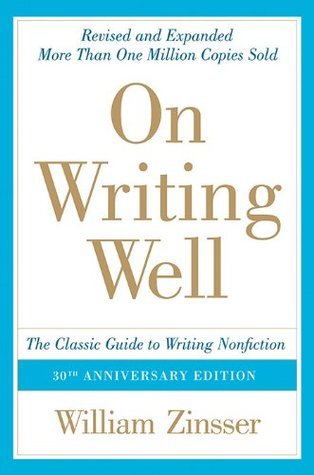
Key Principle
Business and organizational writing fails through one primary mechanism: squandering the self. Writers adopt institutional language and lose the human being inside the professional role. The four articles of faith for any organizational writing are humanity, clarity, brevity, and simplicity — not as soft preferences but as competitive obligations. "Any organization that won't take the trouble to be both clear and personal in its writing will lose friends, customers and money." (Chapter 16: Business Writing)
Why This Matters
Bad institutional writing is not primarily an individual failing — it is a feedback problem. Past a certain organizational level, no one corrects a manager's inflated prose. Hierarchy insulates senior writers from honest criticism; cultural norms equate elaborate language with intelligence. Each uncorrected instance confirms that complexity is correct, compounding the problem. "Once an administrator rises to a certain level, nobody ever points out to him again the beauty of a simple declarative sentence." (Chapter 16: Business Writing)
The result: most executives "don't write what appears over their signature." They have surrendered the qualities that make them unique to ghostwriters who produce inflated prose. A privately direct person is made to appear a pompous ass by communications written in their name. The gap between how leaders speak privately and how their official communications sound is the precise measurement of the institutional voice problem.
Good Examples
Locating the missing "I": The technique for humanizing institutional prose is to find the individual — the engineer, the designer, the executive — and get them to explain it in their own words. One human sentence can redeem pages of surrounding jargon: "A computer is like a sophisticated pencil. You don't care how it works, but if it breaks you want someone there to fix it." (Chapter 16: Business Writing) Even a mass-transit authority can speak like a human being: "These are only new names for very familiar trains."
"I" in institutional writing: "If you work for an institution, whatever your job, whatever your level, be yourself when you write. You will stand out as a real person among the robots." (Chapter 16: Business Writing) Write the first draft with "I" even if institutional style requires removing it. The humanized draft is the starting point; the voice survives even when the pronoun doesn't.
Counterpoints
Concept nouns as the dominant vice: Abstract nominalized terms ("capacity," "functionality," "enhanced decision participation") eliminate the subject, the actor, and the concrete action — leaving only vague apparatus. Translation exposes the failure: "Capacity planning adds objectivity to the decision-making process" = "you should know the facts before you decide." "The system is delivered with functionality" = "it works." When translation produces something radically shorter, the original was broken.
Jargon as self-protection: Technical vocabulary used to avoid accountability — making claims that sound authoritative but are imprecise. "Ongoing," "input," and "prioritize" produce the appearance of meaning without actual content. They allow the writer to deny specific meaning while projecting expertise. The test: does the word fill a gap no existing plain word fills as well? If no, it's jargon.
The passive voice trap: Institutional writing defaults to passive constructions ("It has been decided that...") to distribute responsibility — no actor, no accountability. Active constructions ("We decided to...") require naming the actor, which most institutional writers find exposing. This is why Zinsser's principle applies with particular force in organizational contexts: active verbs are not just clearer, they are more honest.
Key Quotes
"A simple style is the result of hard work and hard thinking; a muddled style reflects a muddled thinker or a person too arrogant, or too dumb, or too lazy to organize his thoughts." — William Zinsser, Chapter 16: Business Writing
"The way to warm up any institution is to locate the missing 'I.' Remember: 'I' is the most interesting element in any story." — William Zinsser, Chapter 16: Business Writing
"If you work for an institution, whatever your job, whatever your level, be yourself when you write. You will stand out as a real person among the robots." — William Zinsser, Chapter 16: Business Writing
Rules of Thumb
- Before writing any institutional communication, ask: what would I say if I were speaking directly to this person?
- Test every sentence: can it be translated into a shorter, plainer version? If yes, use the translation.
- Eliminate concept nouns. Convert "the implementation of the plan" to "they planned it."
- Never use passive voice to distribute responsibility. Active constructions are more honest.
- Locate the individual behind the institutional communication and get them to speak directly.
- Four questions for any business document: Is it human? Is it clear? Is it brief? Is it simple?
Related References
- Clutter and Compression: The Bracketing Technique - jargon is clutter at the lexical level
- Style and Voice: The Organic Identity - squandering the self is the business-writing version of voice suppression
- Micro Tools: Active Verbs, Punctuation, and Daily Compression - active verbs and qualifier removal apply with special force in institutional writing