Key Principle
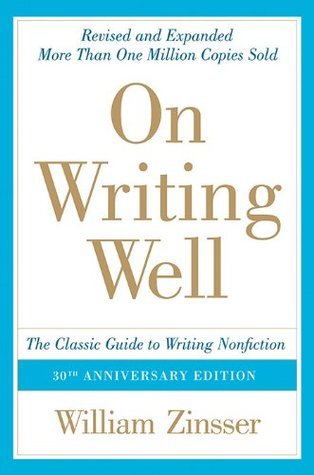
The standard for word choice is precision, not convention — and for usage questions, the deciding criterion is never tradition or comfort but whether the word means exactly what the writer intends. Good writing requires a poet's ear: listening to sentences, not just reading them. "Good writers of prose must be part poet, always listening to what they write." (Chapter 6: Words) Every word earns its place through both meaning and sound.
Why This Matters
Dull word choice is invisible in the bad way — prose that is technically accurate but forgettable. The unexpected-but-accurate word is always preferable to the familiar-but-flat one, because it produces the reader's recognition that something precisely right has been said. The wrong-sounding word — whatever it means — destroys the rhythm that carries the reader through. Prose has a sonic dimension that cannot be ignored.
On usage: the liberal/conservative distinction clarifies what's actually at stake. Be liberal about vocabulary (welcome new words that fill genuine gaps) and conservative about grammar (preserve distinctions that encode real differences in meaning). "Incorrect usage will lose you the readers you would most like to win." (Chapter 7: Usage) Not because they are pedants, but because a writer who conflates "disinterested" with "uninterested" has signaled unreliability — and that reader stops trusting the prose.
Good Examples
The precision test: Thomas Paine's "These are the times that try men's souls" lands as poetry while flat rewrites are "like oatmeal." The arrangement of sounds does work the words alone do not — rhythm, emphasis, and cadence amplify meaning the dictionary definition cannot capture.
The franchise criterion (Bernstein's Rule): Does the word fill a real need? If it does, welcome it. "Launder" earned its place because the Watergate era gave it a precise meaning — "to clean illegally obtained money" — complete with moral overtones that no existing word carried. "Hassle" and "freak" earned their place through precision and gap-filling. "Senior citizen" did not — it is pudgy evasion from the land of sociology, obscuring rather than clarifying.
Lifespan risk of slang: Words tied to a cultural moment can disappear as quickly as they arrived, dating the writer and undermining authority. A word that fills a genuine need survives; a word that rides a trend does not.
Counterpoints
The elegant variation trap: The compulsion to avoid repeating a name or noun produces absurdity — "the Memphis native," "the redhead," "the racquet ace" as substitutes for the player's name. Readers can track names; they cannot track epithets. Never be afraid to repeat the right word. The cure (variation) is worse than the ailment (repetition).
Journalese: The vocabulary of worn-out formulas — "key," "major," "massive," "crucial," "upcoming," "implement" — drained of meaning through overuse. These are not neutral defaults; they are the vocabulary of non-thought. They signal a writer who reached for what was available rather than what was true.
Grammar conservatism matters: Erasing the "disinterested/uninterested" distinction doesn't make the writer more accessible — it loses precision that careful readers depend on and signals unreliability to the readers most worth reaching. The ironic demonstration: "no matter how many writers flaunt their ignorance by flouting the rule" — the sentence uses the distinction it explains.
Key Quotes
"Good writers of prose must be part poet, always listening to what they write." — William Zinsser, Chapter 6: Words
"Language is a fabric that changes from one week to another, adding new strands and dropping old ones." — William Zinsser, Chapter 6: Words
"Incorrect usage will lose you the readers you would most like to win." — William Zinsser, Chapter 7: Usage
"We should apply the test of convenience. Does the word fill a real need? If it does, let's give it a franchise." — Theodore M. Bernstein, quoted in Chapter 7: Usage
"Good usage, to me, consists of using good words if they already exist — as they almost always do — to express myself clearly and simply to someone else." — William Zinsser, Chapter 7: Usage
Rules of Thumb
- Read every sentence aloud before finalizing. Rhythm problems invisible on the page become audible when spoken.
- Test every word: does it fill a gap no existing plain word fills as well? If no, cut it.
- Reach for the unexpected-but-accurate word over the familiar-but-flat one.
- Never substitute epithets for a name to avoid repetition. Repetition is not the problem — ambiguity is.
- Liberal on vocabulary (new words that fill genuine gaps); conservative on grammar (preserve distinctions that encode real meaning differences).
- Avoid slang that is tied to a cultural moment — it will date the writing faster than any other choice.
Related References
- Clutter and Compression: The Bracketing Technique - the utility/vividness test here is identical to the clutter-cutting standard
- Style and Voice: The Organic Identity - word choice is the micro-level expression of authentic voice
- Structure and Decisions: Linear Logic and the Writer's Craft - the word-level iteration protocol for defeating banality