Key Principle
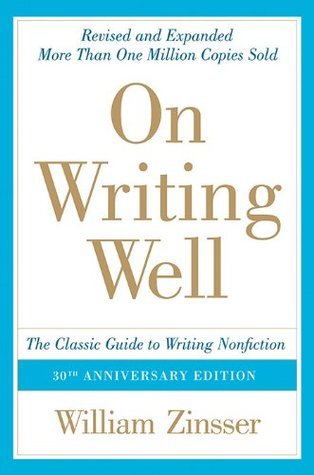
Every nonfiction form has the same core failure modes (enthusiasm over specificity, writer ego displacing subject, jargon as shield) and the same cures (the human element as entry point, significant detail, authentic voice). The surface differences between interview, travel, memoir, and science writing do not override the underlying craft obligations. Universal rules: write for the reader, not yourself; specificity over generality; strip the writer's ego and let the subject speak.
Interview (Chapter 12)
Primary failure mode: The writer's voice drowning out the subject's.
Core technique: The interview subject's own words are the story. Preparation matters (deep background enables the follow-up question that surfaces real material), but the writer's job during the interview is to get out of the way. Use neutral attribution verbs ("said," "told," "wrote") rather than editorializing ones ("admitted," "claimed," "pointed out").
Ethical compression: The line between legitimate compression (distilling a subject's meaning into tighter paraphrase) and fabrication (inventing statements) is real. The memoirist's obligation is to preserve the subject's actual meaning, not to make their prose more quotable.
The leave-taking technique: "Often you'll get your best material after you put your pencil away, in the chitchat of leave-taking." (Chapter 21) Ask one last open-ended question; the subject has relaxed and stopped performing.
Travel (Chapter 13)
Primary failure mode: The enthusiasm trap — the writer's personal excitement treated as sufficient reason for the reader to be excited.
Core technique: Significant detail over volume. The test for any detail is not "did I notice this?" but "does this do work that no other detail could?" Generic details (rocks, seagulls, the Grand Canyon's size) are already known to the reader. "The mere agglomeration of detail is no free pass to the reader's interest. The detail must be significant." (Chapter 13)
Travelese: The vocabulary of worn-out travel clichés — "exotic," "picturesque," "timeless," "unspoiled," "nestled." "If a phrase comes to you easily, look at it with deep suspicion." (Chapter 13)
The custodian interview: In any unfamiliar place, find and interview the person who knows it most intimately — the caretaker, the local historian, the long-tenured worker. Access the spirit of a place that surface observation cannot reach.
The visiting stranger method: Approach even familiar subjects (your own city, your own industry) with the fresh eyes of an outsider — asking what a visitor would notice, what would need explaining.
Memoir (Chapter 14)
Primary failure mode: Treating memoir as documentation rather than construction. "To write a good memoir you must become the editor of your own life, imposing on an untidy sprawl of half-remembered events a narrative shape and an organizing idea." (Chapter 14)
Core technique: Specificity as the engine of emotional truth. Abstract emotional claims produce generic writing; specific sensory details — exact sounds, smells, objects, words in a foreign language — trigger the reader's own emotional memory. "Memoir is the art of inventing the truth." (Chapter 14) The obligation is to emotional truth, not documentary exactness.
The writer as the most interesting character: Suppress neither confusion, shame, nor awakening — performing composure rather than disclosing the actual experience gives the reader chronicle without intimacy.
The outsider advantage: Cultural displacement and immigrant experience carry inherent narrative tension — belonging nowhere fully — which is a structural asset, not a handicap.
Science and Technology (Chapter 15)
Primary failure mode: The dual fear problem — the writer fears failing to understand the subject; the reader fears being made to feel stupid. Both fears produce defenses that degrade the prose.
Core technique: Human element as entry point. "You can take much of the mystery out of science writing by helping the reader to identify with the scientific work being done." (Chapter 15) Start with the most accessible, human-scale entry point. Then work downward toward complexity.
Detective story structure: Convert exposition into narrative momentum by ensuring each paragraph closes one question and opens the next. "He never forgets where he left his readers in the previous paragraph and what they want to know next." (Chapter 15) Readers advance because curiosity drives them.
The upside-down pyramid: Start with the narrowest, most concrete fact; widen each subsequent sentence toward context and implication.
Sports (Chapter 17)
Primary failure mode: The sportswriter's ego — the writer's attitude displacing reporting, producing the journalist's psychology instead of what athletes actually did.
Core technique: Resist the cliché economy. Good sports writing requires words chosen with precision rather than inherited by convention. "I could, in short, write sports English instead of good English, as if they were two different languages. They're not." (Chapter 17)
Synonym obsession (elegant variation): Never substitute descriptive epithets for a player's name to avoid repetition — "the Memphis native," "the redhead," "the racquet ace." Readers can track names; they cannot track epithets.
Sport as social frontier: "If you want to write about America, this is one place to pitch your tent." (Chapter 17) Sports has always been where America's real social conflicts play out — race, class, gender, identity. Writers who treat sport as merely athletic spectacle miss the actual material.
Arts Criticism (Chapter 18)
Primary failure mode: Vague evaluative language ("fascinating," "restrained," "brilliant") that transmits mood but transfers no information.
Core technique: Specific detail over ecstatic adjectives. "Good criticism needs a lean and vivid style to express what you observed and what you think." (Chapter 18) Every claim must be grounded in specific evidence the reader can evaluate.
Historical immersion: A critic cannot distinguish pioneer from imitator without deep knowledge of what has been done before in the medium. This is not background preparation — it is the ongoing condition that makes criticism possible.
Conviction without evasion: "Don't cancel its strength with last-minute evasions and escapes." (Chapter 18) Opinion writing must end with a committed stance. "If it's too early to tell, don't bother us with it."
Humor (Chapter 19)
Primary failure mode: Treating humor as decoration rather than craft — adding jokes to a piece rather than making the piece itself funny.
Core technique: Humor is serious craft requiring control, truth, and meticulous research. It heightens reality rather than escaping it. The discipline: never preach. The moment the humor starts moralizing, it stops being funny.
Timing and structure: The funniest writing achieves its effects through precision, surprise, and structural inevitability — the same qualities that make any other kind of prose work. The humorist's job is not to be funny but to render reality so precisely that the absurdity becomes visible.
Key Quotes
"The crucial ingredient in memoir is, of course, people. Sounds and smells and songs and sleeping porches will take you just so far. Finally you must summon back the men and women and children who notably crossed your life." — William Zinsser, Chapter 14: Memoir
"Writing is not a special language owned by the English teacher. Writing is thinking on paper. Anyone who thinks clearly can write clearly, about anything at all." — William Zinsser, Chapter 15: Science and Technology
"What gives the article its depth is that it's the work of a writer, not a sportswriter." — William Zinsser, Chapter 17: Sports
Rules of Thumb
- Interview: use neutral attribution verbs; get out of the way of the subject; ask one last question after the formal interview ends.
- Travel: test every detail for work it does that no other detail could; distrust any phrase that comes easily.
- Memoir: organize around emotional truth, not chronological completeness; commit to the specific detail.
- Science: start with a human; convert exposition to narrative momentum through detective structure.
- Sports: resist the cliché; cover the game before covering the game's meaning.
- Criticism: ground every evaluative claim in specific evidence; end with a committed stance.
- Humor: never preach; heighten reality rather than escape it.
Related References
- Nonfiction as Literature: The Dominant American Tradition - the case for full literary ambition across all forms
- Implementation Playbook: From Draft to Finished Piece - universal revision workflow that applies to all forms
- The Core Framework: Writing Is Thinking Clearly - same craft principles underlie all forms