Key Principle
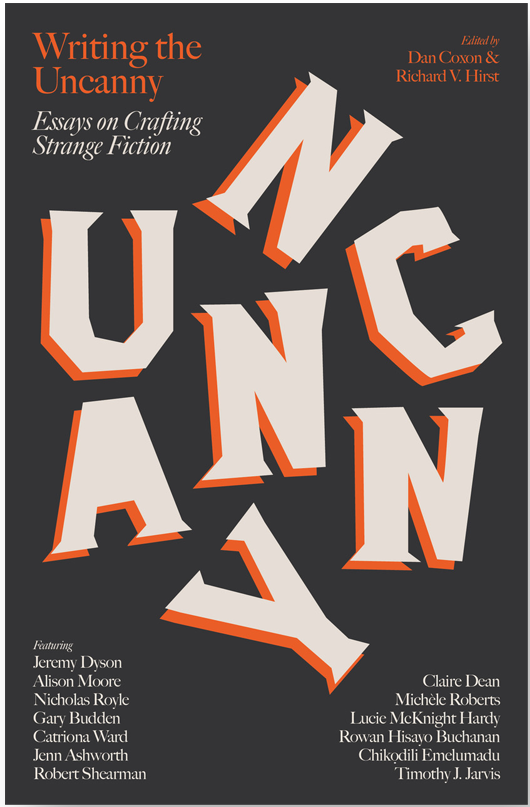
The uncanny (das Unheimliche) is not a genre but a causal mechanism rooted in a linguistic paradox: the German word "heimlich" means both "homely and familiar" AND "secret and concealed." Its negation, "unheimlich," therefore describes not the simply unknown but the concealed surfacing from within the familiar. Fear does not arrive from outside — it erupts from the home itself, which was never fully safe. This is the engine of all uncanny fiction.
Why This Matters
If a writer imports external threat — monster, stranger, disaster — they are writing horror or thriller. The uncanny effect requires something structurally different: revealing that what the reader already trusted as familiar was always harboring something hidden. The domestic setting is not a stylistic preference; it is a structural requirement, because the uncanny needs the reader's prior sense of safety to overturn. Without that prior trust, there is no mechanism, only novelty.
The uncanny is also not confined to any single genre. It is a portable mode deployed across literary fiction (Daisy Johnson, David Mitchell), children's literature (Alan Garner), and horror (Ramsey Campbell). Understanding it as a mode rather than a genre frees the writer to use its techniques in any form without announcing the work as strange. The mechanism — the concealed surfacing from within the familiar — is always the same regardless of the container.
Good Examples
Scott vs. Poe / Fitzgerald vs. Kafka / Spielberg vs. Lynch: The editors build a recurring structural argument across eras: the canonical mainstream work is contrasted with an uncanny counterpart that proves more lasting and more truthful. Kafka is positioned against Fitzgerald as the more authentic voice of the twentieth century — not because his work is darker, but because it accommodates ambiguity, repression, and dread in a way celebratory fiction refuses. (Introduction)
E.T.A. Hoffmann, "The Sandman": Freud's anchor text for the theory. The Sandman is not an intrusion from outside; he is a figure threaded into the protagonist's domestic childhood. The horror depends entirely on the childhood home having been the site of concealment all along. (Introduction, via Freud, "Das Unheimliche," 1919)
Shirley Jackson, Hill House: The house is described as "familiarly unmotherly" — its great padded chairs appear soft and safe but "turn out to be hard and unwelcome when you sit down, and reject you at once." The threat is not supernatural intrusion but the betrayal of domestic promise. (Chapter: Spotlight on Shirley Jackson)
Counterpoints
Pure threat (horror without uncanny register): When a writer locates all danger in an external monster or invader, the reader is never implicated. The familiar remains intact. The effect is suspense or dread, but not the uncanny — because the home is never revealed to have always been compromised. (Introduction)
Pure novelty (weird fiction without personal dread): Work that prioritises strangeness for its own sake, without establishing prior familiarity, produces curiosity rather than the uncanny. The weird is an intrusion from outside everyday reality; the uncanny is a revelation from within it. The distinction is not tonal but structural. (Introduction; cf. Fisher, The Weird and the Eerie, 2016)
Treating the uncanny as genre: Writers who believe they must write ghost stories or horror to access these techniques self-limit. They lose the mode's most powerful applications — in realist fiction, in literary novels, in work that never announces itself as strange. Genre labelling forecloses deployment. (Introduction)
Key Quotes
"The 'uncanny', therefore, was not merely something unknown, but something that had been hidden or repressed. He famously called it 'that class of frightening which leads back to what is known of old and long familiar'." — Dan Coxon and Richard V. Hirst, eds., Introduction
"Although The Great Gatsby regularly tops readers' polls of their favourite twentieth-century novels, few would deny that Franz Kafka, with his patchwork oeuvre of anxiety and surrealism, feels like the bracingly authentic voice of the age." — Dan Coxon and Richard V. Hirst, eds., Introduction
"If you like your fiction to be safe and cosy, this is no place for you." — Dan Coxon and Richard V. Hirst, eds., Introduction
Rules of Thumb
- Ask: does the threat come from outside or from within? If outside, you are writing threat. If from within the familiar, you are writing the uncanny.
- A domestic or everyday setting is not a stylistic default — it is a structural requirement. The reader must have something to trust before it can be overturned.
- The uncanny mechanism is portable. It can be deployed in a realist novel, a children's book, a comedy. The genre label is irrelevant; the mechanism is not.
- Writers working from their own cultural inheritance will find the mechanism most powerful: cultural specificity produces the felt familiarity the uncanny requires to function.
- Unease is not atmosphere. It is load-bearing structure. Fiction that treats it as optional decoration produces work that feels less true to lived experience.
Related References
- Withholding and Negative Spaces - the craft technique that operationalises this mechanism at sentence and structure level
- Repressed History and the House - the mechanism operating at collective and architectural scale
- Implementation Playbook: Writing Uncanny Fiction - step-by-step application of the framework in a first draft