Key Principle
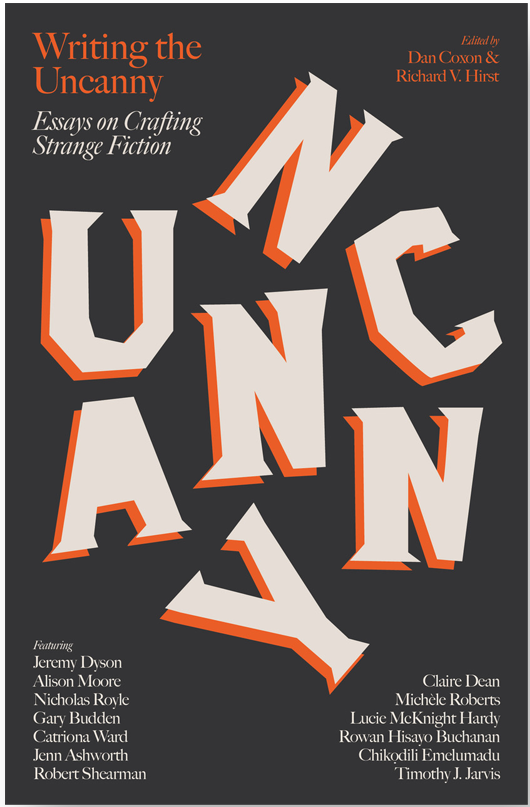
The uncanny is not a Western monopoly. Chikodili Emelumadu argues that the most potent uncanny material comes from culturally inherited fears — the anxieties "that have always plagued — and continue to plague — our respective families and societies." Universal uncanny tropes (vampires, haunted houses) lose charge through overuse precisely because they have been abstracted from lived experience. Culturally rooted fears — drought, barrenness, forced marriage, infidelity — are inexhaustible because they carry real emotional weight. The uncanny needs the familiar to defamiliarize; inherited fears provide that familiarity at depth. — Emelumadu, "Writing the Uncanny"
Why This Matters
This reframes the uncanny's source engine. Where Freud located the uncanny in individual psychological repression, Emelumadu locates it in collective cultural pressures that are known, feared, and often unspoken. A writer drawing on these pressures does not need to invent dread — the dread already exists in the reader's inherited awareness. The technique also opens the uncanny to traditions and fears that Western-centric frameworks overlook, making the mode genuinely cross-cultural rather than parochially European.
The second major contribution is power reversal as uncanny mechanism. Emelumadu describes "colourfully, the often-violent manner in which women are stripped of their power, and then building them up again, just as violently." When the powerless suddenly wield power, the reader's model of normal inverts. The uncanny here is not supernatural dread but structural dread — the recognition that the power arrangement the reader took for granted was always unstable. — Emelumadu, "Writing the Uncanny"
Good Examples
Lesley Nneka Arimah, "Who Will Greet You at Home": Women assemble children from materials and breathe life into them. The protagonist creates a baby from discarded hair; it suckles on her hair. The body horror emerges directly from the culturally specific pressure to reproduce. The uncanny is not the animation itself but the desperation that drives it — a fear the reader recognizes. — Emelumadu, "Writing the Uncanny"
Emelumadu, "The Fixer": A philandering husband offers "my life, my soul is all yours" in his lust. The Fixer takes the offer literally. The uncanny operates through the gap between metaphorical and literal meaning — a casual expression of desire becomes a binding contract, and the power reversal is complete. — Emelumadu, "Writing the Uncanny"
Shirley Jackson, "The Daemon Lover" (naming asymmetry): The narrator is unnamed while her fiance (James Harris) is named. As she searches for him with increasing desperation, her lack of name becomes her lack of social existence. Naming asymmetry externalizes power imbalance at the sentence level. "Society has not claimed its last victim." — Emelumadu on Jackson, "Writing the Uncanny"
Sookie Stackhouse series (surface compliance): Vampires "come out" and submit to human governance. But: "You can dress a lion up in finery and feed it the finest cuts of meat, but one day it will pounce and rip off your face." Sustained unease comes from the reader knowing the compliance is performative while the characters treat it as real — a perception gap applied to social structure. — Emelumadu, "Writing the Uncanny"
Counterpoints
Universal tropes feel exhausted: Vampires and ghosts have been so thoroughly abstracted from any specific cultural anxiety that they often register as furniture rather than threat. A writer using them must reconnect them to a lived fear or accept diminished uncanny charge. — Emelumadu, "Writing the Uncanny"
Reversing Freud: Where Freud frames the uncanny as the return of the repressed (something buried coming back to haunt), Emelumadu effectively reverses this — the uncanny becomes the return of power to the powerless. The disturbance is not that something hidden resurfaces but that a suppressed capacity for agency suddenly activates. The "repressed" here is not a memory but a potential. — Emelumadu, "Writing the Uncanny"
The subconscious as collaborator: Emelumadu treats the subconscious not as a source of buried trauma but as an active problem-solving tool. Cultural fears, once absorbed, are processed below the surface and re-emerge as fictional material with an uncanny charge the conscious mind did not engineer. The writer's job is to provide the raw material (inherited fears, observed power structures) and let the subconscious do the defamiliarizing. — Emelumadu, "Writing the Uncanny"
Key Quotes
"'Fuck your peace,' a lot of my protagonists seem to say. 'And while you're at it, fuck you too.'" — Emelumadu, "Writing the Uncanny." Context: Names the emotional engine of power-reversal fiction — refusal of accommodation as the inciting uncanny act.
"You can dress a lion up in finery and feed it the finest cuts of meat, but one day it will pounce and rip off your face." — Emelumadu, "Writing the Uncanny." Context: Surface compliance masking predatory nature; the perception gap between character trust and reader knowledge.
Rules of Thumb
- Mine your own inherited cultural fears before reaching for universal tropes. The familiar-to-you is more potent than the familiar-to-everyone.
- Power reversal generates uncanny force when the violence of the restoration matches the violence of the original stripping. Gentle restorations produce fantasy; matched violence produces dread.
- Watch for the gap between metaphorical and literal language — characters who mean figures of speech literally are uncanny engines (see "The Fixer").
- Naming and unnaming characters is a sentence-level power tool. Who gets named, and who does not, encodes the power structure the story will disturb.
- Let the subconscious process cultural material. Overly deliberate deployment of cultural fears risks didacticism; the uncanny requires indirection.
Related References
- The Uncanny: Core Framework — Emelumadu's power-reversal method is a culturally specific instantiation of the return-of-the-repressed engine.
- Negative Space and Withholding — Naming asymmetry (Jackson) is a form of negative space at the sentence level.
- domestic horror — Culturally specific fears often manifest in domestic settings (reproduction, marriage, household power).