Fiction Writing
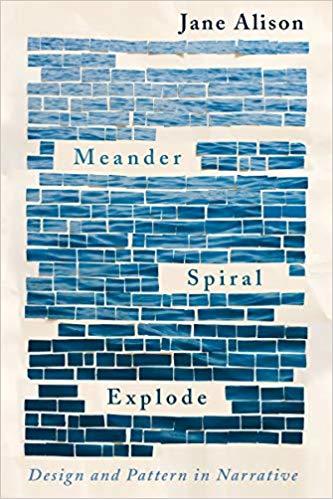
Meander, Spiral, Explode: Design and Pattern in Narrative
Jane Alison 2019 12 references
Use when designing narrative structure beyond the conventional dramatic arc — choosing, applying, and combining alternative patterns (wave, wavelet, spiral, radial, fractal, cellular) drawn from nature.
narrative-structure craft fiction-writing form literary-analysis writing-technique
Overview
The Core Framework
- The dramatic arc is a convention borrowed from tragedy, not a law of fiction — it's one pattern among many
- Nature offers alternative structural templates: wave, wavelet, spiral, radial/explosion, fractal, cellular/network
- Each pattern produces a distinct kind of forward motion and reader experience
- Hylomorphism: the right structure is whichever shape the material demands — form should emerge from content
- Structure is not a container for meaning — it actively produces meaning
Quick Lookup
| Your Material Feels Like... | Try This Pattern | Key Mechanism |
|---|---|---|
| A single rising tension | Wave | Symmetrical scenes mirror across climax |
| Incremental, cyclical experience | Wavelets | Small oscillations between defined poles |
| Obsessive return to a core memory | Spiral | Near-repetition around an axis, deepening each pass |
| A known event everyone circles | Radial/Explosion | Centripetal (dread) or centrifugal (scattering) from nucleus |
| Fragments that illuminate each other | Cellular/Network | Reader draws connections across discrete segments |
| A seed that generates everything | Fractal | Compressed opening self-replicates with variation |
| Multiple structures at once | Multi-structure | Combine patterns (see Cloud Atlas) |
The Key Insight
"Why should a story be shaped like a pyramid? What if it looked like a spiral, or a wave, or a radial?" -- Jane Alison, Introduction
References
No references match your search.