Key Principle
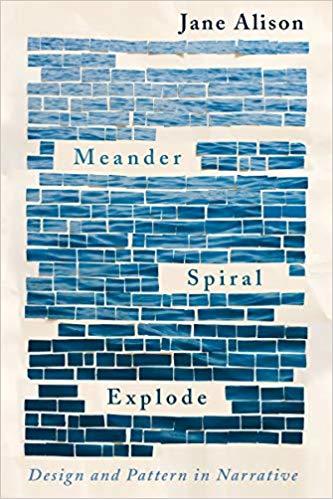
Wavelets distribute narrative energy through small, repeated oscillations between two defined poles rather than building a single dramatic arc. The reader processes these alternations somatically — "felt more in the mouth and throat than consciously registered in the mind" (Chapter 5) — before consciously naming the pattern. This makes the wavelet a body-first structure: the form works on the reader's nervous system before it works on their intellect.
The generative unit of wavelet structure is the double-note oscillation: a two-toned tension struck within sentences, micro-incidents, and larger structures where opposite impulses coexist simultaneously. This creates "low-level tension that keeps every page agitated" (Chapter 5) without requiring dramatic events — the oscillation itself is the energy source.
Why This Matters
The dominant Aristotelian arc assumes one large wave of rising and falling action, but most lived experience is incremental — small tensions, small discoveries, relapses. Writers who force incremental material into a climactic shape produce either false epiphanies or stories dismissed as "plotless" when they are actually patterned differently.
Wavelets offer a recognized alternative. By establishing two poles and alternating between them in small increments, a writer can generate sustained tension across every page without requiring dramatic events. This makes wavelets structurally available to stories about maintenance, endurance, and systemic pressure — experiences the dramatic arc handles poorly. Alison reads this as a feminist structural critique: "three female bodies as decomposing as the hotel they inhabit... abolition of a single wave in favor of a sea of many small ones" (Chapter 5).
Good Examples
Carver, "Where I'm Calling From": Wet/dry poles embedded in concrete details — dryness as smoke, coal, wind; wetness as rain, champagne, blood. Carver uses "drink," "beer," or "gin-and-tonic" nearly twenty times in one passage, "just about drowning a reader," making the text enact what it describes (Chapter 5). The wet/dry stripes are compared to "pale bands in an Agnes Martin painting" — visual art parallel for barely perceptible patterning. The story resolves through convergence: fire, previously associated with ashen deadliness, becomes life when the narrator thinks of "To Build a Fire."
Wolff, The Barracks Thief: Intimacy/repulsion oscillation that never resolves. The double note operates at every scale: within a single sentence ("What kind of man turns his back on his own kind?"), within micro-incidents (Philip shakes Keith awake wanting connection, then cannot stop shaking him), and across the full novella. Philip "remains a site of deadly ambivalence" (Chapter 5). Compared to the curse-driven feedback loop of the Oresteia, but Wolff refuses the radical transformation (Furies into Kindly Ones) that would end the cycle.
Redonnet, Hotel Splendid: No chapters, no indentation, no dialogue — "no rest for the reader" (Chapter 5). Three female bodies decompose alongside the hotel they inhabit. The prose relentlessness mirrors maintenance, decay, and bodily decline. The only way to end the wavelets is death — extinction as the third resolution type.
Counterpoints
Wavelets vs. Meandering: A story that drifts has no poles; a wavelet story oscillates between two defined opposites. Without consistent poles, there is no oscillation — only variation (Chapter 5).
Calibration risk: The pattern must be "just barely perceptible" (Chapter 5). Too obvious and the structure becomes schematic; too subtle and no pattern registers at all. This razor-edge calibration is the primary craft difficulty.
Inverted causation: In wavelet narratives, "plot swarms around character" (Chapter 5) rather than springing from character as Aristotle prescribes. The character endures and tries to maintain integrity against a field of external micro-tensions. This inversion limits wavelets to stories where character endures external pressure rather than drives action.
Key Quotes
"Dispersed patterning, a sense of ripple or oscillation, little ups and downs, might be more true to human experience than a single crashing wave: I'm more likely to feel some tension, a small discovery, a tiny change, a relapse. The same epiphanies every week . . ." — Jane Alison, Chapter 5
"And so on, back and forth between wet and dry — but in a way that is just barely perceptible, something felt more in the mouth and throat than consciously registered in the mind: a form of embodied cognition." — Jane Alison, Chapter 5
"If plot in Aristotelian terms springs from character, here we've gone awfully far from that: plot swarms around character." — Jane Alison, Chapter 5
"No dramatic arc: the story advances, and slightly resolves, through this pattern of rippling." — Jane Alison, Chapter 5
Rules of Thumb
- Establish exactly two poles grounded in concrete sensory details before writing any scenes
- Alternate between poles paragraph by paragraph, sometimes sentence by sentence — many small waves, never one large one
- Keep the pattern at the threshold of perception: if you can name it easily, it is too obvious
- Choose your ending type deliberately: convergence (poles merge and one transforms), perpetuation (the cycle is the permanent condition), or extinction (only death stops it)
- Use concrete noun repetition to intensify somatic effect — let the text enact what it describes
- The double-note oscillation must operate at every scale: sentence, paragraph, and full narrative
Related References
- Spirals - Spirals also use near-repetition but revolve around a central axis rather than oscillating between two poles
- Radials and Explosions - Radial structures share wavelets' rejection of the dramatic arc but center on a powerful nucleus rather than distributed oscillation
- Networks and Cells - Networks take wavelet distribution further, replacing oscillation with discrete cells connected by the reader