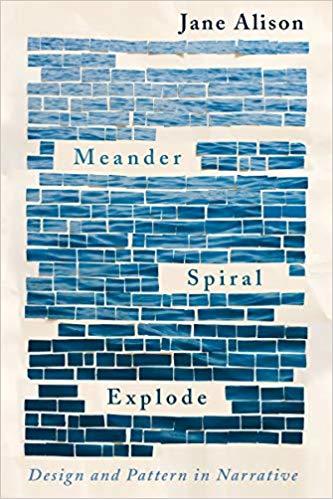
Key Principle
"Text" and "texture" share the Latin root texere — to weave. The reader's primary experience is not story but texture: the weave of syllables, syntax, punctuation, and white space. Neuroscience confirms this — neural activity for sound is roughly equivalent whether a word is read silently or aloud (Broca's area generates internal sound), and the brain's word-recognition region has a twin for face recognition (Chapter 1). Readers see, hear, and feel words as material before they process them as narrative.
Treating prose as a woven material, not just a delivery system for story, unlocks design variables analogous to those of visual artists and architects. This reframing is prerequisite for all the micro-level design work in the book's opening chapters.
Why This Matters
Most craft discussion focuses on plot, character, and theme — treating prose as transparent packaging. Alison reframes the sentence as the reader's actual point of contact with the work. If the sentence is where meaning is materially constructed, then sentence-level design choices — parataxis vs. hypotaxis, resolution density, syllabic texture — are structural decisions, not decorative ones.
Two key design axes emerge at the sentence level: syntactic orientation (parataxis vs. hypotaxis) and resolution density (the degree of specificity and sensory detail). Both are independent variables that writers can set deliberately rather than defaulting to habit.
Good Examples
Parataxis vs. hypotaxis as structural microcosm: Parataxis (he did X and Y and Z) creates linear, sequential motion. Hypotaxis (subordinating syntax that foregrounds some elements and lets others recede) creates spatial, suspensive motion. This sentence-level distinction maps directly onto macro structure: arc narratives are paratactic (event follows event toward climax); non-arc narratives are hypotactic (elements held in suspension, the main point withheld or distributed).
Jamaica Kincaid's Mr. Potter: Paratactic tumbling "and" phrases create a relentless forward cascade — the syntax itself enacts sequential momentum (Chapter 1).
Nicholson Baker's The Mezzanine: Elaborately subordinated, parenthetical, digressive sentences — hypotactic prose that holds multiple thoughts in suspension simultaneously (Chapter 1). Baker's prose about mundane objects (escalators, shoelaces) uses elaborate phrases, four- and five-syllable words, references spanning Rolaids to Old Masters, creating high resolution applied to low-stakes content.
Sebald's The Emigrants: Operates hypotactically at the narrative level — "not about what happened next but instead weaving a net whose design I wouldn't see until I'd finished" (Introduction). The sentence-level logic scales to the whole structure.
Counterpoints
Resolution (degree of specificity and sensory detail) is independent of content importance. Two writers can describe equally mundane content at wildly different resolutions. Writers who confuse resolution with significance over-detail important scenes and under-detail everything else, creating a predictable texture that telegraphs plot (Chapter 1).
Tao Lin's Shoplifting from American Apparel: Short, simple sentences creating "the texture of a cartoon or emoji" — low resolution applied to mundane material (Chapter 1). Compare with Baker's The Mezzanine: same mundane content, opposite resolution, entirely different reading experiences. The contrast proves resolution is a design choice, not a consequence of subject matter.
Hypotaxis is not inherently superior to parataxis. Each suits different structural intentions. The key insight is that the choice should be deliberate, not habitual.
Key Quotes
"You lose a lot if you run from complex sentences with their depths, the way they pull one time zone or idea into the light and let another sink." — Jane Alison, Chapter 1
"Not about what happened next but instead weaving a net whose design I wouldn't see until I'd finished." — Jane Alison, Introduction (on Sebald's hypotactic narrative structure)
Rules of Thumb
- Think of each sentence as a microcosm of the whole narrative's structure — paratactic sentences suit arc-driven stories; hypotactic sentences suit suspensive, pattern-based ones.
- Treat resolution as an independent dial, not a signal of importance. Varying resolution unpredictably prevents the texture from telegraphing which moments "matter."
- When revising, read prose aloud: the brain generates internal sound from written words, so sonic texture is always active even in silent reading.
- Syntax subordination (hypotaxis) can foreground and background elements within a single sentence the same way a non-arc narrative foregrounds and backgrounds across its full span.
- Match your sentence-level syntax to your macro-structural intention. If the whole work is suspensive and pattern-based, paratactic sentences will fight the design.
Related References
- Core Framework: The Arc as Convention and Natural Pattern Alternatives - The macro-structural argument that texture supports
- Narrative Speeds: The Five-Speed Continuum - Speed patterning as another micro-to-macro design variable
- Waves and Symmetry: The Arc as Natural Pattern - How sentence-level energy renewal (micro-profluence) sustains wave structures