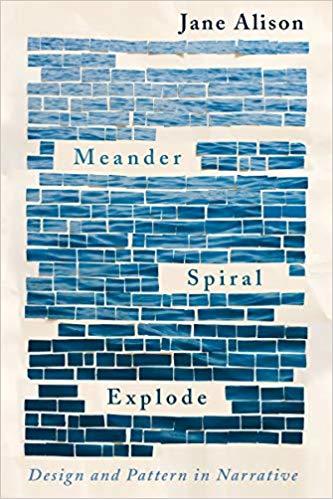
Form-Content Matching
- Let material choose form: "A meander or net or explosion was simply the pattern the material needed. Aristotle's hylomorphism: shape ordering life" (Epilogue). Ask what shape the material wants to become before defaulting to an arc.
- The arc is one valid shape, not the only valid shape: It was derived from Aristotle's analysis of Greek tragedy, codified by Freytag for drama, then retroactively imposed on fiction -- "a genre that didn't exist when the framework was created" (Introduction).
- Test for organic fit: Does the fragmentation, repetition, or circularity enact what the work is about? Phillips's shattered narrative mirrors shattered families; Carson's groping form mirrors the impossibility of knowing her dead brother (Chapter 10).
- Formal experiment without grounding produces hollow work: "Purely cerebral affairs" that "toy on surfaces" result when structure is not anchored in material (Epilogue).
- Think of the arc as describing reader experience, not text structure: "It might be more freeing, as writers, if we think not of a story always following an arc, but of a reader's experience absorbing the story as doing so" (Introduction).
Micro-Level Design
- Prose is woven, not poured: "Text" and "texture" share the Latin root texere (to weave). Treating prose as material gives access to design variables analogous to visual art (Chapter 1).
- Vary narrative speeds deliberately: Alternating gap/summary/scene/dilation/pause creates rhythm. Monotonous speed collapses reader engagement -- "prose becomes a flat stream with no currents" (Chapter 2).
- Still-spots crystallize meaning: "An incident happens and then is pondered, its deeper sense revealed." The pattern is action-then-stillness, and it recurs like breathing (Chapter 2).
- Parataxis and hypotaxis are structural choices: Paratactic syntax (and... and... and...) creates linear, sequential motion. Hypotactic syntax (subordination, suspension) creates spatial motion. The sentence is a microcosm of the narrative (Chapter 1).
- Resolution density is a design dial: The degree of specificity and detail is independent of content importance. Over-detailing important scenes and under-detailing everything else telegraphs plot (Chapter 1).
- Micro-profluence renews energy at the sentence level: "Tiny chains of actions and reactions" -- each micro-event creating the conditions for the next. Without this, prose goes inert between plot events (Chapter 4).
- Micro-frictions signal larger tensions: Small oppositional pairings within sentences ("watery though not from the water") keep each line charged (Chapter 4).
Reader Engagement
- Gaps recruit the reader as accomplice: Ellipsis forces the reader to construct offstage events, making them "complicit" in the narrative. The gap's power is inversely proportional to its size (Chapter 2).
- Pattern recognition replaces plot as the forward engine: In non-arc narratives, the reader is pulled forward by the desire to complete a pattern, not to learn what happens next (Introduction).
- Constellatory reading is active co-creation: The reader assembles meaning from recurring elements across fragments -- "a barking web that hangs in your mind" (Chapter 10). This requires tolerance for ambiguity.
- Somatic processing precedes intellectual recognition: Wavelet patterning is "felt more in the mouth and throat than consciously registered in the mind" (Chapter 5). Structure operates on the body before the mind names it.
- Embedded structural self-portraits guide the reader: Images or phrases within a narrative that mirror the work's own form signal how to read it -- "What's missing here is a focal point" in a centrifugal novel (Chapter 8).
Ending Strategies
- Waves end through symmetrical return: The falling side echoes the rising side with transformed elements. Without this mirroring, the narrative feels merely stopped rather than finished (Chapter 4).
- Wavelets offer three endings: Convergence (poles merge and transform meaning), perpetuation (oscillation as permanent condition), extinction (only death stops the cycle) (Chapter 5).
- Spirals must earn their stop: Since spirals "could go on forever," identify the moment when accumulated meaning justifies stopping. The reader should discover the question only upon encountering the answer (Chapter 7).
- Fractals require a crash-stop: The logic of self-replication implies infinite continuation. Solve with a "mad leap" -- a final iteration so surprising it breaks the pattern (Chapter 10).
- Cellular narratives end in illumination: "Not so much a stasis of concluded action as a stasis of illumination" (Chapter 9). The reader reaches the end when their pattern-recognition achieves density.
- Radials end through saturation: Accumulating perspectives on the nucleus until moral or perceptual pressure resolves -- not through climax but through the reader's exhaustive understanding of complicity and consequence (Chapter 8).
Pattern Selection
- Forward-moving material: Wave, wavelet, or meander. These patterns advance through time, whether in large arcs, small oscillations, or digressions (Chapters 4, 5).
- Material centered on a single charged event: Radial/explosion. The story orbits a nucleus. Choose centripetal for dread, centrifugal for avoidance (Chapter 8).
- Material that circles and deepens: Spiral. Needs a central axis (character, narrator, or theme) and image-driven forward motion rather than event-causality (Chapter 7).
- Material that replicates at different scales: Fractal. Start with a compressed seed; each branch applies a different loupe (Chapter 10).
- Material of equal-weight discrete segments: Cellular/network. Threading motifs must bind sections; images must progress, not merely accumulate (Chapter 9).
- Material resisting single patterns: Multi-structure design. Layer patterns in tension -- most effective experimental narratives retain some wave-like forward motion while overlaying meander, spiral, or radial patterning (Chapter 11, Epilogue).
- Wavelets vs. waves: "Dispersed patterning, a sense of ripple or oscillation, little ups and downs, might be more true to human experience than a single crashing wave" (Chapter 5). Use wavelets when material tracks incremental experience rather than a single dramatic crescendo.
Key Quotes
"Rather than expecting the 'soul' or animating shape of fiction to be a plotted arc, why not imagine other shapes?" -- Jane Alison, Introduction
"Instead of reproducing the form of previous fiction, the form of the novel should seek to approximate the shape of our experience." -- Ronald Sukenick, quoted in Introduction
"It feels like a river -- yet looks like a design." -- Jane Alison, Chapter 2
"I hope that other patterns might help us imagine new ways to make our narratives vital and true, keep making our novels novel." -- Jane Alison, Epilogue
Related References
- Implementation Playbook - Step-by-step construction for each pattern
- Fractal Narratives - Deep dive on fractal narrative construction
- Multi-Structure Reading - Layering multiple patterns simultaneously