Human Flourishing
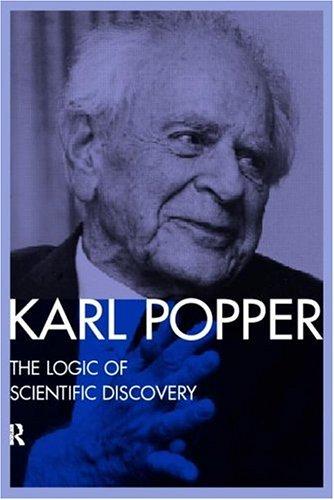
The Logic of Scientific Discovery
Karl Popper 1959 10 references
Popper's philosophy of science: falsifiability as the criterion of demarcation, deductive testing over induction, corroboration over verification. Use when evaluating scientific claims, designing tests, or reasoning about what makes a theory scientific.
falsifiability philosophy-of-science demarcation deductive-testing corroboration anti-inductivism epistemology
Overview
The Core Framework
- Science proceeds by deductive testing: propose bold theories, derive predictions, attempt to refute them
- The criterion separating science from non-science is falsifiability — can the theory, in principle, be contradicted by observation?
- Content = improbability = testability = corroborability: the most informative theories are the least probable
- Corroboration measures how well a theory has survived severe tests — it is not verification and not a probability
- Without methodological rules against ad hoc immunization, any theory can evade refutation
Quick Lookup
| Situation | Do This | Avoid This |
|---|---|---|
| Evaluating a claim | Ask "What would refute this?" | Asking "What confirms this?" |
| Choosing between theories | Prefer the bolder, more testable one | Preferring the safer, more "probable" one |
| A prediction fails | Check auxiliaries, then consider theory refuted | Adding ad hoc hypotheses to save the theory |
| A prediction succeeds | Record corroboration, design harder tests | Declaring the theory "proven" |
| Assessing evidence | Ask if the evidence could have gone the other way | Counting confirming instances |
| Judging simplicity | Simpler = more falsifiable = more informative | Treating simplicity as aesthetic preference |
The Key Insight
"The old scientific ideal of episteme — of absolutely certain, demonstrable knowledge — has proved to be an idol." — Karl Popper, Chapter 10
References
No references match your search.