Key Principle
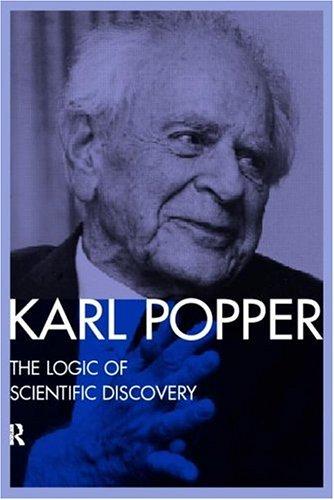
Collected heuristics from The Logic of Scientific Discovery for evaluating theories, designing tests, and avoiding common epistemological errors. These rules distill Popper's methodology into practical guidance applicable across disciplines.
Evaluating Theories
- The falsifiability test: Ask of any claim, "What observation would refute this?" If no answer exists, the claim is metaphysical, not scientific (Chapter 1)
- The content test: Judge theories by what they forbid, not what they permit. "Not for nothing do we call the laws of nature 'laws': the more they prohibit the more they say" (Chapter 1)
- The boldness test: Prefer theories that make precise, risky predictions over those that accommodate any outcome. High content = low probability = high testability (Chapter 6)
- The simplicity test: A simpler theory is not prettier — it is more falsifiable. Prefer the theory that can be refuted by fewer data points (Chapter 7)
- The ad hoc test: When a theory is "saved" by a new hypothesis, ask: does the rescue add new testable predictions, or merely accommodate the anomaly? If no new tests follow, the rescue is ad hoc (Chapter 4)
Designing Tests
- Severity matters more than quantity: One severe test (testing a prediction that would be surprising without the theory) is worth more than a thousand mild confirmations (Chapter 10)
- Test the riskiest predictions: The predictions most likely to fail are the most informative to test. If a theory predicts something everyone already expected, confirming it proves little (Chapter 10)
- Test auxiliaries independently: When a prediction fails, check whether the auxiliary hypotheses (measurement apparatus, initial conditions) might be at fault before abandoning the main theory (Chapter 4)
- Specify refutation criteria in advance: Decide before the test what results would count as a refutation. Post hoc reinterpretation of results is a conventionalist stratagem (Chapter 4)
Common Mistakes
- Confusing origin with validity: How a theory was discovered (intuition, dream, accident) is irrelevant to its scientific standing. Only testability matters (Chapter 1)
- Confusing probability with quality: "A high degree of probability is therefore not an indication of 'goodness' — it may be merely a symptom of low informative content" (Appendix *ix). The best scientific theories are the least probable
- Confusing corroboration with verification: A well-corroborated theory is not "proven true" — it has merely survived severe tests so far. "The old scientific ideal of episteme — of absolutely certain, demonstrable knowledge — has proved to be an idol" (Chapter 10)
- Treating observations as infallible: Even observation reports are tentative hypotheses. "Experiences can motivate a decision... but a basic statement cannot be justified by them — no more than by thumping the table" (Chapter 5)
- Demanding proof before action: Universal laws can never be proven. Waiting for certainty is waiting forever. Act on the best-corroborated theory while continuing to test it
The Deductive Testing Procedure
- Derive testable predictions from the theory (plus initial conditions and auxiliary hypotheses)
- Compare predictions with experience — design experiments that could refute them
- If the prediction fails: check auxiliaries first, then consider the theory refuted (provisionally)
- If the prediction succeeds: the theory is corroborated — but not verified. Continue testing with more severe tests
- Compare with rivals: prefer the theory that has survived the most severe tests and has the highest empirical content
The Immunization Warning Signs
Watch for these moves that shield a theory from falsification:
| Stratagem | Example | Why It's Illegitimate |
|---|---|---|
| Ad hoc auxiliary | Adding an epicycle to save a prediction | Reduces testability instead of increasing it |
| Definitional shift | Redefining "success" after failure | Changes the theory's content covertly |
| Questioning the tester | "The experiment was flawed" (without independent evidence) | Makes the theory untestable by dismissing any negative result |
| Lowering precision | "We predicted approximately X" (after X failed) | Reduces content and falsifiability |
Key Quotes
"Whenever we propose a solution to a problem, we ought to try as hard as we can to overthrow our solution, rather than defend it." — Karl Popper, Preface (1959)
"We should prefer the better-tested theory, the one which, by its logical character, can be most severely tested." — Karl Popper, Chapter 10
"A theory makes assertions only about its potential falsifiers. (It asserts their falsity.)" — Karl Popper, Chapter 4
Related References
- Falsifiability and the Logic of Deductive Testing — The theoretical foundation these heuristics operationalize
- Conventionalist Stratagems and Methodological Rules — Detailed treatment of immunization tactics
- Content, Testability, and Degrees of Falsifiability — The formal basis for preferring bold theories
- Corroboration — How a Theory Stands Up to Tests — How to appraise a theory's track record