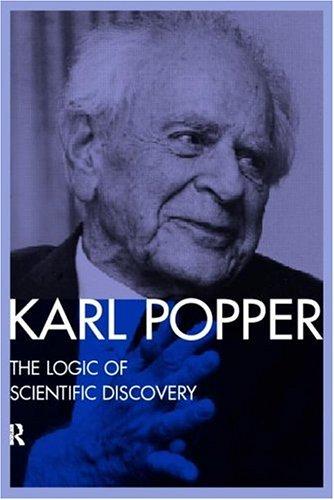
Key Principle
Any theory can be logically saved from refutation through conventionalist stratagems: (1) ad hoc auxiliary hypotheses that reduce testability, (2) surreptitious redefinition of terms, (3) questioning the experimenter's competence, (4) questioning the theoretician's acumen. Falsifiability as a purely logical property is therefore necessary but insufficient for science. Methodological rules — normative conventions governing the "game of science" — must forbid these evasions.
The supreme meta-rule: "the other rules of scientific procedure must be designed in such a way that they do not protect any statement in science against falsification" (Chapter 2).
Why This Matters
Without these rules, pseudoscience can claim to be falsifiable while in practice immunizing itself from every test. The gap between falsifiability (a property of a theory's logical form) and falsification (the methodological act of accepting a refuting basic statement) is where scientific integrity lives or dies. A theory that is falsifiable in principle but shielded in practice is scientifically worthless.
This is where Popper's philosophy becomes prescriptive rather than merely descriptive. The rules are not descriptions of how scientists do behave, but norms for how they should behave if they wish to do science rather than ideology.
Good Examples
Einstein vs. Fitzgerald-Lorentz: When the Michelson-Morley experiment contradicted Newtonian mechanics, the Fitzgerald-Lorentz contraction hypothesis "saved" Newton by positing that objects contract in the direction of motion through the ether — but this added no new testable consequences. Einstein's special relativity, by contrast, "predicted new consequences, new physical effects, and thereby opened up new possibilities for testing" (Chapter 4). The contrast illustrates the difference between an ad hoc rescue and a genuine scientific advance.
Specific methodological rules: Popper lists concrete prohibitions — no introducing auxiliary hypotheses unless they increase the theory's degree of falsifiability; no changing definitions to evade refutation; no dismissing experimental results merely because they contradict the theory (Chapter 4).
The game metaphor: "Science is not a system of certain, or well-established, statements; nor is it a system which steadily advances towards a state of finality... it is a system of rules and conventions" (Chapter 2). The rules define the game; without them, there is no game.
Counterpoints
Conventionalism (Poincaré, Duhem): The conventionalist position holds that the simplest theoretical system is chosen by convention and then maintained against refutation by adjusting auxiliary hypotheses. Popper acknowledges this is logically possible — any theory can be saved — but argues it sacrifices empirical content: "I differ from the conventionalist in holding that the statements decided by agreement are not universal but singular" (Chapter 5). The conventional element belongs to the basis, not the theory.
The Duhem-Quine problem: When a prediction fails, how do you know which part of the theoretical system is at fault — the main theory or an auxiliary assumption? Popper addresses this with methodological rules (test auxiliaries independently, do not introduce ad hoc modifications) but acknowledges there is no purely logical resolution (Chapter 4).
Lakatos's refinement: Imre Lakatos later argued that Popper's rules needed to be supplemented with a theory of research programmes, distinguishing progressive (content-increasing) from degenerating (ad-hoc) shifts. This is an extension, not a refutation, of Popper's insight.
Key Quotes
"A theory makes assertions only about its potential falsifiers. (It asserts their falsity.)" — Karl Popper, Chapter 4
"The other rules of scientific procedure must be designed in such a way that they do not protect any statement in science against falsification." — Karl Popper, Chapter 2
Rules of Thumb
- When a theory is "saved" by a new hypothesis, ask: does the rescue add new testable predictions, or does it merely accommodate the anomaly?
- Never accept a modification that reduces a theory's degree of falsifiability
- Treat any move that makes a theory harder to test as a warning sign of pseudoscience
- The burden of proof falls on whoever proposes an auxiliary hypothesis: they must show it increases empirical content
Related References
- Falsifiability and the Logic of Deductive Testing — The logical criterion that these rules protect
- The Problem of the Empirical Basis — Where conventional decisions legitimately belong (basic statements, not theories)
- Content, Testability, and Degrees of Falsifiability — How to measure whether a modification increases or decreases empirical content