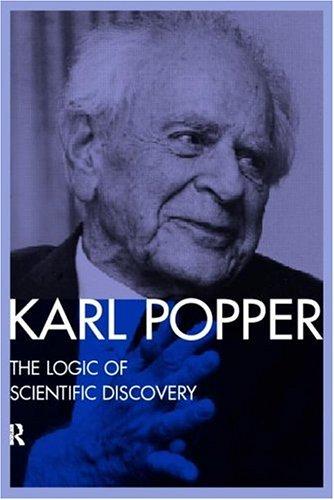
Key Principle
The Vienna Circle proposed that meaningful statements must be empirically verifiable. Popper shows this criterion is self-defeating for science: "It is not only metaphysics which is annihilated by these methods, but natural science as well. For the laws of nature are no more reducible to observation statements than metaphysical utterances" (Appendix *i). Universal laws cannot be derived from any number of observations, so verificationism classifies them as meaningless along with the metaphysics it aimed to eliminate.
Popper replaces the verifiability criterion of meaning with the falsifiability criterion of demarcation. The question is not "Is this statement meaningful?" but "Is this statement empirically testable?" Metaphysical statements may be meaningful and important (they have historically guided science) — they are simply not empirical.
Why This Matters
The positivist project sought to protect science from metaphysics by drawing a line around meaningful discourse. But the line was drawn in the wrong place: it excluded metaphysics at the cost of excluding science's own universal laws. Popper's critique is not a defense of metaphysics but a defense of science against well-intentioned allies who would destroy it with friendly fire.
This matters beyond philosophy of science because verificationist impulses recur wherever someone demands that a claim be "proven by data" before it is taken seriously. Popper's point: universal laws are never proven by data. The question is whether they are testable — whether data could, in principle, refute them.
Good Examples
The self-destruction of verificationism: "All metals expand when heated" is a universal law — unverifiable by any finite set of observations. Under the verifiability criterion, it is as meaningless as "the Absolute is lazy." Yet it is the paradigm case of a scientific statement. Falsifiability saves it: a single metal that fails to expand when heated would refute it (Chapter 1, Appendix *i).
Protocol sentences: Neurath and Carnap proposed "protocol sentences" — records of immediate observations — as the indubitable foundation of science. Popper rejects these as psychologism disguised as linguistic convention: grounding science in subjective reports ("I, Otto, observed X at time T") reintroduces the very subjectivity that objectivity was meant to eliminate (Chapter 5).
Metaphysics as scientifically fruitful: Popper does not dismiss metaphysics — he argues it often precedes science. "From Thales to Einstein, from ancient atomism to Descartes's speculation about matter... metaphysical ideas have shown the way" (Preface, 1959). Atomism was metaphysical for centuries before becoming testable. The question is not whether a statement is metaphysical but whether it is currently testable.
Counterpoints
Carnap's liberalized criterion: Later versions of verificationism (Carnap's "degree of confirmation") tried to weaken the criterion. Popper argues this retreat to probabilistic confirmation fails formally: degree of corroboration cannot be a probability (see The Formal Probability Calculus and Zero-Probability Proof), so the liberalized criterion inherits the same fatal flaw (Appendix *ix).
Popper's own proximity to positivism: Popper was sometimes grouped with the Vienna Circle despite his criticisms. He acknowledged intellectual debts (especially to discussions with members of the Circle) while insisting on the fundamental disagreement: demarcation, not meaning, is the central problem (Preface, 1959).
Quine's attack on the analytic-synthetic distinction: W.V.O. Quine later attacked positivism from a different angle — the very distinction between analytic and synthetic statements. Popper's critique is more targeted: he accepts that meaningful/meaningless is a real distinction but denies it is the right criterion for demarcating science.
Key Quotes
"In so far as a scientific statement speaks about reality, it must be falsifiable: and in so far as it is not falsifiable, it does not speak about reality." — Karl Popper, Appendix *i
"It is not only metaphysics which is annihilated by these methods, but natural science as well." — Karl Popper, Appendix *i
"From Thales to Einstein, from ancient atomism to Descartes's speculation about matter... metaphysical ideas have shown the way." — Karl Popper, Preface (1959)
Rules of Thumb
- Never demand that a theory be "proven by evidence" — universal laws cannot be verified, only tested
- Distinguish between "not scientific" (unfalsifiable) and "not meaningful" (nonsensical) — many important ideas are meaningful but untestable
- Metaphysical ideas can be precursors to science; don't dismiss them, but don't confuse them with testable theories
- When someone claims a theory is "supported by data," ask whether the data could also have refuted it — if not, the "support" is illusory
Related References
- Falsifiability and the Logic of Deductive Testing — Falsifiability as the replacement for verifiability
- The Formal Probability Calculus and Zero-Probability Proof — The formal refutation of Carnap's confirmation theory
- The Problem of the Empirical Basis — Why protocol sentences fail as science's foundation