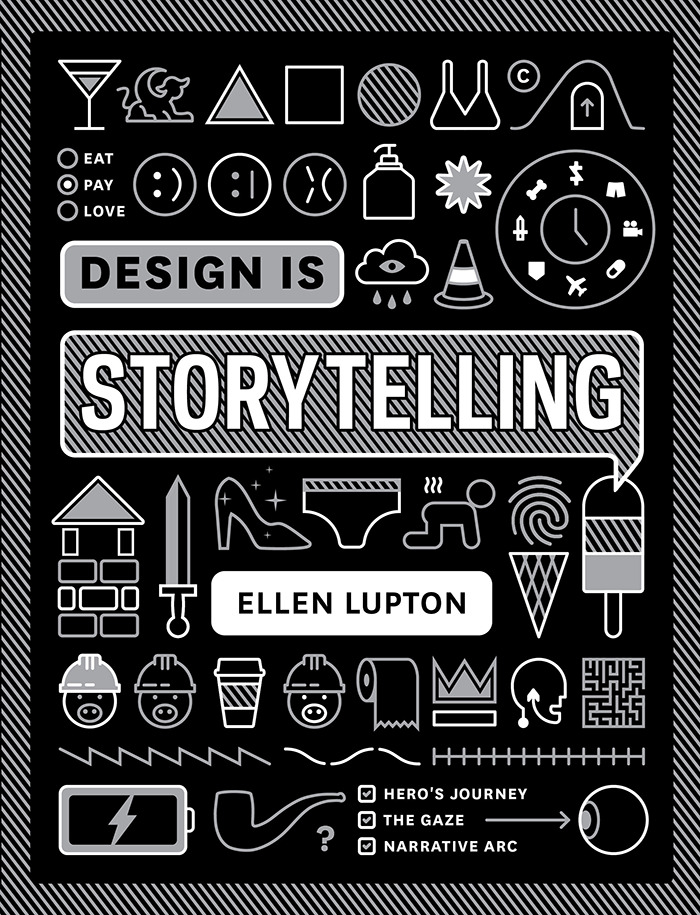
Key Principle
Freytag's five-part narrative arc — Exposition, Rising Action, Crisis, Climax/Resolution, Falling Action/Denouement — is not a literary metaphor borrowed for convenience. It is a structural tool for designing any experience that unfolds over time. The arc maps energy and tension, not just sequence. Neuroscience confirms the pattern is biological: brain activity during pleasurable experiences literally rises, peaks, and falls in the same shape as dramatic action. The arc's real power emerges through nesting — smaller arcs feed into larger ones, sustaining momentum across complex, multi-touchpoint experiences.
Why This Matters
Without narrative arc, designers optimize for a single frozen view instead of the unfolding journey. The result: artifacts that look good in a screenshot but fail in use. Flat experiences with no emotional shape leave users who complete tasks but feel nothing and retain nothing. The arc provides a shared vocabulary for pacing decisions across time-based experiences — services, spatial journeys, product interactions, onboarding flows. Skipping anticipation-building or omitting completion signals works against neurobiology. The arc is not optional; it is how brains process pleasure.
Good Examples
Roller coaster silent pause. A roller coaster designer inserted a silent pause just before the apex. The unexpected quiet triggers worry and suspense — the same mechanism filmmakers use before a jump scare. The causal chain: controlled delay, mounting uncertainty, amplified emotional release at climax. (Referenced from Joel Beckerman, Sonic Boom.)
Three Little Pigs as nested arcs. Each pig's house is a sub-arc (build, destroy) nested inside the overall story arc. The third sub-arc rises highest (brick house resists), producing the climax (wolf down chimney). This fractal quality is how complex experiences maintain momentum. (Act 1: Action, pp. 23)
Pleasure cycles (wanting/liking/learning-satiety). Three biological phases — Wanting (anticipatory desire: seeing, smelling, approaching), Liking (consummatory pleasure: eating, engaging, using), Learning/Satiety (post-peak resolution: fullness, completion). Food and sex cycles both follow this shape, confirming the arc is grounded in neurobiology. (Kringelbach, Stein, and Hartevelt, "The functional neuroanatomy of food pleasure cycles," Physiology and Behavior 106, 2012: 307-316.)
Micro-arcs in product design. Every user action — logging in, sharing content — is a scene in a larger narrative. A button click confirmed by a sound is a micro-arc. Design decisions about color, font, texture, and verbal language initiate dramatic arcs moving from desire to satisfaction. Completion signals (a beep, a click) mark falling action. (Act 1: Action)
Counterpoints
Resolution seeds new conflict. The WolfCam example: "Pig is forever free of wolves. But now, he has a mouse problem." Designed experiences should account for what comes after completion — the arc does not end cleanly in real systems.
Non-linear and flat designs. Not all experiences benefit from dramatic tension. Utility-first tools (a calculator, a transit schedule) may resist narrative shaping. The arc is most powerful for experiences where engagement and emotional payoff matter.
Cultural variation in arc shape. Freytag's pyramid derives from Western dramatic tradition (Aristotle's Poetics, 19th-century German theater). Kishōtenketsu and other non-Western narrative structures use contrast rather than conflict to create movement — the five-part arc is not universal.
The "mantle of bullshit" objection. Stefan Sagmeister charged that "storytelling" in design is overused branding for prestige. Lupton's counter: the connection is structural, not decorative. Both design and narrative build energy through rising action, reach a climax, and release tension. The pattern is functional.
Key Quotes
"A true narrative arc sweeps forward across time, pushing ahead with constant motion. It looks like a wave about to break, a pregnant package of stored energy." — Jack Hart, Storycraft (University of Chicago Press, 2011)
"Designers today produce more than logos and cereal boxes; they create situations that stimulate the mind and body over time." — Ellen Lupton (Act 1: Action)
"Surging from high to low and back again gives stories their satisfying sense of completion. Complex narratives contain stories within stories and conflicts within conflicts." — Ellen Lupton (Act 1: Action)
"Stories ask questions and delay the answers." — Ellen Lupton (Act 1: Action), summarizing Aristotle
Rules of Thumb
- Map intensity, not just sequence. When designing a flow, sketch the emotional energy curve (low to high to low) before laying out screens or steps.
- Nest small arcs inside big ones. Each micro-interaction (a confirmation sound, a loading animation) should have its own rise-peak-fall feeding the macro-journey.
- Build in a pause before the peak. Controlled delay amplifies emotional release — silence before the drop, a loading moment before the reveal.
- Match the three pleasure phases. Wanting (anticipation/teaser), Liking (core engagement), Learning/Satiety (completion signal). Skipping any phase weakens the experience.
- Design for what comes after resolution. Completion is a transition, not an endpoint. Seed the next arc or the user disengages.
- Distinguish plot from story. The sitemap is the plot (logical structure); the user journey is the story (experiential sequence). Build both — they are not the same thing.
- Ensure sufficient magnitude. Trivial problems yield trivial experiences. If the transformation a product enables is small, no amount of craft sustains engagement.
Related References
- Design Is Storytelling: The Three-Act Framework - overarching thesis
- Hero's Journey and Spatial Design - spatial application of narrative arc
- Emotional Journey Mapping and Memory Design - emotional dimension of arc