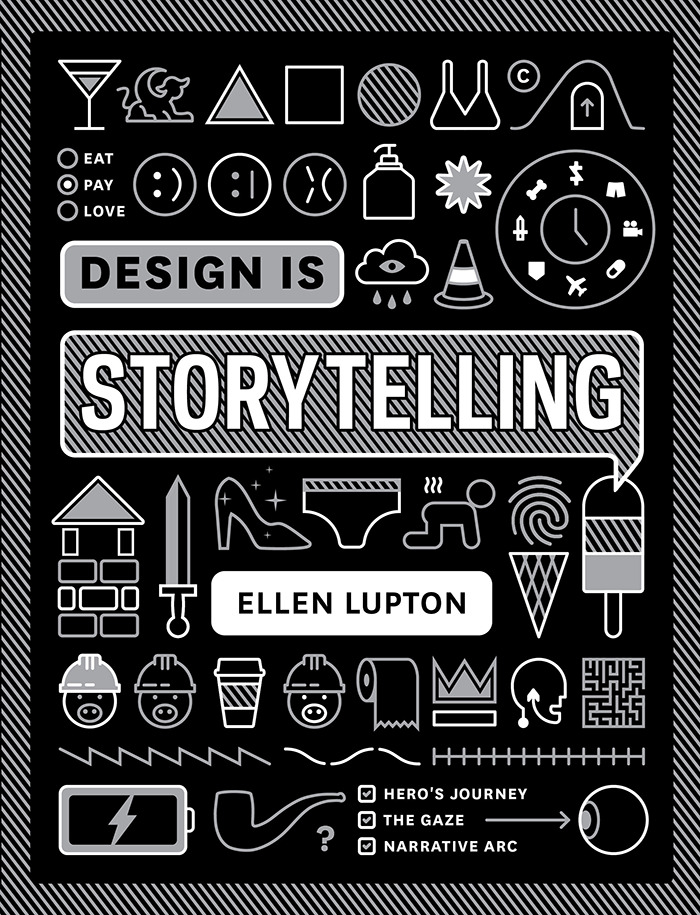
Key Principle
Knowing storytelling frameworks is not the same as using them. This playbook sequences the book's operational tools into a repeatable design process: storyboard to pre-visualize action, emotional journey map to plot feeling over time, writing clinic to sharpen language, storytelling checklist as a quality gate, and project generator to force unfamiliar method/subject pairings. The sequence matters -- action structure first, emotional architecture second, verbal and sensory polish last.
Why This Matters
Designers often learn individual techniques but fail to apply them systematically. A storyboard without an emotional layer produces functional but forgettable sequences. Strong emotional design undercut by weak copy loses its power at the surface. The storytelling checklist exists precisely to catch these gaps before shipping, interrogating a project across all three dimensions -- Action, Emotion, Sensation -- so that no single dimension is neglected.
Good Examples
Storyboarding as Pre-Visualization -- A six-frame storyboard is the ideal constraint for mastering essential narrative form. It forces selection of only the most critical moments. UX designers produce wireframes and flats following the same sequential logic -- from an inciting incident or call to action through the steps required to achieve a goal. Mengyan Li's cyclist frustration storyboards demonstrate how emotional specificity (facial expressions, situational detail) makes abstract user pain points viscerally concrete (Act 1: Action, p. 38).
Emotional Journey Mapping -- User feelings plotted as highs and lows across a timeline of touchpoints. A bus-trip journey arcs from excitement through frustration to delight to decline; each valley is an intervention point. A course enrollment journey pairs each frustration (financing, full class) with a designed recovery (counselor intervention, alternatives). The Fairy Godmother App reframes Cinderella as a customer satisfaction map where ratings soar at delivery, crash at midnight, and recover via GPS lost-and-found.
Writing Clinic in Action -- Six rules target specific ways prose weakens storytelling. The verb escalation example is definitive: "was" (weak) < "waited" (strong) < "smoked his last Marlboro" (strongest -- embeds character and stakes). Under Armour's CEO stopped a copywriter for using "participate" instead of "compete" on a registration page; one word violated the brand's narrative of athletic intensity.
Project Generator Matrix -- Twelve prompt categories (Resource Sharing, Visual Instructions, Spatial Path, etc.) each paired with topic variations and tool references keyed to specific book methods by page number. This converts the book from passive reference into a generative system, forcing cross-pollination between subject matter and storytelling methods.
Counterpoints
- Storyboards that capture only functional steps and not emotional reality fail as empathy tools. Without facial expressions, body language, and situational detail, they reduce to wireframe sequences.
- The writing rules are not absolute. "Show, don't tell" can produce overwritten prose if applied without judgment. The governing principle is clarity, not cleverness.
- The project generator is combinatorial, not prescriptive. Not every method/subject pairing will produce strong results -- the value is in forcing designers out of default-to-familiar approaches.
- The storytelling checklist is a quality gate, not a creativity generator. Use it to audit finished work, not to initiate it.
Key Quotes
"The purpose of a storyboard is to explain action with a concise series of pictures." -- Ellen Lupton (Act 1: Action, p. 34)
"Stories thrive on obstacles, delays, and moments of revelation. A story is a winding path, not a straight and efficient line." -- Ellen Lupton (Act 1: Action, p. 36)
"Every sentence tells a story. Every sentence has a hero and an action. A sentence can sizzle with suspense or wilt with fatigue." -- Ellen Lupton (p. 154)
"Writers must learn to slash -- without remorse -- their most beloved passages of pampered prose." -- Ellen Lupton (p. 155)
Rules of Thumb
- Sequence your tools: Storyboard (action structure) before emotional journey map (feeling over time) before writing clinic (verbal surface). Do not polish copy before the arc is sound.
- Six frames maximum for initial storyboards. If you cannot tell the story in six frames, you have not identified the essential beats.
- Map emotions, not just tasks. If your journey map has no Y-axis for feeling, it is a task flow, not an emotional journey.
- Apply the Storytelling Checklist as a three-pass audit: first Action (Does it depict change? Is there a call to action?), then Emotion (What emotions at what points? Where are pain points and rewards?), then Sensation (Are Gestalt principles used? Are non-visual senses engaged?).
- Use the five writing rules as an editing pass: be concrete, use active voice, use strong verbs, show don't tell, cut nominalizations and filler. Then kill your darlings -- wait days, then cut ruthlessly.
- Use the project generator when stuck. Pick an unfamiliar prompt category and pair it with a method you have not tried. The combinatorial structure prevents repetition.
- Reverse-outline finished work: extract headings after writing. If headings are not parallel or do not tell a coherent story, the material needs restructuring.
Related References
- Storyboard Tool and Five Ingredients of Story -- storyboard technique and the five ingredients of a complete story
- Emotional Journey Mapping and Memory Design -- peak-end rule, story shapes, and emotional journey mapping in depth
- Narrative Arc and Freytag's Pyramid -- Freytag's Pyramid and dramatic arc as structural foundation
- Design Is Storytelling: The Three-Act Framework -- the three-act structure (Action, Emotion, Sensation) that the checklist operationalizes