Writing the Ghost: Modes and Methods
- Impact: HIGH
- Tags: ghosts, taxonomy, circular-architecture, intertextual-haunting, stasis, witnessing
- Chapter: Seeing Things and Saying Things, Haunting the Text
Key Principle
Ghost fiction requires two simultaneous decisions: what kind of presence the ghost will have, and what structural shape the haunting will take. Ashworth provides a taxonomy of ghost modes — five distinct ways a ghost can exist in a story, each demanding different technical solutions. Ward provides the architecture — circular, repetitive, intertextual — that houses those ghosts formally. Together they argue that the ghost is not a creature but a structural position: whoever is unseen, unheard, or ungrieved occupies it, and the story's form must enact the haunting rather than merely describe it.
Why This Matters
Ghost stories fail when the writer treats the ghost as a special effect rather than a structural commitment. Choosing a ghost mode determines point of view, the story's relationship to doubt, and whether the ghost drives plot or dissolves it. Choosing a ghost architecture determines whether the story moves forward or circles, whether resolution is possible, and how deeply the reader is trapped inside the haunting. The two decisions are inseparable: a visible ghost in a linear plot is a character; a visible ghost in a circular architecture is a haunting.
Ashworth's Five Ghost Modes
Visible Ghost: Broadcasts evidence of death and life simultaneously — "persistently present as a way of reminding us of its incurable absence." Technical challenge: finding "the sweet spot between recognition and surprise, portrait and plot." Work with cliche through "acknowledgement without obedience" — use familiar ghost signifiers but make them do double duty. Example: Beetlejuice's Miss Argentina with bandaged wrists and pageant sash. (Chapter: Writing the Ghost — Jenn Ashworth)
Traces (Invisible Ghost): Ghost reduced to indirect evidence — mist on mirrors, doors that won't close, muddy footprints. Traces "allow the possibility of doubt to emerge as an opportunity" because every sign permits rational explanation. The poltergeist variant makes "the homely become not only unhomely but actively hostile." Example: Gilman's "The Yellow Wallpaper." (Chapter: Writing the Ghost — Jenn Ashworth)
Ghost as Agent: Ghost carries messages, seeks revenge, enacts trauma. Must have "purpose and motivation" embedded in cause and effect. Key question: "What action, or understanding, occurs because of the haunting — and what change does that trigger?" Ghosts who complete their function tend to disappear. (Chapter: Writing the Ghost — Jenn Ashworth)
Ghost POV / Ghost as Narrator: Writing from inside the ghost. Usually "only ever trying to tell us something about what it is to be a person." Practical starting point: list the ghost's physical capabilities — can it feel cold, is it hungry, can it hear and be heard? These constraints generate the voice. (Chapter: Writing the Ghost — Jenn Ashworth)
Ghost Who Doesn't Know It's Dead: Subset of the epiphany story. "The shock comes not from the death or the haunting, but from the sickly realisation that we too have been dead to the world all along." Variant: the ghost-narrator who knows but withholds from the reader (Muriel Spark's "The Portobello Road"). (Chapter: Writing the Ghost — Jenn Ashworth)
Ward's Circular Ghost Architecture
Ward argues that ghosts embody not death but the horror of arrested time — "sterile, futile and without result." This reframes the writer's task: if ghosts are frozen time, then circular structure, repetitive imagery, and self-enclosing loops become the formal equivalent of haunting. Four interlocking components:
Bookending / Circularity: Opening and closing with the same language or image, denying cathartic resolution. Hill House opens and closes with "whatever walked there, walked alone," turning the novel into a circle where "instead of progress, we have achieved only entropy." (Chapter: Haunting the Text — Catriona Ward)
Escalating Repetition: Words and motifs repeat with slight variation, each iteration taking "reality ever so slightly further off kilter." Ward traces Jackson's word-clusters: "coming" shifts to "bang" and "knock," then to "cold" — each cluster a different movement of the scene's escalation, building with "almost musical precision." (Chapter: Haunting the Text — Catriona Ward)
Nested Framing: Stories-within-stories create "a fractal set of Chinese boxes" where physical and textual boundaries become unstable. In Maturin's Melmoth the Wanderer, layers of narration model how ghost stories travel through literary history. (Chapter: Haunting the Text — Catriona Ward)
Prophetic Echoing: Early scenes prefigure later ones. The old woman Eleanor knocks down prefigures Eleanor's own fate. The reader recognizes the pattern only in retrospect, producing the retrospective dread that is the ghost story's signature affect. (Chapter: Haunting the Text — Catriona Ward)
Intertextual Haunting
Ghost stories are "engaged in a frenetic discussion among themselves and with their predecessors." Each text is a "haunted edifice of meaning, holding its predecessors within its confines." Ward demonstrates specific chains: M.R. James's twin-bed scene in "Oh, Whistle" is seized and transformed by Jackson in Hill House's hand-holding scene — "These two scenes are a pair, like the twin beds." The absence established by one text is "horribly filled" by the next. For the practitioner: your ghost text will carry spectral traces of prior texts whether you intend it or not. (Chapter: Haunting the Text — Catriona Ward)
The Skeptical Witness
Ghost stories require a beholder who is inherently skeptical — this is structural, not stylistic. A world that accepts ghosts produces no horror; a world that excludes them cannot host the story. The ghost resides "in possibility, a lack of certainty, in omission, suggestion and obsessive echoing." Parkins declares himself "a convinced disbeliever in what is called the 'supernatural'" — making him "the perfect, classic subject for the ghostly experience." (Chapter: Haunting the Text — Catriona Ward)
Key Quotes
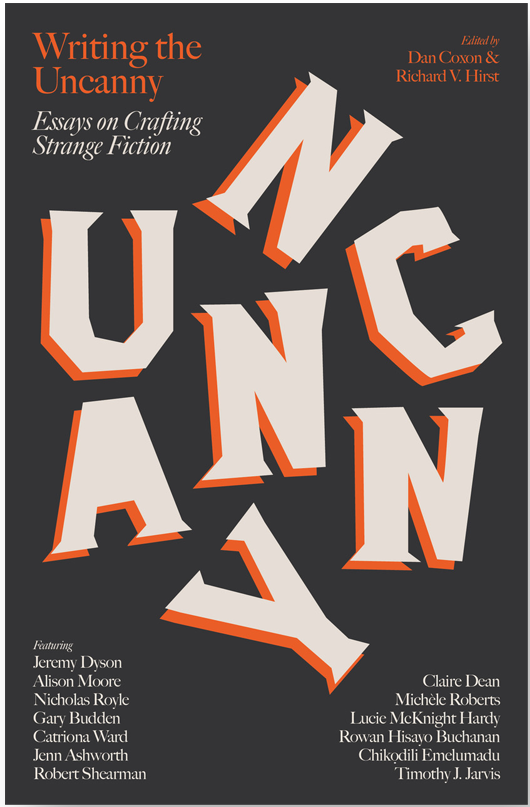
"The visible ghost is the epitome of there and not there. It broadcasts evidence of its death and something of the nature of its life. It is persistently present as a way of reminding us of its incurable absence." — Jenn Ashworth, "Writing the Ghost," Writing the Uncanny
"The shock in this type of story comes not from the death or the haunting, but from the sickly realisation that we too have been dead to the world all along and did not know it." — Jenn Ashworth, "Writing the Ghost," Writing the Uncanny
"Ghost stories in general, and particularly Hill House, are about iterations, the horror of returning, the wrongness of repetition, each one taking reality ever so slightly further off kilter, and yet also paralysing it." — Catriona Ward, "Haunting the Text," Writing the Uncanny
"It is in the might where ghosts reside — in possibility, a lack of certainty, in omission, suggestion and obsessive echoing." — Catriona Ward, "Haunting the Text," Writing the Uncanny
"Ghosts may inhabit the ether but they travel through narrative, transforming as they go." — Catriona Ward, "Haunting the Text," Writing the Uncanny
Rules of Thumb
- Choose the ghost mode before the plot. The mode determines POV, the story's relationship to doubt, and whether the ghost drives or dissolves narrative. If your ghost is Traces, you are writing a story about uncertainty; if Agent, about consequence. (Ashworth)
- "Acknowledgement without obedience" for cliche. Use familiar ghost signifiers — the cold room, the figure at the window — but make each do double duty as biography and plot. Do not pretend the conventions do not exist; work through them. (Ashworth)
- "How" reveals "why." The technical choice — visible or invisible, omniscient or limited, embodied or disembodied — is not decoration on meaning. It is meaning. "The central task — to find a way to use the 'how' to reveal the 'why' — still stands." (Ashworth)
- Circularity requires escalation. Circular structure risks tedium. Control it through word-substitution and rhythmic variation — each return must take reality slightly further off kilter. Without precise escalation, repetition becomes redundancy. (Ward)
- Build in a skeptical witness. Without rational resistance, the supernatural has nothing to work against. The narrator or a key character must occupy the position of disbeliever so the reader shares the journey into dread. (Ward)
- Comfort, then revelation. Jackson's signature: restore safety first — "she saves us — the lights come on, our heart rate slows" — then deliver the true horror. The worst discovery follows relief, not escalating threat. (Ward on Jackson)
- The ghost is a structural position, not a creature. Whoever is unseen, unheard, or ungrieved occupies it. Morrison's Beloved shows the haunting will find a form — exorcise the ghost and a flesh-and-blood arrival replaces it. McGregor's Even the Dogs inverts: characters ghostly in life become present only in death. (Ashworth)
Related References
- negative-space-toolkit.md — McKnight Hardy's withholding techniques; the mechanism underlying Traces mode and the skeptical witness's incomplete perception
- comedy-and-uncanny.md — Shearman's escalation through comedy shares the same engine as Ward's musical repetition: incremental variation within a pattern, targeting different affects
- domestic-horror.md — Jackson's Hill House as architecture doing psychological work; the house as formal container for the circular ghost structure