Key Principle
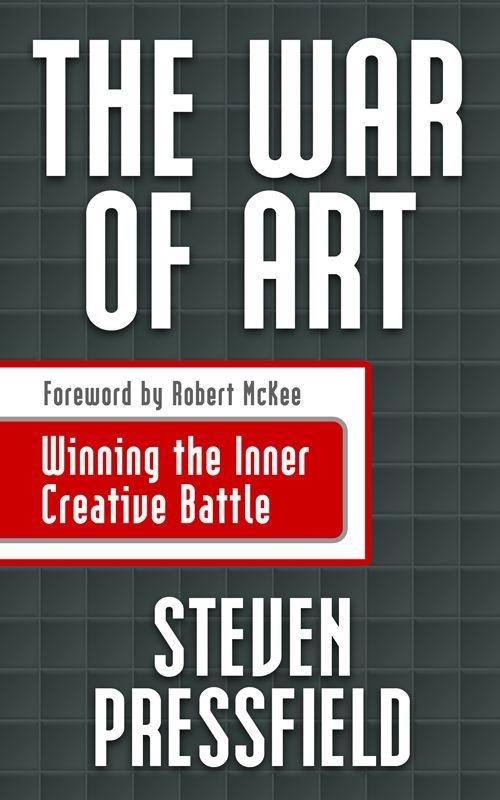
Every creator operates from one of two orientations: territory or hierarchy. In a hierarchy, self-worth is indexed to rank -- approval, status, competitive positioning against others. In a territory, self-worth comes from the work itself through a closed feedback loop that requires no external input. Pressfield draws this distinction from biology: "In the animal kingdom, individuals define themselves in one of two ways -- by their rank within a hierarchy (a hen in a pecking order, a wolf in a pack) or by their connection to a territory (a home base, a hunting ground, a turf)" (Book One, Territory versus Hierarchy). The distinction is not a preference or personality type. It is a structural orientation that determines whether authentic work is even possible.
Hierarchical orientation is structurally fatal to creative work because it directs attention outward -- toward reception, market signals, and status -- which cuts the artist off from the one source that matters: the interior. The hack is the clearest expression of this failure. The hack's problem is not cynicism but fear: "The hack condescends to his audience. He thinks he's superior to them. The truth is, he's scared to death of them or, more accurately, scared of being authentic in front of them" (Book Three, Section 96). Hackwork is therefore not a neutral commercial strategy but a specific manifestation of Resistance wearing a business suit.
Territorial orientation is defined by five testable properties. An activity qualifies as a territory only if it: (1) provides sustenance independent of outcome, (2) sustains without external input through a closed feedback loop, (3) can only be claimed alone, (4) can only be claimed by work, and (5) returns exactly what you put in. Property 2 is the critical filter -- it is what makes territorial orientation structurally independent of hierarchy.
Why This Matters
Without this distinction, a creator may possess genuine talent and professional discipline yet produce hollow work, because the orientation is wrong -- the work is calibrated to reception rather than truth. The misdiagnosis is especially dangerous because hierarchical orientation can look like professionalism. The hack who studies the market, writes to trends, and ships on time appears disciplined. But discipline in service of hierarchical orientation only accelerates the production of inauthentic work.
Hierarchy also breaks at scale. Humans evolved for tribes of roughly 20 to 800 individuals. In mass society, the hierarchically oriented person "feels overwhelmed, anonymous... submerged in the mass" and resorts to futile status signaling -- "flashing badges of status... and wondering why nobody gives a shit" (Book One, The Artist and the Hierarchy). Hierarchical orientation is not merely creatively fatal; it is structurally dysfunctional in the modern world.
The territory framework matters because it makes the abstract concept falsifiable and actionable. A creator can audit any activity against the five properties, apply the two diagnostic tests, and get a clear binary answer about their orientation -- rather than relying on vague aspirations about "doing it for the love of it."
Good Examples
The swimmer's closed loop: "The swimmer who towels off after finishing her laps feels a helluva lot better than the tired, cranky person who dove into the pool thirty minutes earlier." The sustenance comes from the activity itself, not from a coach's approval or a race result. This is territory in its purest form. (Book Three, Section 97)
Van Gogh's territorial integrity: Van Gogh "produced masterpiece after masterpiece and never found a buyer in his whole life." His work was entirely territorial -- sustained by the painting itself, not by market validation. External reception is unreliable as a creative compass; territory is the only investment that always returns full value. (Book One, The Artist and the Hierarchy)
Pressfield's Bagger Vance: Pressfield's most commercially and critically successful novel came from trusting his own creative impulse rather than market calculation: "I trusted what I wanted, not what I thought would work." Territorial orientation is not anti-commercial -- it simply refuses to let commercial prediction override authentic creative impulse. (Book Three, Section 96)
The four markers of hierarchical orientation: (1) Competitive positioning against those above and below. (2) Rank-based self-evaluation -- happiness indexed to position. (3) Rank-based treatment of others -- relating to people based on status only. (4) Other-directed action -- "act for others, dress for others, speak for others, think for others." If any of these describe your creative behavior, the orientation is hierarchical. (Book One, Territory versus Hierarchy)
Counterpoints
Territorial orientation is not anti-commercial: Pressfield does not prescribe ignoring the market as ascetic purity. The insight is that the market cannot be reliably predicted, while authentic creative impulse is the only reliable guide. Commercial success may follow territorial work -- it simply cannot be the compass.
Contempt for failure cannot be willed: Contempt for failure is not bravado or a personality trait to adopt. It is the natural byproduct of genuine territorial engagement. If sustenance truly comes from the work itself, then external reception genuinely does not matter. You cannot fake this -- you can only deepen territorial engagement until contempt for failure emerges organically. Attempting to perform contempt for failure while operating hierarchically produces brittle posturing, not resilience.
The vehicle frame carries metaphysical weight: Pressfield's claim that "the artist and the mother are vehicles, not originators" provides philosophical justification for territorial orientation but requires accepting a transpersonal creative source. Creators who reject this metaphysics can still use the territory framework on purely pragmatic grounds -- intrinsic motivation produces more authentic work -- without endorsing the vehicle metaphor.
Key Quotes
"In the animal kingdom, individuals define themselves in one of two ways -- by their rank within a hierarchy (a hen in a pecking order, a wolf in a pack) or by their connection to a territory (a home base, a hunting ground, a turf)." -- Steven Pressfield, Book One, Territory versus Hierarchy
"To labor in the arts for any reason other than love is prostitution." -- Steven Pressfield, Book One, The Artist and the Hierarchy
"The hack condescends to his audience. He thinks he's superior to them. The truth is, he's scared to death of them or, more accurately, scared of being authentic in front of them." -- Steven Pressfield, Book Three, Section 96
"A territory doesn't give, it gives back." -- Steven Pressfield, Book Three, Section 97
"Every erg of energy you put in goes infallibly into your account. A territory never devalues. A territory never crashes." -- Steven Pressfield, Book Three, Section 97
"Contempt for failure is our cardinal virtue." -- Steven Pressfield, Book Three, Section 100
Rules of Thumb
- Apply the Anxiety Test: "If I were feeling really anxious, what would I do?" If the answer is to seek reassurance from others, the orientation is hierarchical. If the answer is to go do the work, it is territorial.
- Apply the Last Person on Earth Test: "If I were the last person on earth, would I still do it?" Yes means territorial. No means hierarchical. This eliminates all possible external audience and isolates intrinsic motivation.
- Audit any creative activity against the five territory properties. If property 2 fails -- if sustenance requires external input like praise, sales, or followers -- the orientation is hierarchical regardless of how it feels.
- When work feels hollow despite talent and discipline, suspect an orientation error before suspecting a skill deficit. The problem may not be how you work but why you work.
- Do not confuse activities that feel sustaining because of external praise with activities that are sustaining because of intrinsic closed-loop feedback. Property 2 catches this confusion.
- Contempt for failure is a diagnostic, not a prescription. If you cannot honestly say you hold failure in contempt, deepen your territorial engagement rather than performing indifference you do not feel.
- Hackwork is Resistance, not strategy. Market-driven creative decisions made from fear of authentic expression will produce work that fails on its own terms -- "even if you succeed, you lose."
Related References
- Resistance: The Core Framework - Resistance is the force that pushes creators toward hierarchical orientation; territory is the structural antidote
- Turning Pro: The Professional Mindset - The professional operates territorially by definition; daily discipline oriented toward the work itself is the practical expression of territorial orientation
- Identity Architecture: Insulating Against Resistance - The authentic self is pre-given, not constructed; territorial orientation keeps the channel to this self open, while hierarchy blocks it