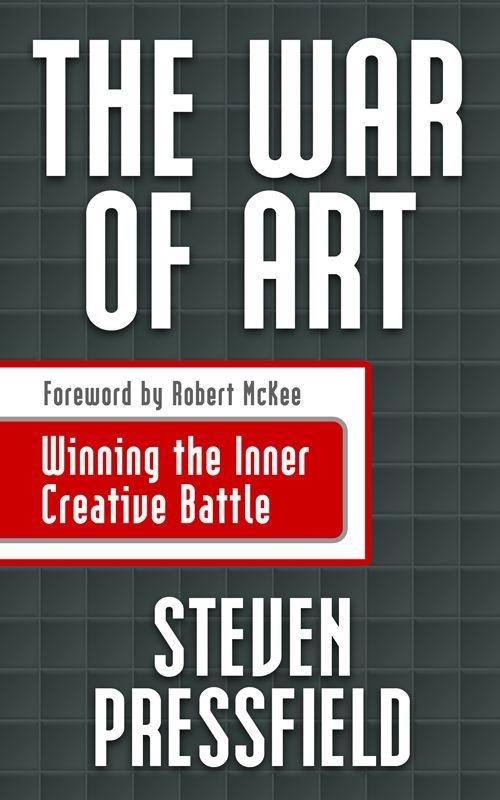
Key Principle
The professional mindset is not a talent or personality trait but a behavioral operating system that defeats Resistance by eliminating the decision points where it intervenes. Turning pro means redirecting the discipline you already demonstrate at your day job toward the work that actually matters. The amateur thinks about the work; the professional shows up and does it -- on a fixed schedule, through misery, detached from outcomes, regardless of fear.
Why This Matters
Resistance cannot be defeated by understanding it (rationalization corrupts thinking itself -- see the deception stack from Book One). The only cure is behavioral: a set of daily practices that bypass Resistance's mechanisms entirely. The professional's fixed schedule eliminates the "Should I work today?" decision point where rationalizations intervene. Emotional detachment from output removes the existential stakes that amplify fear into paralysis. Misery tolerance reclassifies suffering from a warning signal into an operating cost. Together, these form a three-layer protocol: fear-starvation (showing up denies Resistance its fuel), rationalization-bypass (no decision point means no opening for excuses), and identity-defusion (no fused identity means failure cannot threaten the self).
Good Examples
- The Maugham Principle: Somerset Maugham said, "I write only when inspiration strikes. Fortunately it strikes every morning at nine o'clock sharp." Discipline is the cause; inspiration is the effect -- never the reverse.
- The Professional Transfer: Everyone already acts like a professional at their day job -- showing up daily, persisting through difficulty, tolerating boredom, accepting judgment. The gap is not competence but allocation. If you apply professional discipline to your paycheck job but amateur discipline to your calling, which one do you actually love more?
- King Kong Lives: Pressfield's film bombed catastrophically -- reviews said "we hope these are not their real names, for their parents' sake." He identifies this as the moment he became a pro. Professional status is confirmed by surviving real failure and continuing to work, not by achieving success.
- The Caddie at Prestwick: Pressfield complains about the wind on the golf course. The caddie replies, "Ye've got t' play th' wind." The professional collapses "fair" and "unfair" conditions into a single category: terrain to navigate.
- Henry Fonda: Vomited before every stage performance for his entire career, then marched onstage anyway. Fear never disappears; it recedes only through action, not before it.
Counterpoints
- "I don't want to ruin something I love by making it a job." Pressfield inverts this: the amateur does not love the game enough. If he did, he would not pursue it as a sideline. Treating sacred work as casual is not noble restraint -- it is insufficient commitment that keeps Resistance permanently in play.
- "Real artists wait for inspiration." The amateur who waits for inspiration enters infinite deferral. The professional who shows up on schedule reliably produces inspiration through the act of working. Waiting is not neutral passivity; it is capitulation to Resistance.
- "This work is too important to approach imperfectly." Reverence and preciousness are themselves forms of Resistance. The professional adopts a mercenary posture -- treating sacred work as daily labor -- precisely because too much love causes paralysis. Detachment is a tool, not indifference.
- "I need better conditions before I can do my best work." The field is level only in heaven. Conditioning work on ideal conditions means conditioning work on never. Every demand for fairness before working is an indefinite postponement disguised as a reasonable standard.
Key Quotes
"In my view, the amateur does not love the game enough. If he did, he would not pursue it as a sideline, distinct from his 'real' vocation." -- Steven Pressfield, Section 51
"By performing the mundane physical act of sitting down and starting to work, he set in motion a mysterious but infallible sequence of events that would produce inspiration, as surely as if the goddess had synchronized her watch with his." -- Steven Pressfield, Section 52
"The artist committing himself to his calling has volunteered for hell, whether he knows it or not." -- Steven Pressfield, Section 54
"Resistance knows that the amateur composer will never write his symphony because he is overly invested in its success and overterrified of its failure. The amateur takes it so seriously it paralyzes him." -- Steven Pressfield, Section 55
"Too much love can make him choke. The seeming detachment of the professional, the cold-blooded character to his demeanor, is a compensating device to keep him from loving the game so much that he freezes in action." -- Steven Pressfield, Section 56
"The professional knows that Resistance is like a telemarketer; if you so much as say hello, you're finished. The pro doesn't even pick up the phone." -- Steven Pressfield, Section 61
"The field is level, the professional understands, only in heaven." -- Steven Pressfield, Section 62
"He knows that by toiling beside the front door of technique, he leaves room for genius to enter by the back." -- Steven Pressfield, Section 65
Rules of Thumb
- Action before inspiration. Sit down at a fixed time every day. Inspiration follows engagement; it never precedes it.
- Zero tolerance for excuses. One yielded excuse lowers the threshold for the next. The professional refuses before the argument is even heard -- "the pro doesn't even pick up the phone."
- Detach identity from output. You are not your work. When failure means "this draft didn't work" rather than "I am worthless," Resistance loses its primary leverage.
- Expect and endure misery. Isolation, rejection, self-doubt, and humiliation are the universal entry fee, not personalized warnings. Misery tolerance is a learnable skill.
- Plan for endurance, not sprints. Double the expected time and cost. Resistance weaponizes enthusiasm by encouraging unsustainable intensity that leads to crash and abandonment.
- Treat conditions as terrain. Never wait for fairness, perfect circumstances, or cleared schedules. Navigate what exists.
- Master technique. Craft mastery creates the conditions for inspiration to arrive and find a prepared vessel. The false dichotomy between craft and genius dissolves: technique is inspiration's prerequisite.
- Measure love by commitment. The proof of how much you love the work is not how you feel about it but whether you show up for it daily with professional discipline.
Related References
- Rationalization and the deception stack (Book One, Sections 46-48) -- explains why the cure must be behavioral rather than cognitive
- Resistance as fear (Book One) -- the professional mindset is the operational counter-protocol to fear-based Resistance
- The Muse framework (Book Three, previewed) -- creative grace rewards disciplined suffering; the Muse "favors working stiffs" and "hates prima donnas"