ARG Design
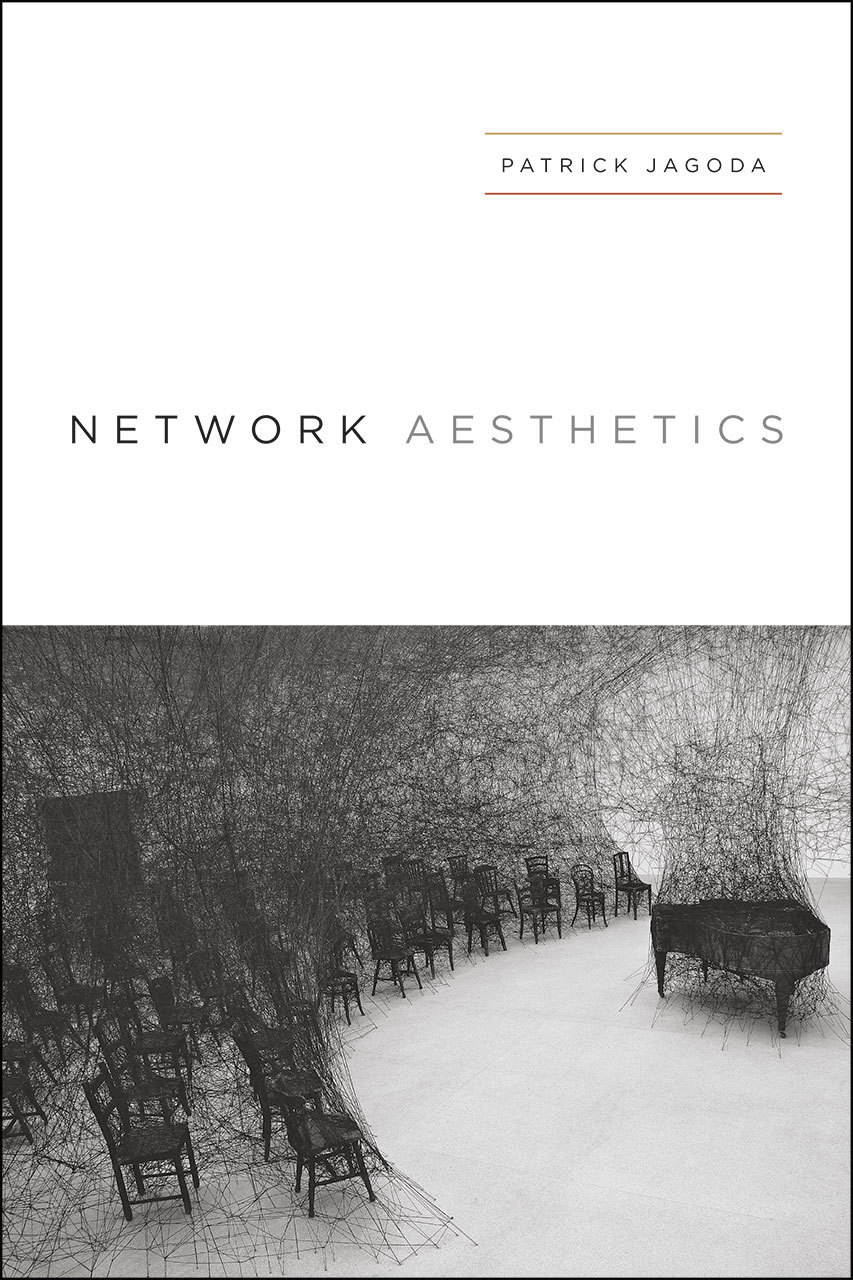
Network Aesthetics
Patrick Jagoda 2016 12 references
Patrick Jagoda's framework for how aesthetic works — novels, films, TV, games, and ARGs — constitute irreplaceable modes of sensing network culture, distributed agency, and the network imaginary.
media-theory network-culture aesthetics alternate-reality-games digital-humanities affect-theory critical-theory
Overview
The Core Framework
- Aesthetic works don't merely represent networks — they constitute irreplaceable modes of sensing them
- Five aesthetic modes: maximal (novels), emergent (films), realist (TV), participatory (games), improvisational (ARGs)
- Nonsovereignty — being ungoverned by distributed agency — is the analytical starting point, not a failure state
- Ambivalence as extreme presence: total engagement with networks while refusing quick resolution
- Network form is a historically contingent episteme, not a natural structure; it will be succeeded
Quick Lookup
| Situation | Do This | Avoid This |
|---|---|---|
| Analyzing a network-themed novel | Read for cognitive mapping, agnotology, tactical belatedness | Reduce to plot summary or thematic content |
| Analyzing a multi-strand film | Distinguish emergence from conspiracy at the formal level | Assume complex structure = political sophistication |
| Analyzing TV serial drama | Apply ANT's "soft eyes" — follow nonhuman actors too | Focus on individual character arcs over systemic form |
| Analyzing multiplayer games | Track flux vs. flow, disjunctive multiplay, extimacy | Treat player experience as isolated from network affect |
| Analyzing ARGs | Look for production-of-belief, nonsovereign failure | Evaluate as viral/spreadable success metrics |
| Encountering network totality | Practice ambivalence as extreme presence | Choose between celebration and negation |
| Explaining "connection" today | Start with network imaginary, not technology | Treat connectivity as neutral or progressive |
The Key Insight
"Only connect! … But in the early twenty-first century, Forster's exhortation seems not merely naive but anachronistic … connection is less an imperative than it is the infrastructural basis of everyday life." — Patrick Jagoda, Introduction: Network Aesthetics
References
No references match your search.