Key Principle
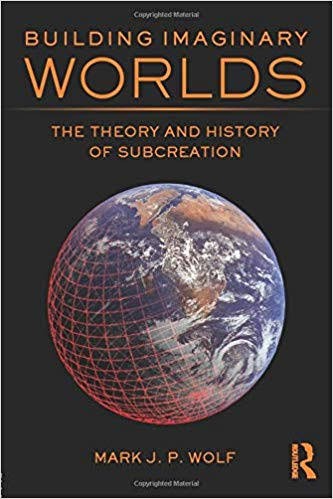
Imaginary worlds evolved across three millennia through a consistent pattern: as real-world knowledge expanded, subcreators were forced into progressively more remote settings (earthly islands, underground realms, other planets, other dimensions), each relocation generating new feasibility constraints that deepened world-building. The structural trajectory moves from journey-dominant narratives (travel to and from the world is the primary content) through world-emergent stories (extended stays allow detailed description) to world-dominant fiction (the journey occurs entirely within the secondary world, and the protagonist is an inhabitant rather than a visitor). "Eventually, when such framing devices were no longer needed and main characters could be inhabitants of a world instead of merely visitors to them, the main character's journey of exploration could take place entirely within the world itself" (Chapter 2).
Why This Matters
The history reveals that verisimilitude pressure -- the escalating standard set by audiences' experience of real-world representations -- is the primary engine driving world-building innovation. After Marco Polo, authority shifted from written authoritas to the credibility of the traveler-narrator. As travel writing grew more sophisticated, imaginary worlds had to keep pace. When mass media collapsed the experiential distance between real-but-distant places and fictional ones, secondary worlds accessed through media became epistemologically equivalent to foreign countries known only through media. "It is no accident that the increase in the popularity of secondary worlds coincided with the rise of the mediated Primary World; each encouraged the other" (Chapter 2).
The second major trajectory is the shift from character-based to world-based franchises. "World-based franchises could be extended beyond the lifespan and experience of any individual character, which gave them an advantage over character-based franchises" (Chapter 2). Characters are mortal containers; worlds are immortal platforms. This structural shift is the single most consequential change in twentieth-century franchise entertainment.
Good Examples
- The Odyssey as foundational model: Combined both major exposition strategies (traveler-protagonist discovering the world, and tales told by characters within the diegesis) while occupying a liminal status between real and imaginary geography -- scholarly debates about mapping its islands onto real locations have persisted from antiquity to the present (Chapter 2).
- Swift's Gulliver's Travels (1726): Set "a new standard for literary secondary worlds" by balancing fantastic elements with realistic description, including pseudo-scientific explanations (how Laputa flies) and the deliberate suggestion that more exists than what is shown -- engineering productive incompleteness centuries before Tolkien theorized it (Chapter 2).
- Tolkien's philological method: Beginning with language invention and deriving cultures, histories, and geography from invented languages. "Realizing that languages do not evolve in a vacuum, he decided to create the cultures from which his languages would come" (Chapter 2). Innovation was in degree and integration, not kind -- "it was the degree to which he did them that gave his world its rich verisimilitude" (Chapter 2).
- MMORPGs as ontological threshold: Persistent, unrepeatable, collaborative worlds that "cannot be seen or experienced exhaustively, making them even more like the Primary World, of which only a tiny fraction can be known and experienced during one's lifetime" (Chapter 2).
Counterpoints
- Complexity does not guarantee imitation: Despite McCay's groundbreaking visual world-building in Little Nemo in Slumberland, it inspired no imitators. Fantasy/SF strips never exceeded 5% of total comic output. Depth can emerge from sustained iteration (Gasoline Alley) as readily as from intentional design (Chapter 2).
- Utopia-dystopia is relative, not inherent: Plato's Kallipolis mandates state-controlled art -- a condition many would consider dystopic despite being presented as ideal. Renaissance utopias presented slavery and execution for drunkenness as features of ideal societies (Chapter 2). Subcreated societies are ideological mirrors exposing the assumptions of their creators.
- The medium of origin constrains what kinds of worlds are conceivable: Image-first worlds foreground space and architecture; text-first worlds foreground history and language. "Before the twentieth century, imaginary worlds were largely a literary experience. Words were the building blocks from which worlds were made" (Chapter 2). The shift to image-originated worlds changed conception, not just delivery.
Key Quotes
"Fantastic places have always gained more credibility by being set in remote or little-known areas of the world where their existence is harder to disprove." -- Mark J. P. Wolf, Chapter 2
"I fall back on falsehood -- but falsehood of a more consistent variety; for I now make the only true statement you are to expect -- that I am a liar." -- Lucian of Samosata, quoted in Chapter 2
"It is no accident that the increase in the popularity of secondary worlds coincided with the rise of the mediated Primary World; each encouraged the other, in a way, and the representation of the Primary World became a way to benchmark the representation of secondary worlds." -- Mark J. P. Wolf, Chapter 2
"These worlds, then, are not only quantitatively different from earlier ones, but qualitatively different, in that the audience has an experience of a world which, like the Primary World, not only achieves saturation of mind, but virtually exceeds the audience's ability to encounter it all in its entirety." -- Mark J. P. Wolf, Chapter 2
Rules of Thumb
- Verisimilitude standards are relative, not absolute -- set by whatever fidelity audiences currently expect from representations of reality
- Worlds that respond to characters possess narrative gravity; passive-tourism worlds are forgotten (Dorothy changes Oz; Dot and Tot observe Merryland)
- The generative seed of a world need not be plot or character -- it can be language, geography, physics, or social structure; the substrate determines the kind of world you get
- Low-cost prototyping paradoxically generates the most ambitious worlds (pulp stories as seeds for novel series and franchises)
- When a secondary world exceeds any individual's capacity to experience it fully, it acquires a property previously unique to reality: inexhaustibility
Related References
- Transmedial Growth and Adaptation - the five media windows through which worlds achieve ontological independence
- Circles of Authorship and Degrees of Canonicity - how worlds outgrow single authors across circles of authorship
- Subcreation within Subcreated Worlds - diegetic subcreation as the tradition's self-aware culmination