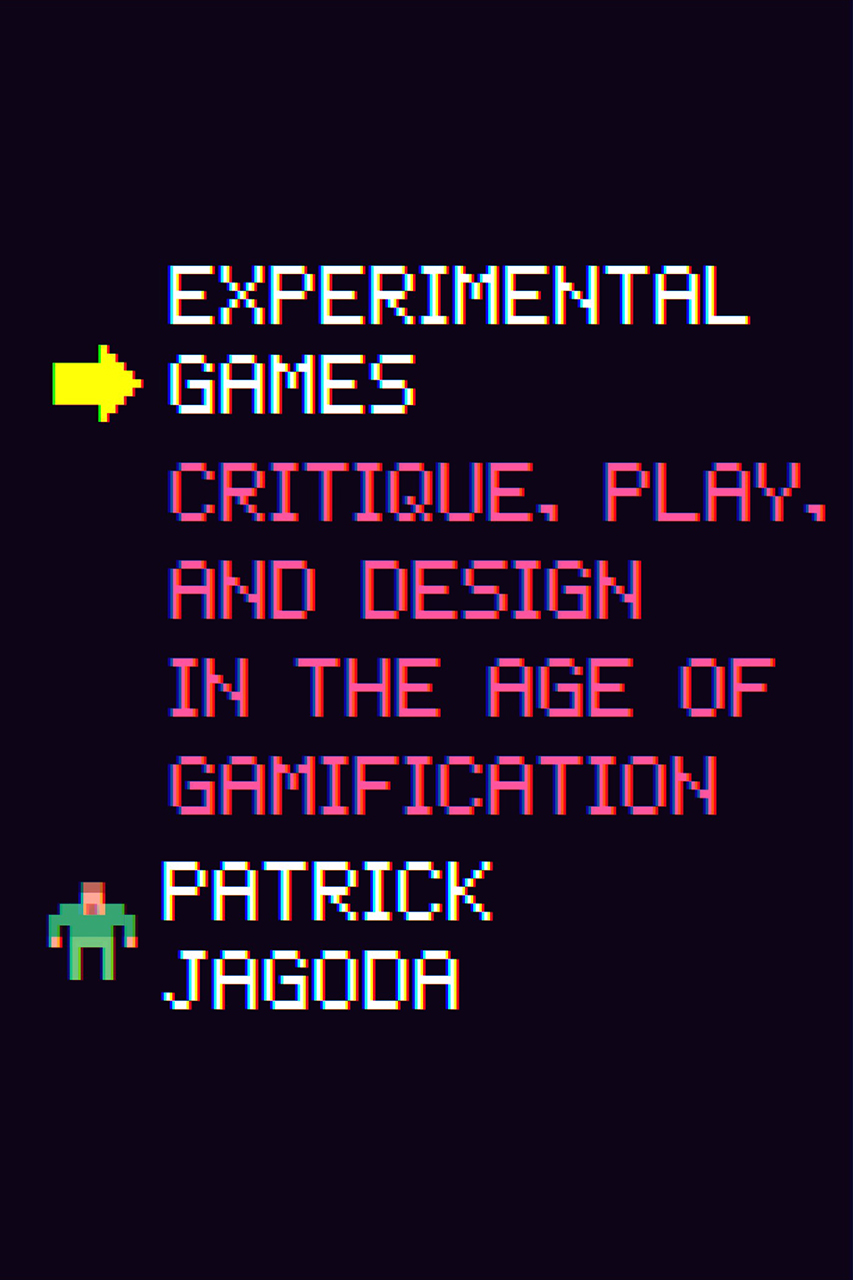
Key Principle
Jagoda's frameworks are not just descriptive — they are tools for practice. Critics can use the gamification genealogy and tripartite difficulty taxonomy to analyze any game at the level of form rather than content. Designers can use the priming/conditioning distinction, nonsovereignty, and problem-making to build games that expand rather than constrain affective ranges. Players can use failure-as-play-style and literate play as deliberate practices that exceed gamification's designed possibility spaces.
Why This Matters
The dominant mode of game criticism focuses on content (narrative, representation, thematic message) while leaving mechanics unexamined. The dominant mode of game design treats experimental as a marketing category — novel aesthetics over conventional reward loops. The dominant mode of player culture frames optimization as the only legitimate play style. Jagoda's frameworks offer a correction to each: form over content for critics, problem-making over problem-solving for designers, and failure-as-method over completion-seeking for players.
None of these three tracks is ideologically pure. The critic still uses the infrastructure of game studies; the designer still ships on commercial platforms; the literate player still inhabits designed possibility spaces. Complicity without purity is the condition, not the failure.
Track 1: For Critics
How to analyze any game using Jagoda's lens
Step 1 — Apply the Gamification Genealogy (Ch. 1) Ask: which stage of the genealogy do this game's mechanics instantiate? Do the core verbs (resource management, ranking, daily check-ins, variable rewards) trace back to behavioral economics' sub-individual intervention? Does the game operate like CCS — serial, continuous, no graduation — or does it introduce closure and interruption?
Step 2 — Separate Form from Content (Ch. 1) Identify the game's narrative premise and its mechanical operations separately. Do they agree? If they contradict (Stardew Valley's anti-capitalist story on extractivist mechanics), the mechanics reveal the ideological work. Ask: what does the player do, not what does the game say?
Step 3 — Apply the Tripartite Difficulty Taxonomy (Ch. 5)
- Mechanical difficulty: execution, pattern recognition — note but do not center.
- Interpretive difficulty: requires homework (genre literacy, cultural references, medium history).
- Affective difficulty: irresolvable, relational — where does the game's difficulty emerge from what the player brings (age, body, history, identity)? This is where ideology operates.
Step 4 — Look for the Allegorithm (Ch. 5) How do the mechanics themselves carry ideological content — not through narrative, but through what the rules require the player to enact? In SPENT, the typing test for temp work is not a metaphor for precarious labor evaluation; it is precarious labor evaluation. In Loved, obeying the interlocutor is not a symbol of the player-designer contract; it instantiates it.
Step 5 — Locate the Complicity (Ch. 5, 7) What infrastructure does the experimental critique rely on? What does the game's formal ambition require it to use — and therefore implicate itself in? Game, Game, Game and Again Game critiques the military-industrial-entertainment complex from within game form. The critique cannot be pure. Note the ontological difficulty: the formal contradiction is not a flaw but the honest condition of experimental work.
Execution Pitfalls for Critics
- Stopping at content: concluding that a game is critical because its theme is anti-capitalist, without examining what its mechanics train players to do.
- Treating affective difficulty as subjective: affective difficulty is relational and therefore analyzable — it arises from specific encounters between specific player histories and specific design structures.
- Praising complicity as subversion: Problem Attic, SPENT, and The Stanley Parable are all complicit in what they critique; the question is whether the complicity is acknowledged or disavowed.
Track 2: For Designers
How to design for priming, nonsovereignty, affective difficulty, and problem-making
Design for Priming, Not Conditioning (Ch. 2–3) Conditioning: closed environment, pre-specified output, stimulus-response. The player is trained. Priming: open environment, acts on the rules of the game rather than directly on the players, expands affective range without targeting a specific behavior. The question shifts from "What behavior do I want?" to "What tendencies do I want to open?" Operational test: can the player exceed what you expected them to do, and does the game remain meaningful if they do?
Design Toward Nonsovereignty (Ch. 4) Nonsovereignty is not frustration for its own sake. It is the formal condition in which the player inhabits a loss of control that neoliberal discourse promises will never occur. Three routes:
- Trauma and algorithmic disorientation (Problem Attic): shifting gravity, no legible objectives, unfair rules.
- Formal frustration of medium conventions (Dys4ia): refusing the controls the player expects.
- Erotic overflow and flow (Luxuria Superbia): nonsovereignty reached through excess and abandon rather than deprivation. The designer's goal is to make the player experience what is otherwise disavowed — not to punish, but to stage.
Design Affective Difficulty, Not Just Mechanical Challenge (Ch. 5) Affective difficulty arises from what players bring; it cannot be calibrated like hit points. Design entry points for it: unresolvable moral weight (Undertale's memory across playthroughs), binary questions that cannot capture affective complexity (Loved), aesthetics that resist clean legibility (Game Game Game's horror vacui Flash interface). Ask: where does this game become irresolvable — not just hard, but irresolvable?
Make Problems, Not Solutions (Ch. 2, 7) The experimental game does not ask "How do I solve X problem in my player's life?" It asks "How do I construct a situation in which a new problem — one that did not preexist the game — becomes visible or livable?" Bachelard's formulation applies: the hypothesis is "realized" through the experiment, not confirmed by it. Design for synthesis, not confirmation. ARG protocol: design with player improvisation as a structural expectation. When players exceed the design (the break-in episode in the parasite ARG), that excess is the experiment's result, not its failure.
Design for Joy, Not Fun (Coda) Fun relieves tension — it deintensifies, provides relief, targets individual gratification. Joy (Spinoza via Massumi) "registers the invention of new passions, tendencies, and action-paths that expand life's powers." (Coda: Joy) Design question: what new collective capacity does this game enable? What can players do together — or sense, or feel — that they could not before?
Execution Pitfalls for Designers
- Experimental aesthetics over experimental form: unusual visuals or non-standard narrative do not constitute problem-making if the underlying mechanics are standard reward loops.
- Priming as manipulation: priming that narrows affective range (e.g., using loss aversion to drive engagement) is conditioning under a different name. Priming in Jagoda's sense expands range.
- Treating the player as the experiment's subject: ARGs collapse the designer/player boundary. If the design cannot survive player improvisation that exceeds intent, it is a controlled experiment, not a collaborative problem.
- Joy as warmth: Spinozan joy is austere — it does not mean pleasant or fun. It means expanded collective capacity. Designing for joy may require designing toward difficulty.
Track 3: For Players
How to practice failure-as-play-style and literate play
Practice Failure as Method (Ch. 6) Failure-as-play-style is "a set of techniques, orientations, adjustments, improvisations, and integrations made by players that enabled them to participate in a precarious role play." (Chapter 6: Failure) In practice:
- Speedrunners exploit glitches via intentional failure to expose the game's structure.
- Queer gamers fail "in the way that a game does not want" (Bonnie Ruberg) — refusing optimization, inhabiting the margins.
- ARG players dwell in structural fragility as a mode of experience rather than trying to escape it. The literate player treats failure as an epistemological tool: what does this failure reveal about the game's assumptions? What does failing here make visible?
Practice Interpretive and Affective Reading (Ch. 5) Mechanical difficulty is what game culture narrates; interpretive and affective difficulty are where the player's own history enters. Literate play requires sitting with what is irresolvable: the moment when a game cannot be decoded, when the difficulty is not in the game but in the encounter between player and game.
Notice What You Are Being Primed To Do (Ch. 3) Game culture transmits priming across sessions — hoarding patterns, camera awareness, optimization defaults. These are tendencies, not choices. Literate play involves noticing the prior affective conditioning that makes "free" choices feel inevitable. The Stanley Parable and Undertale both create the conditions for this noticing; the player must meet the game halfway.
Choose Pause or Rupture Deliberately (Coda) Games offer two kinds of breaks: pause (relief, deintensification, checking out) and rupture (structural experimentation, expanded possibility). Neither is wrong. The problem is when pause exhausts what games are understood to offer. Literate players can choose which mode they are in — and can recognize when fun's deintensifying comfort is foreclosing the possibility of joy.
Execution Pitfalls for Players
- Mistaking literate play for joyless play: affective difficulty and failure-as-play-style are not ascetic refusals of fun. They are additional modes available alongside conventional play.
- Treating experimental games as homework: the point of experimental play is not to extract the correct political lesson. The games make problems; the player inhabits them. There is no graduation.
- Assuming failure reveals individual inadequacy: the ideological work of neoliberal failure discourse is to make structural precarity feel like personal deficit. Failure-as-play-style refuses this by making failure collective and methodological.
Key Quotes
"Gamification, I would like to argue, names a formal and cultural counterpart to neoliberalism." — Patrick Jagoda, Chapter 1: Gamification
"Design is how we can be dominated by instrumental rationality and love it, too." — Alan Liu, The Laws of Cool, cited as Chapter 1 epigraph
"Video games can make better problems. They are important, particularly in a US culture that too often promises easy solutions." — Patrick Jagoda, Chapter 5: Difficulty
"Freedom is not chosen: it is invented." — Brian Massumi, cited in Chapter 7: Improvisation
"Joy is much more than a pleasure. It registers the invention of new passions, tendencies, and action-paths that expand life's powers, flush with perception." — Brian Massumi on Spinoza, cited in Coda: Joy
Rules of Thumb
- Always start analysis with the verbs — what does the player do? Not what does the game say?
- Experimental form requires experimental methodology: if you can grade it, it is not experimental.
- Literate play is a practice, not a competence — it requires ongoing effort, not a terminal skill set.
- The designer cannot stand outside the infrastructure they critique; complicity is the condition of experimental work, not its negation.
Related References
- Key Game Case Studies - annotated index of games discussed in the book
- Rules of Thumb - collected heuristics organized by theme