Key Principle
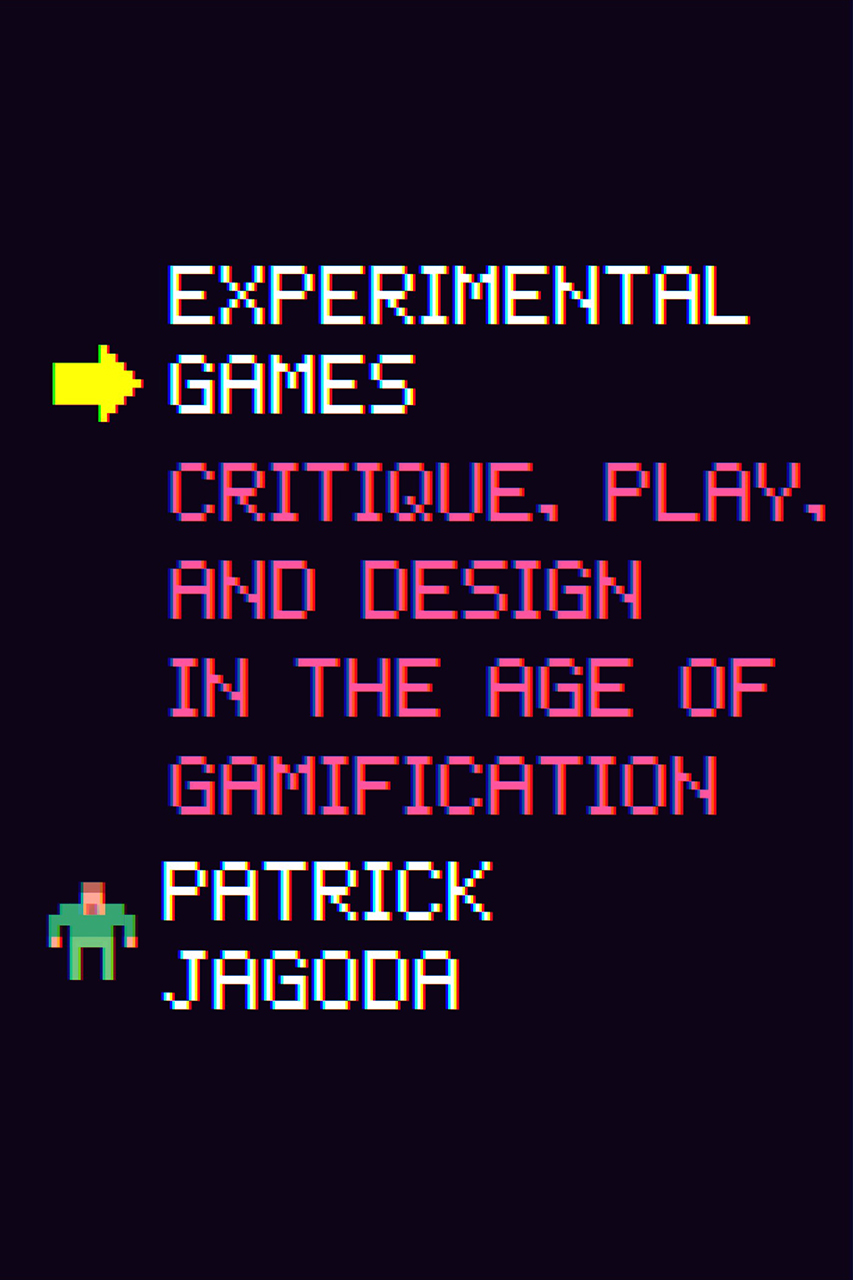
These heuristics are condensed from Jagoda's frameworks across all chapters. They are tools for quick diagnosis and design orientation, not substitutes for the full arguments. Each rule has a chapter anchor; consult the relevant chapter when the rule needs to be grounded or contested.
Why This Matters
Gamification's ideological work is most effective below the threshold of reflection. These rules of thumb are designed to raise that threshold — for critics analyzing games, designers making them, and players inhabiting them. They are organized by theme rather than chapter, because the book's core claim is that these themes form a single continuous argument: from genealogy to joy.
Diagnosing Gamification
Critique the mechanism, not the surface. Points, badges, and leaderboards are not inherently gamification's problem. The problem is that these mechanics were designed by game theory → neoliberalism → behavioral economics as a continuous project to make rational self-optimization feel good. Diagnose the genealogy. (Ch. 1)
Form does the ideological work, not content. A game's narrative can be anti-capitalist while its mechanics train players in extractivist optimization. When content and form contradict, form wins. (Ch. 1)
Ask what the player must enact, not what the game depicts. The allegorithm (Galloway) means the rules themselves carry ideology. Analyze the verbs — what the player is required to do — before analyzing the story. (Ch. 5)
Gamification is more dangerous than propaganda because it conditions rather than persuades. It doesn't argue for neoliberal rationality; it trains it into the body through repetition and affect. Design that makes coercion aesthetically pleasurable is structural, not incidental. (Ch. 1, Introduction)
Qualculation is the affect bridge. Abstract neoliberal metrics (performance rankings, efficiency scores) are cold in a spreadsheet. In a game, delivered through color, animation, sound, and social feedback, the same abstraction becomes sensory and therefore motivating. (Ch. 1)
The society of the game is more totalizing than spectacle. Spectacle required passive consumption; the society of the game requires you to actively perform neoliberal logic, train it into your body, and call it play. (Introduction)
Behavioral economics refined neoliberalism; it did not critique it. The shift from individuals to sub-individual units (habits, preferences, behaviors) as the target of intervention is what gamification inherits. This is not a critique of irrationality — it is its instrumentalization. (Ch. 1)
Experimental Design Principles
Design for priming, not conditioning. Conditioning molds players in closed environments toward preset outputs. Priming acts on the rules of the open environment to expand affective range without specifying the outcome. The question is not "What behavior do I want?" but "What tendencies do I want to open?" (Ch. 2–3)
Experimental design makes problems, not solutions. Problem-solving experimentation confirms a pre-given result. Problem-making constructs its object — demonstrates reality rather than reporting it. The game that makes a new problem visible is experimental; the game that gamifies an existing solution is not. (Ch. 2, 7)
Nonsovereignty is a design resource, not a punishment. The moment the player is out of control — formally disoriented, erotically overwhelmed, algorithmically confounded — is where experimental games can interrupt control-society subjection. Design toward it deliberately. (Ch. 4)
There are three routes to nonsovereignty. Trauma and disorientation (Problem Attic); formal frustration of medium conventions (Dys4ia); erotic overflow and flow (Luxuria Superbia). Negativity is not the only path. (Ch. 4)
Affective difficulty cannot be calibrated. It arises from what players bring — age, body, history, identity — and from the relational encounter between player and system. Design entry points for it, not solutions to it. (Ch. 5)
Ontological difficulty is the live wire. The hardest category in Steiner's taxonomy is the fundamental contradiction in the medium — using game form to critique game form from within. This is not a flaw; it is the honest condition of experimental work. (Ch. 5)
Complicity without purity is the condition of experimental games. No game can step entirely outside the infrastructure it critiques. The question is whether the complicity is acknowledged and made productive or disavowed and masked. (Ch. 5, 7)
Design with player improvisation as a structural expectation. When ARG players exceed the design — staging a break-in, organizing a protest — that excess is the experiment's result, not its failure. The boundary between designer and player is part of what the experiment tests. (Ch. 7)
ARGs reveal consensus reality as constructed. By refusing to announce themselves as games, ARGs make the default world visible as a designed, normative formation — something that could be otherwise. This is Rancière's dissensus operationalized as game form. (Ch. 7)
Parasitic media inhabits, it does not oppose. The experimental game does not require an alternative infrastructure — it uses existing media systems to make them "unfamiliar, indeterminate, and thus transformable." Resistance from within is not surrender. (Ch. 7)
Player Literacy
Notice the prior conditioning that makes free choices feel inevitable. Game culture transmits priming across sessions: hoarding patterns, camera awareness, optimization defaults. These are tendencies, not choices. Literate play requires noticing them. (Ch. 3)
Choice is affective, not sovereign. Decision happens; it is not made by a rational self pausing to consult a menu. Games that treat choice as rational-sovereign naturalize a fiction. (Ch. 3)
Failure-as-play-style is available. Players can deliberately inhabit formal failure — replaying to explore structure, refusing optimization, failing in the way the game does not want. This is a literate practice, not incompetence. (Ch. 6)
Failure reveals the game's assumptions. What does failing here make visible? Failure is an epistemological tool when treated as method rather than outcome. (Ch. 6)
Distinguish pause from rupture. Games offer two kinds of breaks: relief from overwork or anxiety (pause) and structural experimentation that opens alternative possibilities (rupture). Neither is wrong, but when pause exhausts what games are understood to offer, fun forecloses joy. (Coda)
The Joy/Fun Distinction
Fun is deintensifying; joy is expansive. Fun relieves tension, stills tendency, provides individual gratification — Adorno and Horkheimer called it "a medicinal bath." Joy (Spinoza via Massumi) registers the invention of new passions and the collective expansion of life's powers. (Coda: Joy)
Joy is not pleasant. Spinozan joy is austere — it does not mean warm or comfortable. Designing for joy may require designing toward difficulty, irresolvability, and collective encounter rather than individual satisfaction. (Coda: Joy)
The design question joy poses is collective. Not "How does this satisfy the player?" but "What new capacity, sensitivity, or collective experience does this game enable?" (Coda: Joy)
ARG Design
ARGs are collaborative problems, not controlled experiments. A controlled experiment isolates variables and expects replicability. An ARG borrows hypothesis-testing from science and problem-making without solution from art, producing a hybrid suited to complex social systems. (Ch. 7)
Dissensus is the political mode that corresponds to problem-making. Diversity and inclusion is problem-solving: quantifiable, targeted, resolvable. Dissensus (Rancière) makes visible what had no reason to be seen — it places one world in another without guaranteeing agreement. (Ch. 7)
Context is everything — not as a platitude but as a design methodology. When S.E.E.D. ARG players organized a protest in response to Eric Garner's and Michael Brown's deaths, the design team honored context over controlled experiment. The game's ending was rewritten. (Ch. 7)
The Complicity-Without-Purity Problem
Experimental games cannot immunize against capture. Iterative experimental design is also how corporations optimize products. The concept identifies the mode of operation at stake, not a guarantee against co-optation. (Ch. 2)
Resilience demanded as a response to precarity is itself a governance technique. Sara Ahmed: "the requirement to take more pressure; such that the pressure can gradually increase." (Chapter 6: Failure) A game that rewards resilience without interrogating why resilience is required is reinforcing the structure it appears to address.
Key Quotes
"Gamification, I would like to argue, names a formal and cultural counterpart to neoliberalism." — Patrick Jagoda, Chapter 1: Gamification
"Video games can make better problems. They are important, particularly in a US culture that too often promises easy solutions." — Patrick Jagoda, Chapter 5: Difficulty
"The ARG itself is not a product but a process of collective consciousness, imagination, and realization of a world." — Patrick Jagoda, Chapter 7: Improvisation
"games have largely offered an impoverished range of virtual realities. If approached as an experimental art-science, I believe that games can yet enable a more intense and joyful realization of virtualities." — Patrick Jagoda, Coda: Joy
Related References
- Key Game Case Studies - annotated index of games with design principles per case
- implementation playbook - how to apply these heuristics across critic, designer, and player tracks