Key Principle
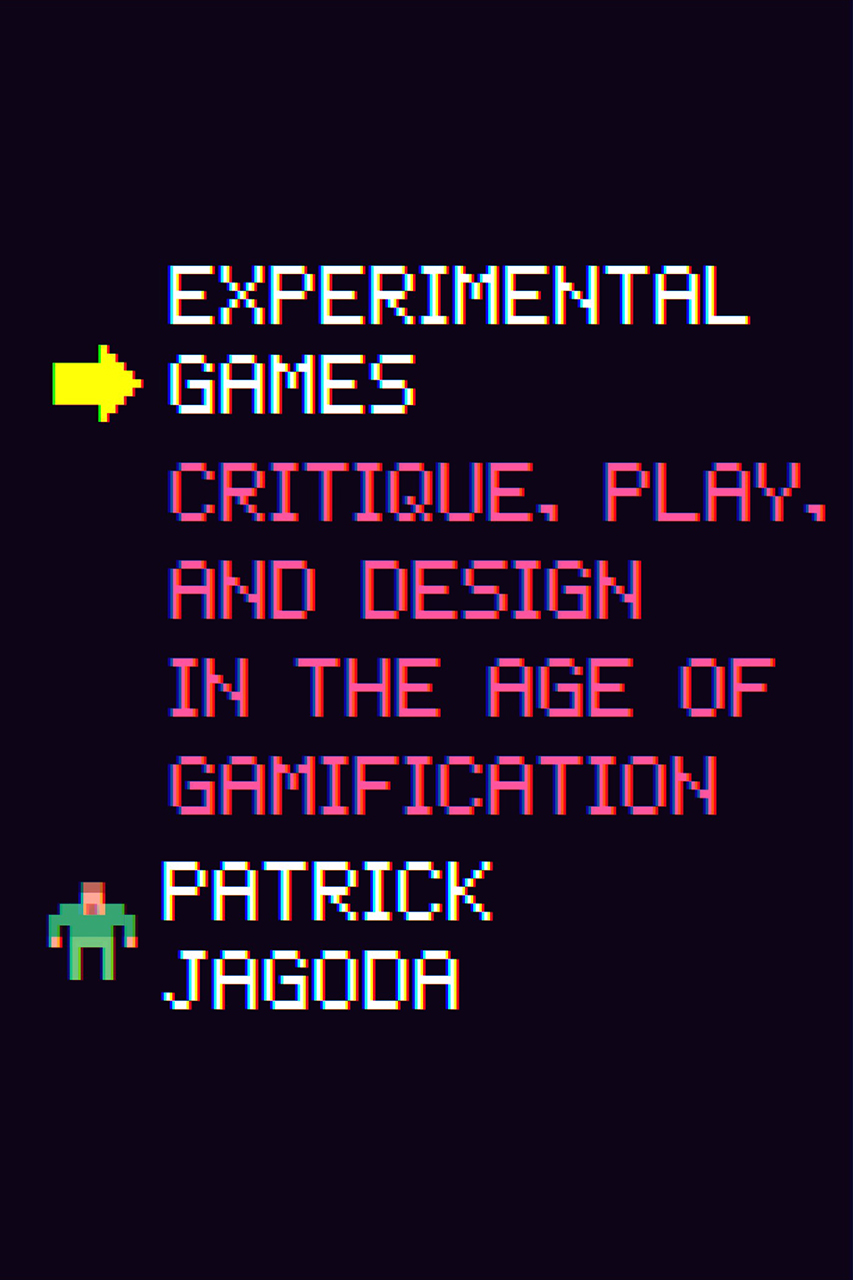
Gamification is the terminal point of a four-stage historical genealogy — game theory (1940s–60s) → neoliberalism (1970s–80s) → behavioral economics (1990s–2010s) → digital games (2000s–present) — constituting one continuous project, not four separate histories. The key distinction that drives the whole chain: "Whereas earlier frameworks such as neoclassical economics and game theory can be said to describe and model rationality, neoliberalism goes a step further to prescribe this same type of rational behavior as the recipe for becoming the most valuable form of human capital." (Chapter 1)
Why This Matters
Without this genealogy, gamification looks like a recent tech industry fad, correctable by intent or regulation. With it, digital games appear as the inevitable terminus of a century-long project to make rational self-optimization feel good. The genealogy is not background; it is the mechanism. Each stage inherits and transforms the previous stage's model of the subject.
The most important inheritance is from behavioral economics to digital games: behavioral economics documented actual human irrationality (Kahneman and Tversky's prospect theory, Simon's bounded rationality) but did not break from neoliberalism — "behavioral economics acts as an educative force on behalf of neoliberalism." (John McMahon, Chapter 1) Crucially, it shifted the unit of intervention from the individual to sub-individual units: interests, utilities, cognition, decisions, choices, actions, consumption, preferences, behaviors. This shift is what gamification inherits and operationalizes through designed game mechanics.
Good Examples
Stage 1 — Game Theory: Von Neumann and Morgenstern formalize games as the universal model of rational decision-making. Games become the basic unit of rationality in social scientific consciousness — not just a tool for economists but the structural metaphor for human interaction generally. (Chapter 1)
Stage 2 — Neoliberalism: The descriptive model becomes a prescriptive social norm. The market's abstract incoherence is stabilized through a game metaphor: one can feel "skin in the game" when one cannot feel "skin in the market." (Chapter 1) This is when games shift from mathematical tools to a world-building metaphor that shapes the subject.
Qualculation as the affect bridge: Candy Crush Saga's design makes neoliberal quantification available "at the level of both rationality and affect within the sensorium of the player." (Chapter 1) Its 6,005-level, no-end structure mirrors Deleuze's societies of control (serial, continuous, no clear closure) — there is no graduation, only perpetual return. The abstract becomes sensory, and therefore motivating.
Counterpoints
Stardew Valley is the genealogy's sharpest test case. Its anti-capitalist content (escaping corporate life, returning to nature) appears to break from the chain. But the mechanics do not: Year 2's "Grandpa's Evaluation" is a literal appraisal of breadth and depth across all portfolio activities; the "Statue of Perfection" rewards optimal self-management. Min-maxing — daily path planning, resource reinvestment, multi-objective scheduling — mirrors neoclassical rational optimization not as metaphor but as actual learned habit. (Chapter 1) The content opposes the genealogy; the form continues it.
"Individual habits allegedly separate the winners from the losers." (Wendy Chun, Chapter 1) The genealogy explains why this ideological claim feels true to players: behavioral economics already shifted the intervention site to habits and preferences; digital games deliver that intervention affectively, in ways that feel like personal development rather than ideological conditioning.
The Stardew Valley case demonstrates the book's core methodological claim: form, not content, does the ideological work. This means anti-capitalist game design cannot succeed by adding anti-capitalist narrative to extractivist mechanics. The engine must change, not the story.
Key Quotes
"Whereas earlier frameworks such as neoclassical economics and game theory can be said to describe and model rationality, neoliberalism goes a step further to prescribe this same type of rational behavior as the recipe for becoming the most valuable form of human capital." — Patrick Jagoda, Chapter 1: Gamification (and Its Discontents)
"behavioral economics acts as an educative force on behalf of neoliberalism." — John McMahon, quoted in Chapter 1
"Individual habits allegedly separate the winners from the losers." — Wendy Chun, quoted in Chapter 1
Rules of Thumb
- Trace any gamification mechanic back through its genealogy: which stage installed it, and with what ideological purpose?
- The unit of intervention in gamification is sub-individual — habits, preferences, tendencies — not the whole rational agent. Design critique must operate at this level.
- When form and content contradict (anti-capitalist story, extractivist mechanics), the form wins. Assess the engine, not the shell.
- Qualculation is the diagnostic question: how does this game make abstract metrics sensory? That is where the neoliberal affect channel operates.
- "Skin in the game" is a tell. When game rhetoric stabilizes market abstraction, the genealogy is active.
Related References
- core framework - The macro thesis that the genealogy grounds
- experimental design - How experimental design can break from what the genealogy installs