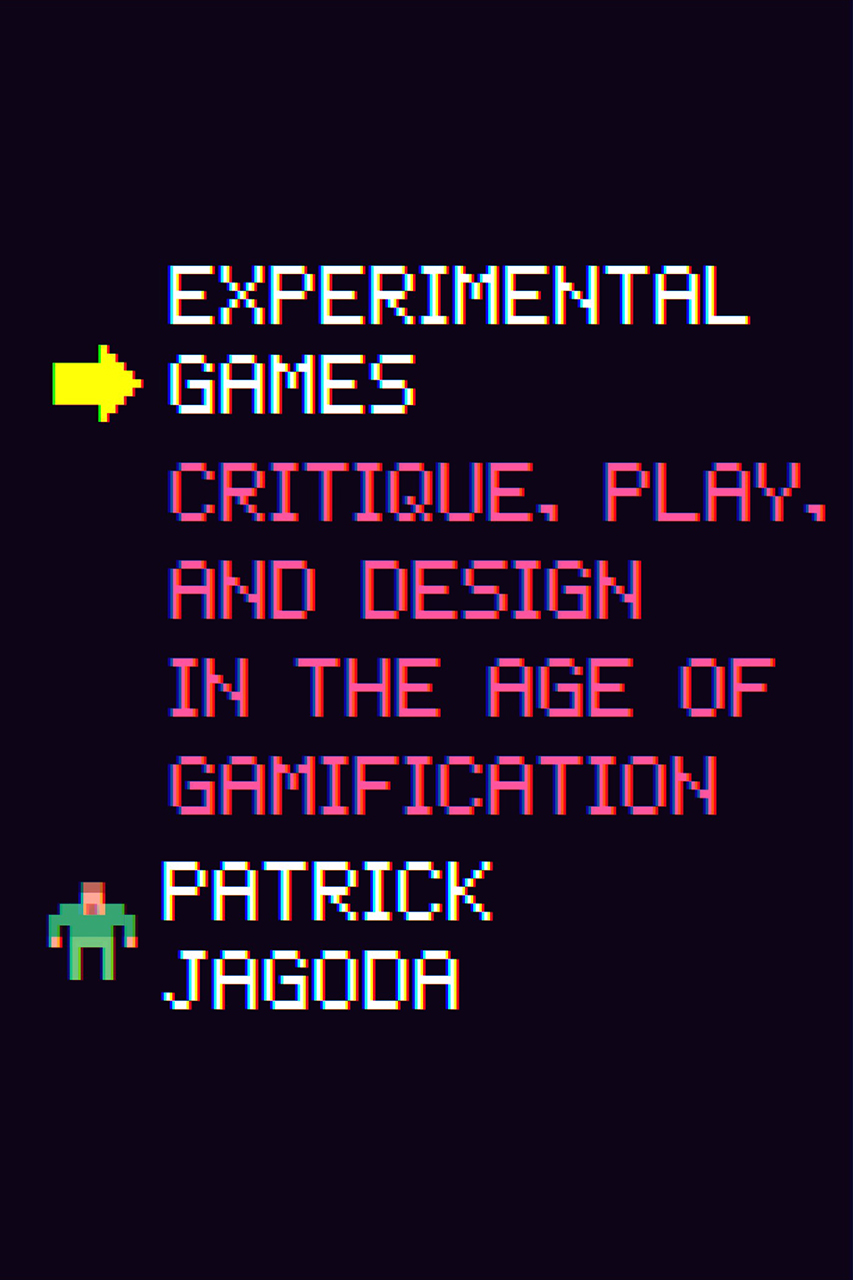
Key Principle
Neoliberalism operates a dual logic: failure is reframed as a productive resource for those with capital (the Taleb/antifragility alibi — "The fragility of every startup is necessary for the economy to be antifragile"), while for the majority failure becomes atmospheric — not a discrete event but a pervasive social condition that forecloses ordinary political reflex. (Chapter 6: Failure) Experimental games can intervene by making precarity-as-atmosphere affectively legible, and by enabling failure-as-play-style as a deliberate counter-practice rather than a deficit to overcome.
Why This Matters
Most game-based failure discourse (Juul's "failure paradox," motivational retry loops) treats failure as a psychological event — something individual players experience and overcome. This framing is ideologically continuous with neoliberal self-optimization: the player who fails and retries is performing the same logic as the worker told to "fail better." The chapter's core intervention is to distinguish between discrete failure events and atmospheric precarity — the latter is sustained, distributed, and has no resolution point.
The political stakes are high because atmospheric precarity functions as affective governance: "an affective means of distributed social control that reinforces the centrality of the free market to all thought and decision-making." (Chapter 6: Failure) Sara Ahmed closes the circuit: the demand for resilience in the face of precarity is itself a governance technique — "the requirement to take more pressure; such that the pressure can gradually increase." (Chapter 6: Failure) Games that only simulate discrete failure leave this structure untouched. Games that make the atmosphere felt have a different political reach.
Good Examples
- Thresholdland (2010): Ten-day transmedia immigration roleplay where only 5 of ~3,000+ players avoided loss conditions, structurally mirroring real immigration precarity. Players inhabited a precarious role rather than attempting to escape it — failure as play style concretely instantiated. (Chapter 6: Failure)
- Little Inferno (2012): Nested failure structure — the inner object-burning game is completable; the outer world (catastrophic climate collapse, corporate positivity masking finitude) is already foreclosed. "A fair and forgiving object-burning game is embedded within an unfair and unwinnable game of the world within which it is embedded." (Chapter 6: Failure) The satire of gamification is formal: reward mechanics yield a mouse pad labeled "Platinum Rainbow Elite Status."
- Speedrunning and queer failure: Speedrunners exploit glitches via intentional failure; queer gamers fail "in the way that a game does not want" (Bonnie Ruberg, cited in Chapter 6) — both are instances of failure as method for "learning how to make a different game." (Chapter 6: Failure)
Counterpoints
- SPENT (2011): Procedural mimesis of poverty — decision branches with exclusively undesirable options, porous magic circle linking to PayPal donation. A 2016 study by Roussos and Dovidio (n=227) found players showed no increase in empathy or support for antipoverty policies. Hypothesized mechanism: choice mechanics inadvertently suggest poverty is personally controllable ("stigma controllability"). Observers watching others play did show empathy increases — the design logic that makes SPENT feel immersive may undermine its political pedagogy. (Chapter 6: Failure)
- Little Inferno forecloses action entirely: Unlike Thresholdland's relational failure, Little Inferno offers no redemptive arc — this is a feature, not a flaw, but confirms that atmospheric precarity games cannot guarantee political transformation.
- "Failure, too, must be learned" (Chapter 6: Failure): None of the three case-study games guarantees correct political consciousness. Affect cannot be assumed to produce ideology critique; design, psychology, and social context all mediate what players take away. Experimental games make problems; they do not solve them.
Key Quotes
"The fragility of every startup is necessary for the economy to be antifragile." — Patrick Jagoda, Chapter 6: Failure (citing Taleb)
"An affective means of distributed social control that reinforces the centrality of the free market to all thought and decision-making." — Patrick Jagoda, Chapter 6: Failure
"The requirement to take more pressure; such that the pressure can gradually increase." — Patrick Jagoda, Chapter 6: Failure (citing Sara Ahmed on resilience)
"Failure, too, must be learned." — Patrick Jagoda, Chapter 6: Failure
Rules of Thumb
- Design for atmospheric precarity, not just discrete failure events: a game that lets you retry indefinitely leaves the structural condition untouched.
- Failure-as-play-style is a player literacy practice: designing for it means building systems that reward deliberate inhabitation of failure, not just optimization.
- Watch for stigma controllability: choice mechanics in poverty/precarity games can inadvertently frame structural conditions as personally controllable — test with observers, not just players.
- Resilience mechanics (retry, recover, persist) can reinforce governance logic as easily as they build empathy. Ask what your retry loop is teaching.
Related References
- ARGs and Improvisation as Problem-Making - ARGs extend failure-as-play-style into collective, transmedia problem-making
- Joy vs. Fun - Joy as the affective alternative to failure's deintensifying fun