How Experiences Are Framed
Key Principle
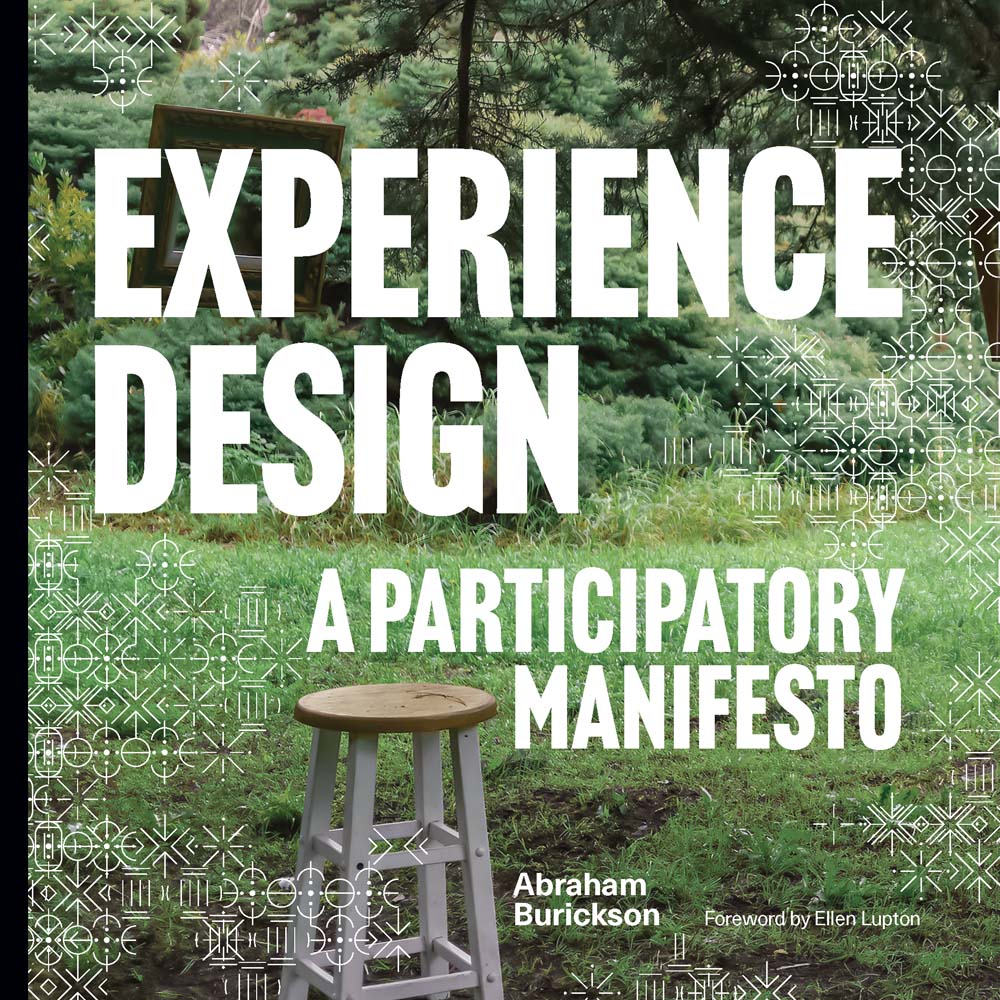
Frames structure consciousness and redefine the subject. A frame is not a passive border around content — it is the primary mechanism that converts undifferentiated perception into structured experience. The frame determines what attention is possible, what role the audience inhabits, and what the content can mean. Design starts at the frame, not the content: "The experience designer considers the frame of the book before the object that is the book" (p. 40).
Every frame performs two operations simultaneously: it draws a boundary (declaring what is inside and outside the experience) and it overwrites the subject's identity. "When you open the book, you become what the book wants you to be: a reader" (p. 39). "The frame structures consciousness, redefining the subject who engages with it" (p. 40).
Why This Matters
Without deliberate framing, designed experiences dissolve into ambient noise. The audience has no assigned role, no structured attention, and no clear expectations. Content quality becomes irrelevant when the frame is incoherent — a brilliant installation in a hallway with foot traffic competes with every passing stimulus. The designer's question is never "Is this good?" but "What attention does this frame produce?" (p. 47).
Frames also determine whether design elements feel coherent or dissonant. Each frame carries an attentional register (utilitarian, contemplative, sacred). Transplanting elements from one register into another — pedestals in a bathroom, utilitarian signage in a cathedral — produces discomfort the user feels but cannot name. "There are no pedestals in the bathroom because pedestals are for a different kind of attention" (p. 44).
Good Examples
Duchamp's Fountain (1917): A urinal on a bathroom wall produces bathroom attention; the same urinal on a gallery pedestal produces art attention. The object is identical — the frame is what changes. This proves that framing is the experience designer's primary instrument (p. 47).
Then She Fell (2012): Immersive theater that removes the proscenium but retains the building frame. A dancer brushes the audience member's hair — "sensations that belong in one frame are pulled into another, leaving the audience off-kilter and a little off guard: a good way to heighten the attention and break the audience out of habitual ways of seeing" (p. 52). The experience feels like "the tactile qualities of a dream" (p. 52).
The Jejune Institute (Jeff Hull): Scattered its frame across San Francisco with no building boundary. "The vagueness breaks other structures: the temporal frames that generally structure aesthetic experiences are broken, as are the geographic frames" (p. 53). Audiences began to see ordinary life as "designed and full of compositional possibility" (p. 53) — the most radical outcome on the framing spectrum.
Museum admission sticker: A temporal frame. "When you put the museum sticker on your shirt, a timer that frames the experience begins" (p. 47). Walking home with the sticker still on produces "a strange, broken frame." Removing it closes the experience.
Hannaham's Card Tricks (2011): Used museum wall placards as the artwork itself, collapsing frame and content into one object and turning the act of reading a label into "an impossible intellectual task, a kind of Zen art koan" (p. 49).
Counterpoints
No frame is hermetic. "The book is a porous frame: it is small and time limited, and it takes work to keep the attention inside" (p. 40). Treating a frame as impermeable produces fragile designs that shatter the moment real-world conditions intrude. The designer must manage the contest between frame and context, not pretend context does not exist.
Removing a frame does not eliminate framing — it makes the frame invisible and shifts the labor of frame-recognition to the audience. Without deliberate porosity, frameless experiences read as either a prank or paranoia; the productive blur between real and designed never forms (p. 53).
Frame solidity accumulates across time, not just space. "Sunday Mass at the Vatican is solid, but Sunday Mass after making a pilgrimage along the Camino de Santiago for weeks is far more solid" (p. 49). Designers can build solidity before the main event through preparatory sequences and rituals.
Key Quotes
- "Frames are the lines we draw around a thing so that we know what the thing is and what it is not." (p. 39)
- "The frame defines the subject, no matter how accurately the subject feels that definition is." (p. 42)
- "The experience designer asks a different question: 'What is the structure of attention generated by the frame?'" (p. 47)
- "Art is a particular structure of attention." (p. 47)
- "When an experience has a solid frame, we are fully inside it, our attention is focused, and unrelated stimuli are less likely to pull us out of the frame." (p. 49)
- "A movie theater is a more solid frame than a handheld device streaming the same film." (p. 49)
- "Inside the frame, objects are not objects; they are signifiers." (p. 57)
- "That's what frames are for, guiding the imagination into a new understanding of what you behold." (p. 58)
Rules of Thumb
- Design the frame before the content. Identify the attentional register your experience requires, then build or choose a frame that produces it.
- Ask three questions for every frame: What attention does it structure? What subject does it produce? What register do design elements need to match?
- Layer frames to compound solidity. A single frame may be too weak — pedestal + museum building + wall label reinforce each other and reduce ambiguity (p. 47).
- Match frame solidity to required attention depth. Porous frames for light engagement, solid frames for deep immersion. A phone screen is not a theater screen.
- Never mix attentional registers. Contemplative elements in utilitarian spaces and utilitarian elements in sacred spaces produce dissonance.
- Build solidity before the main event. Preparatory sequences, rituals, or journeys increase the frame's holding power at the moment of encounter.
- Close the frame deliberately. Without temporal closure, the participant is neither inside the experience nor fully returned to the everyday — the experience bleeds rather than resolves.
- Use cross-frame transfer sparingly and intentionally. Pulling sensations from one frame into another heightens attention but must serve a designed purpose, not merely surprise.
Related References
- Experience Design: The Core Framework — Frames operationalize the core thesis that experience design transforms objects into lived experience.
- Three Levels of Immersion — Solid vs. porous frames directly determine immersion depth; the framing spectrum (proscenium/building/porous) maps onto immersion levels.
- Worldbuilding: Four Elements of a World — Worldbuilding constructs frames so comprehensive that porosity decreases and the interior becomes self-sustaining.