Place, Landscape, and Liminality
- Impact: MEDIUM
- Tags: landscape, liminality, beach, reweirding, edgelands, setting
- Chapter: Half-Concealed Places, Beach Reading
Key Principle
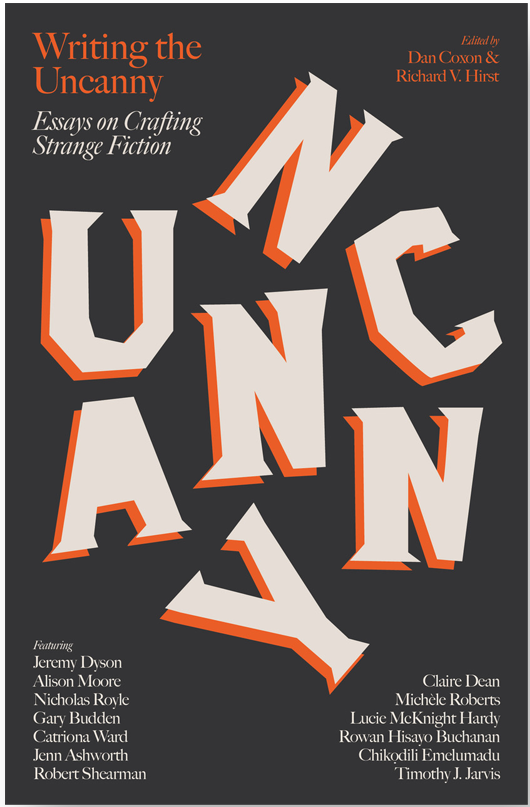
Settings generate uncanny effects not by being inherently strange but by occupying thresholds — between familiar and unfamiliar, land and sea, visible and invisible, inhabited and abandoned. Two complementary strategies emerge from the essays: Budden's "reweirding" redirects uncanny attention from exhausted rural landscapes to the suburban and industrial spaces most people actually inhabit, while Royle identifies the beach as a master-class liminal setting where boundaries between states dissolve. In both cases, the setting does not merely house the narrative — it generates it. M. John Harrison's principle: "The stories could not happen anywhere — they happened because of their location." (Half-Concealed Places — Gary Budden, discussing M. John Harrison)
Why This Matters
A setting chosen for atmosphere alone remains backdrop. A setting that enacts boundary dissolution at the level of landscape performs the uncanny's core operation — the collapse of distinctions the reader depends on (inside/outside, safe/unsafe, land/sea). The beach and the edgeland both work because they are transitional zones where categories become unstable. Writers who treat setting as generative rather than decorative produce effects that cannot be separated from their locations.
Good Examples
- Budden's Tottenham Hale one-way system: Specificity is essential — "it isn't any one-way system, it's the Tottenham Hale one-way system." Generic settings cannot produce uncanny effects because the uncanny requires the familiar, and familiarity requires the particular. Budden's "reweirding" treats suburban streets, retail car parks, underpasses, and industrial estates as inherently mysterious. (Half-Concealed Places — Gary Budden)
- Harrison's Ikea forecourt: Urban destinations sorted in three tiers — normal (museums), odd but explicable (abandoned cinemas), and inexplicable: "giant retail car parks, entrance arches, one-way systems." When people gather on "the rainswept forecourts of Ikea" after closing time, the consumer landscape becomes mystery. Harrison withholds explanation. The banal-made-strange is more unsettling than the obviously strange because there is no normality behind it. (Half-Concealed Places — Gary Budden, discussing M. John Harrison)
- Campbell's infiltrating sand (via Royle): In Ramsey Campbell's "Beside the Seaside," sand progressively infiltrates a hotel room — "grains sparkled whispering on the glass top of the dressing table" — until "the sheets weighed on him heavily as sand." The beach crosses its proper boundary and colonizes interior space, enacting uncanny transgression at the literal, physical level. (Beach Reading — Nicholas Royle)
- Chandler's fog-surf (via Royle): "Under the thinning fog the surf curled and creamed, almost without sound, like a thought trying to form itself on the edge of consciousness." A sentence that enacts what it describes — the simile reaches toward meaning without arriving, mirroring both surf and the uncanny itself. (Beach Reading — Nicholas Royle, quoting Raymond Chandler, The Big Sleep)
Counterpoints
- Folk-horror's rural landscapes have diminishing returns. Vestigial paganism, hostile villages, and unearthed artifacts have become tropes — "easily summarisable, which means they've lost their strangeness." Budden's remedy is to redirect uncanny attention to built environments. (Half-Concealed Places — Gary Budden)
- Setting alone does nothing; execution does everything. Royle contrasts James Herbert's The Fog — mass beach suicide producing zero uncanny effect — with subtler writers. Herbert declares "Death. Death was absolute" and "The black sea around her was so frightening!" These shouted assertions bypass the reader's affect entirely. "It's not as simple as combining death and the beach; you have to write it like you mean it." (Beach Reading — Nicholas Royle)
- Surrealism and the uncanny are adjacent but distinct. "Something is unheimlich if it is somehow both familiar and unfamiliar at the same time, while the surrealists would often site something familiar in an unfamiliar or unexpected location." The uncanny fuses familiar and unfamiliar within a single object; surrealism displaces the familiar into an unexpected context. Confusing the two weakens both. (Beach Reading — Nicholas Royle)
Key Quotes
"The setting, the location of the story, in its seemingly dull incidental detail is the story itself as much as the plot or the actions of the characters." — M. John Harrison (quoted by Gary Budden, "Half-Concealed Places," Writing the Uncanny)
"An area whose chief landmarks were half-concealed places that had the feel of the past, but were too anonymous to count as history." — Joel Lane (quoted by Gary Budden, "Half-Concealed Places," Writing the Uncanny)
"All the wonders lie within a stone's-throw of King's Cross Station." — Arthur Machen (quoted by Gary Budden, "Half-Concealed Places," Writing the Uncanny)
"Under the thinning fog the surf curled and creamed, almost without sound, like a thought trying to form itself on the edge of consciousness." — Raymond Chandler, The Big Sleep (quoted by Nicholas Royle, "Beach Reading," Writing the Uncanny)
Rules of Thumb
- Setting generates narrative; it does not merely house it. If the story could be transplanted to a different location without loss, the setting has not been made uncanny. The location must be the reason the story happens. (Budden on Harrison)
- Specificity creates familiarity; familiarity enables the uncanny. Name the real place — the particular one-way system, the specific beach. Generic settings produce generic dread. (Budden)
- Reweirding beats invention. Instead of inventing strange places, attend to the strangeness already present in mundane built environments. The Anglo-Saxon root "wyrd" means not "strange" but "interconnected" — all places deserve equal attention. (Budden)
- The weird intrudes; the eerie empties. Mark Fisher's distinction: the weird is the wrong thing in the wrong place, but the eerie attaches to environments — "empty and depopulated landscapes are eerie; abandoned buildings, obsolete structures and ruins are eerie." Eeriness arises from the gap between evidence of human life and absence of actual humans. (Budden, citing Fisher)
- Liminal zones are inherently uncanny. Edgelands — transitional zones between country and town, "in various stages of decay and regeneration" — combine all landscapes in unstable combination. The beach occupies the same structural position between land and sea. Look for spaces where categories overlap without resolving. (Budden; Royle)
- Let landscape transgress its boundaries. Campbell's sand infiltrating a hotel room enacts the uncanny at the physical level. When the outside becomes inside — when landscape behaves as intruder — the result performs boundary dissolution rather than merely describing it. (Royle on Campbell)
- Withhold explanation from the banal-made-strange. Harrison never tells us what the displaced people are doing on the Ikea forecourt. The refusal to explain is what sustains the eeriness. An explained mystery is a solved problem; an unexplained one is a permanent disturbance. (Budden on Harrison)
- The uncanny emerges from precision, not from aiming at eeriness. Royle suggests "perhaps the mark of a great writer is one who creates such effects... without actually looking for it." Attend to the exact sensory detail of a place and the strangeness will surface on its own. (Royle)
Related References
- domestic-horror.md — Roberts's house-as-unconscious and Jackson's environmental sympathy; the interior counterpart to landscape liminality
- negative-space-toolkit.md — McKnight Hardy's withholding techniques; the mechanism underlying Harrison's refusal to explain
- core-framework.md — Freud's foundational distinction between familiar and unfamiliar that underpins why liminal settings work