Identity Dissolution and Environmental Sympathy
- Impact: HIGH
- Tags: identity, jackson, environmental-sympathy, hill-house, juxtaposition
- Chapter: Spotlight on Shirley Jackson (Alison Moore)
Key Principle
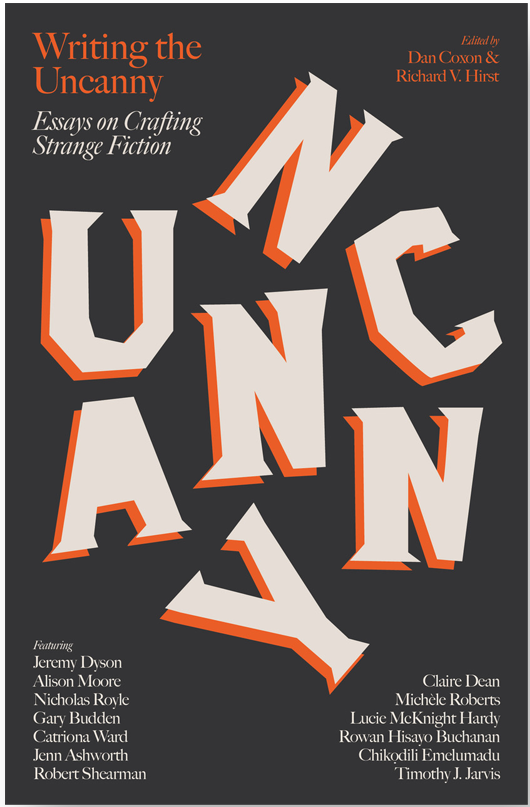
The uncanny does not require monsters. Its most disturbing effects come from the systematic erosion of identity and the transfer of emotional disturbance into physical environment. Shirley Jackson's method works on two interlocking axes: (1) characters lose their identifying markers progressively until they become unrecognizable, and (2) buildings and settings absorb and express the character's inner dislocation. The result is a world where the distinction between self and surroundings dissolves — which is far more unsettling than any external threat.
Why This Matters
Most horror writers reach for the intrusion — something alien enters the character's world. Jackson inverts this. The character's world consumes the character. Identity doesn't shatter in a dramatic moment; it wears away through accumulation of small losses. This is harder to write but lands deeper, because the reader experiences the erosion in real time rather than reacting to a single shock. The technique also solves a persistent problem in uncanny fiction: how to sustain dread across a long narrative without escalating into spectacle. Jackson sustains it by operating across multiple registers simultaneously — architectural, social, tonal — so that wrongness permeates every surface of the story.
Good Examples
Progressive identity erasure — In "The Missing Girl," Martha's photograph blurs, her name is forgotten, her paintings become "vague." Each loss is small; together they constitute annihilation. The person isn't taken — she erodes. (Moore, "Spotlight on Shirley Jackson," Writing the Uncanny)
Coat as identity — In "Louisa, Please Come Home," shedding a coat is enough to shed an identity, and Louisa's own parents refuse to recognise her on return. The uncanny charge comes from the disproportion: an act that trivial should not have that consequence. (Moore, "Spotlight on Shirley Jackson," Writing the Uncanny)
Hill House as maternal surrogate — The house "shivered and shook" in sympathy with Eleanor's disturbance; its dimensions are "chillingly wrong" because Eleanor's psychology is dislocated. The house is "familiarly unmotherly": "Great embracing chairs and sofas which turn out to be hard and unwelcoming when you sit down, and reject you at once." The dead mother has been replaced by architecture that reproduces her rejection. (Moore, "Spotlight on Shirley Jackson," Writing the Uncanny)
Multi-register disorientation — Jackson layers architectural wrongness, social wrongness (Dr Montague clings to his title in an "utterly unscientific" field; the heir is a petty thief), and tonal wrongness (the best sleep of Eleanor's life in an "only barely tolerable" room; gold-rimmed dishes beside horror; a picnic on a lawn that terrifies). No single element is the scare. The cumulative wrongness across every register is the scare. (Moore, "Spotlight on Shirley Jackson," Writing the Uncanny)
Moore's kidney donation as uncanny source — Moore took notes in third person during her own surgery: "instead it was happening to Daisy." Progressive diminishment — losing watch, ring, nail polish, then an organ — maps the body's dispossession. The uncanny didn't require invention, only arrangement of real details. (Moore, "Spotlight on Shirley Jackson," Writing the Uncanny)
Counterpoints
The uncanny can also work through sudden rupture — Not all uncanny effects require slow erosion. Jackson's own "Whose hand was I holding?" achieves its force in a single line. But even this depends on the cumulative context that precedes it; the line would not land without the sustained atmospheric work. (Grady Hendrix, cited in Moore, Writing the Uncanny)
Environmental sympathy risks the pathetic fallacy — When setting mirrors character too neatly, it can flatten into allegory. Jackson avoids this by making the environment not merely reflective but contradictory — the house comforts and rejects simultaneously, which keeps the reader off-balance rather than reassured by a readable symbol.
Key Quotes
"Self becomes Other, or the distinction between self and Other is lost." — Moore, "Spotlight on Shirley Jackson," Writing the Uncanny
"Can strong emotional disturbance in a person transfer itself to his surroundings?" — Tove Jansson, Moominpappa at Sea (cited by Moore, Writing the Uncanny)
"The heroines of her novels are frequently motherless." — Ruth Franklin, Shirley Jackson: A Rather Haunted Life (cited by Moore, Writing the Uncanny)
"What is innocent during the normal course of events can cohere into something sinister when selected and presented in a narrative." — Moore, "Spotlight on Shirley Jackson," Writing the Uncanny
"Strong emotional disturbance, as Moominpappa suspected, has a natural home in the Uncanny." — Moore, "Spotlight on Shirley Jackson," Writing the Uncanny
"Whose hand was I holding?" — Shirley Jackson, The Haunting of Hill House (cited by Grady Hendrix, Paperbacks from Hell)
Rules of Thumb
- Erode, don't erupt. Remove identifying markers one at a time — name, appearance, possessions, recognition by others. Each loss should feel minor; the cumulative effect should feel catastrophic.
- Make the setting feel, not just look. The environment should not merely reflect the character's state but enact it — comforting and rejecting at the same time, welcoming and dimensionally wrong.
- Work across registers simultaneously. Layer architectural, social, and tonal wrongness so that the reader cannot locate the source of their unease in any single element.
- Biographical wounds become structural absences. A real emotional truth (love withdrawn) can be expressed as its structural equivalent in fiction (person removed, mother dead, house hostile). The conversion is from feeling to architecture, not from event to event.
- Selection over invention. The uncanny often does not require fabrication. Arrange real details — signed paperwork, a doctor's implausible name, trousers that don't fit — until their sequence produces dread.
- Contradictory comfort is more unsettling than pure menace. The best sleep in an unbearable room, fine china beside horror. Juxtaposition prevents the reader from settling into a single emotional register.
Related References
- edgelands-and-reweirding.md — Budden's urban uncanny and Harrison's principle that setting generates narrative
- (forthcoming) domestic-uncanny.md — Interior spaces as sites of identity threat