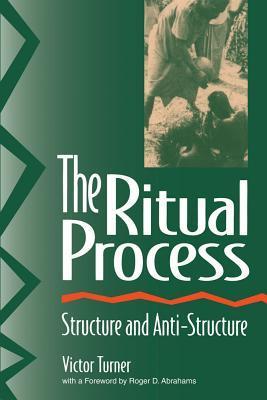
Key Principle
Society manages the tension between structure and communitas through two complementary ritual types: status elevation rites humble the strong before installing them in higher office, while status reversal rites temporarily empower the weak over the strong. Both ultimately reinforce the structural order rather than destroying it. "The implication is that for an individual to go higher on the status ladder, he must go lower than the status ladder" -- Victor Turner, Chapter 5.
Turner's typology rests on a core distinction: elevation rites are irreversible, individual, and tied to life-crisis transitions; reversal rites are reversible, collective, and tied to calendrical or group-crisis occasions. Both deploy liminality but to different ends.
Why This Matters
Turner's typology resolves a puzzle: why do rituals that invert or dissolve hierarchy end up strengthening it? The answer is that liminality functions differently for the powerful and the powerless.
For those being elevated, humiliation is a prerequisite for legitimate authority -- you cannot command others without first experiencing subjection. Novices in elevation rites are reduced to "human prima materia," undifferentiated social raw material, before reconstitution at a higher level.
For those in permanent low status, temporary symbolic power provides a purificatory "reset" that cleanses the accumulated abuses of hierarchy without abolishing it. Over time, behavior under structure "drifts away" from communitas values; those in authority "misuse and abuse the incumbents of lower positions." Cyclical reversal rites correct this drift.
Misreading either type as genuinely revolutionary or as a mere "safety valve" misses the dialectical point: communitas and structure need each other, and ritual is the mechanism that calibrates their relationship.
Good Examples
Gaboon kingship installation (Ch. 5): The populace beats, spits on, and curses king-elect Njogoni. Then elders crown him and all show respect. This composite ritual combines individual elevation with collective reversal -- "You are not our king yet; for a little while we will do what we please with you. By-and-by we shall have to do your will." The humiliation phase is not incidental; it is a structural prerequisite for the authority that follows.
Ashanti Apo ceremony (Ch. 5): An eight-day "perfect lampooning liberty" where all -- free and slave -- may speak openly about superiors' faults. The high priest explains that harbored hatred sickens the sunsum (soul) of both parties; frank speech cools and heals it. The ritual proceeds through three analytically distinct phases: lampooning (communitas through frank speech), river purification (universal values isolated), and structural rebirth (chief alone officiates, hierarchy reasserted). "To purge or purify structure by plain speaking is to reanimate the spirit of communitas."
Holi festival in India (Ch. 5): Low-caste women beat high-caste farmers; a bully rides backwards on a donkey as "King of the Holi"; purification specialists heap mud on leading citizens. "Each riotous act at Holi implied some opposite, positive rule or fact of everyday social organization." Turner corrects Marriott's reading: what floods across structural boundaries is not biological "libido" but "the liberated experience of communitas," which "involves consciousness and volition."
Counterpoints
- Communitas cannot be institutionalized without self-negation. "Communitas cannot manipulate resources or exercise social control without changing its own nature and ceasing to be communitas" (Ch. 5). Status reversal must remain bounded and ephemeral to function.
- Pseudo-hierarchies complicate the typology. Marginal groups (biker gangs, secret societies, cargo cults) develop elaborate rank systems that neither elevate nor reverse but substitute one structural modality for another -- "playing the game of structure rather than engaging in the socioeconomic structure in real earnest" (Ch. 5).
- The "safety valve" reading is insufficient. Turner insists the Apo ceremony does more than let off steam. It analytically separates communitas from structure, purifies each, and reintegrates them: "Structure, scoured and purified by communitas, is displayed white and shining again to begin a new cycle of structural time" (Ch. 5).
Key Quotes
"The stronger are made weaker; the weak act as though they were strong." -- Victor Turner, Chapter 5
"Cognitively, nothing underlines regularity so well as absurdity or paradox. ... By making the low high and the high low, they reaffirm the hierarchical principle." -- Victor Turner, Chapter 5
"If the liminality of life-crisis rites may be, perhaps audaciously, compared to tragedy...the liminality of status reversal may be compared to comedy, for both involve mockery and inversion, but not destruction, of structural rules." -- Victor Turner, Chapter 5
"The ultimate desideratum, however, is to act in terms of communitas values even while playing structural roles." -- Victor Turner, Chapter 5
Rules of Thumb
- When authority seems illegitimate, check whether the elevation process included genuine humiliation -- skipping the liminal descent undermines the legitimacy of ascent.
- Temporary inversions that remain bounded tend to reinforce order; inversions that lose their temporal frame risk becoming revolutionary movements.
- The structurally lowest figures carry purificatory power precisely because "beneath" has two senses: inferior rank and the common ground of all social life.
- Status elevation is analogous to tragedy (humbling, pain); status reversal is analogous to comedy (mockery without destruction).
- Masks in reversal rites grant chthonic and feral power -- anonymity "for purposes of aggression, not humiliation." Masking the weak in aggressive strength and the strong in humility and passivity cleanses society of its "structurally engendered sins."
- Two types of religious movements map onto the ritual types: religions of humility (mystical union, patience, undifferentiated communitas) resemble elevation liminality; religions of status reversal (functional differentiation, hierarchical inversion) resemble reversal liminality.
Related References
- Routinization of Communitas - how communitas movements inevitably develop structural features, the process that status rituals periodically reset
- Rules of Thumb from The Ritual Process - cross-chapter heuristics including the structure/communitas dialectic underlying both ritual types