Key Principle
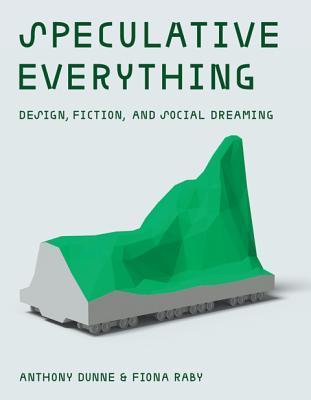
Literary fiction is not a source of inspiration for design -- it is a methodological source. Designers should start not from products but from "laws, ethics, political systems, social beliefs, values, fears, and hopes, and how these can be translated into material expressions, embodied in material culture, becoming little bits of another world that function as synecdoches" (Chapter 5). A single designed artifact implies an entire ideology. The designer creates specific objects; the viewer reverse-engineers the society that would have produced them.
Why This Matters
Design already traffics in fiction -- imaginary users, fantasy brand worlds -- but channels that fiction-making exclusively toward commercial ends. When designers refuse to acknowledge their status as "expert fictioneers in denial" (Chapter 5), they forfeit the ability to imagine alternative social arrangements. The failure mode is not a lack of creativity but a misdirection of it: fiction-making capacity locked into serving industry rather than provoking public debate.
The second failure mode is methodological laziness. Without structured approaches borrowed from literary fiction -- thought experiments, counterfactuals, reductio ad absurdum, what-if scenarios -- speculative design collapses into either vague futurism or illustrative sci-fi pastiche. The methods matter as much as the imagination.
Good Examples
Dougal Dixon, After Man (1982): Every speculative creature traces back to evolutionary science. A flightless bat whose wings evolved into legs still uses echolocation but now stuns prey. "By tempering his speculations, Dixon guides us toward the system itself and the interconnectedness of climate, plant, and animal" (Chapter 5). This is systemic extrapolation -- grounding each invention in real mechanisms.
Thomas Thwaites, The Toaster Project (2009): Reductio ad absurdum as design method. Thwaites attempted to build a toaster from scratch and discovered it contains 404 parts. He spent nine months extracting five materials and learned the last time one person could smelt iron ore alone was the fifteenth century. "The project was never about going back to basics; it was always about highlighting just how complex and difficult the processes behind even the most simple of everyday conveniences...have become" (Chapter 5).
George Saunders, Pastoralia (2000) and Black Mirror (2012): Neoliberal speculative fiction -- extrapolating today's free-market capitalism to extremes rather than borrowing historical political systems. These expose failures "at a human scale" (Chapter 5), where "all are free to live as they please but they are trapped within the options available through the market" (Chapter 5).
Counterpoints
Idiosyncratic worlds hit a wall: Matthew Barney's Cremaster Cycle is "noninstrumental, personal, subjective, and profoundly beautiful" but so private it "can only be aesthetically appreciated by others" (Chapter 5). Design's fictional worlds must remain accessible enough to provoke debate, not just admiration. Method without communicability fails.
Counterfactuals require setup: The audience needs historical backstory before they can engage with a counterfactual design. The setup is "slightly cumbersome" (Chapter 5), which means counterfactuals work best when the branching point is widely known or when the presentation includes enough context for viewers to reconstruct it.
Story making is not storytelling: The authors draw a deliberate distinction. Story making is design's generative, materializing capacity -- creating physical artifacts that instantiate fictional worlds. Storytelling is narrative. Conflating the two leads designers to think they need complete narratives when what they need is a compelling material fragment.
Key Quotes
"We are interested in working the other way around -- starting with designs that the viewer can use to imagine the kind of society that would have produced them, its values, beliefs, and ideologies." -- Dunne & Raby, Chapter 5
"Designers today are expert fictioneers in denial." -- Dunne & Raby, Chapter 5
"For us, the purpose of speculation is to 'unsettle the present rather than predict the future.'" -- Dunne & Raby, Chapter 5
"It is too easy to focus only on the experiment part; it is the thought bit that makes them interesting and inspirational for us." -- Dunne & Raby, Chapter 5
Rules of Thumb
- Start from ideology (values, ethics, social systems), not from products or environments -- then let the material artifact be a synecdoche for the whole world
- Choose your method deliberately: thought experiments for freedom from feasibility, reductio ad absurdum for making invisible systems visible, counterfactuals for escaping prediction, what-if scenarios for tracing a single premise through systemic consequences
- Ground speculations in real mechanisms (scientific, economic, behavioral) -- the constraint boundary between hard limits (physics) and soft limits (ethics, economics) is where speculative design lives
- Privilege the thought over the experiment: intellectual provocation matters more than material execution
- Keep fictional worlds accessible enough to provoke debate, not so private they can only be admired
Related References
- Physical Fictions and Make-Believe - How the artifacts produced by these methods function as props for make-believe
- Aesthetics of Unreality - Visual strategies for representing the worlds these methods generate
- Dissemination and Exhibition Strategies - How speculative designs produced through these methods circulate publicly