Key Principle
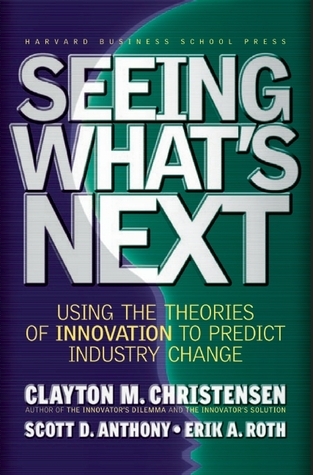
The barrier to applying disruption theory is procedural, not conceptual. Users lack "the questions to ask," "where to look," and "what to look for" -- not the underlying ideas (Introduction). This playbook converts theory into a three-step diagnostic walkthrough: detect signals, evaluate battles, assess choices.
Why This Matters
Each step feeds the next in a causal chain. Signals identify where disruption may be forming; competitive-battle analysis predicts who wins once contact occurs; strategic-choice analysis reveals whether firms are strengthening or undermining their own positions (Introduction). Skipping a step or executing them out of order produces unreliable conclusions.
Step 1: Identify Signals of Change (Ch. 1)
Determine which customer group dominates the industry circumstance, then match it to the innovation type most likely to succeed.
Diagnostic questions by customer tier:
- Nonconsumers: Are there people who "lack the ability, wealth, or access to conveniently and easily accomplish an important job for themselves" (Ch. 1)? Is anyone offering them a simpler, cheaper alternative that only needs to be better than nothing? Does the product use familiar behaviors (Pattern 2) to reach new users (Pattern 1)?
- Undershot customers: Are consumers frustrated with current limitations and willing to pay more for enhancements? If yes, expect sustaining innovations to win; integrated companies thrive while specialists struggle.
- Overshot customers: Have customers stopped paying premiums for further performance improvements? Look for: new business models serving least-demanding tiers, specialist companies targeting mainstream buyers, emergence of standards, and providers migrating closer to end customers (Ch. 1).
Critical warning: For disruptive innovations, "the lead customers are in new markets or in the low end of existing markets" (Ch. 1). Looking at high-performance tiers will produce false negatives.
Decision rule: "Identifying the industry circumstance is important because it defines what sorts of innovations will not flourish" (Ch. 1). If the circumstance is overshot, sustaining strategies will underperform. If undershot, disruptive strategies will fail to gain traction.
Step 2: Evaluate Competitive Battles (Ch. 2)
Once a signal is detected, assess who wins when entrant meets incumbent using the RPV tale-of-tape and asymmetry analysis.
RPV Tale-of-the-Tape:
| Dimension | What to Assess | Diagnostic Method |
|---|---|---|
| Resources | Things a firm has or has access to -- technology, capital, talent, brands, distribution (Ch. 2) | Visible; but "most analysts evaluate firms only on visible resources, which produces systematically wrong predictions" (Ch. 2) |
| Processes | Patterns of interaction, coordination, and decision-making that transform inputs into outputs (Ch. 2) | Ask: "What difficult problems has this company repeatedly solved over time?" |
| Values | The prioritization filter ranking which opportunities get pursued (Ch. 2) | Infer from: business model, cost structure, size/growth expectations, investment history |
Asymmetry assessment -- five sequential questions:
- What are each player's business models, motivations, and skills?
- Where are the symmetries and asymmetries between players and market needs?
- Do asymmetries favor attacker or incumbent?
- Does the innovation fit its target naturally, or is there cramming -- force-fitting it to customers who value its new attributes least (Ch. 2)?
- Is a company ceding low-end markets to move up -- and is there an "up" to sustain that retreat?
Shield-then-Sword pattern: Entrants first grow behind a "shield of asymmetric motivation" (incumbents do not want to respond), then forge a "sword of asymmetric skills" (incumbents can no longer respond) (Ch. 2). Incumbent failure is sequential -- a choice problem that hardens into a capability problem.
Step 3: Assess Strategic Choices (Ch. 3)
Evaluate whether firms are making decisions that increase or decrease their odds. Three dimensions form the preparation regimen checklist:
| Area | Correct Signal | Red Flag |
|---|---|---|
| Strategy process | Emergent strategy in uncertain markets; limited fixed-cost infrastructure; business plan that tests assumptions | Polished business plan with high confidence in numbers under uncertainty: "Alarm bells should ring when an investor sees a well-researched, highly polished business plan" (Ch. 3) |
| Hiring | Managers whose past challenges match the venture's future problems (schools of experience) | Hiring for pedigree rather than relevant problem-solving history |
| Funding | Investors "patient for growth but impatient for profits" (Ch. 3); values aligned with venture stage | Investors demanding rapid growth, pushing venture toward large markets prematurely |
Strategy flip: Once market signals clarify, shift from emergent to deliberate -- "rigorous and disciplined" execution (Ch. 3). Timing this transition is critical and may require different managers for each phase.
Common Execution Pitfalls
- Cramming: Forcing a disruptive innovation into a large existing market. "Attempts to cram a disruptive innovation into a large existing market almost never work. Customers tend to reject the innovation" (Conclusion, p. 270).
- Resource-only analysis: Evaluating competitors solely on visible resources while ignoring processes and values -- the mechanism behind systematically wrong predictions (Ch. 2).
- Sustaining entrants competing head-to-head: Sustaining-innovation startups should sell to incumbents, not fight them. Surviving as a standalone sustaining entrant is "quite rare" (Ch. 2).
- Treating disruption as binary: The same innovation can be disruptive to one firm and sustaining to another. Labeling innovations without specifying to whom produces mispredictions (Conclusion, p. 270).
- Confusing signals with certainties: "A signal should not be confused with conclusive evidence... The goal here is to dramatically increase the odds of getting things right" (Introduction, Note 9).
Five Practitioner Rules (Conclusion)
- Challenge "unassailable" data -- It describes only the past. Past success may not predict future success (p. 272).
- Use theory to guide data collection -- Theory and data are complements. "Trust. But verify" (p. 272).
- Everything is relative -- Evaluate each innovation through each firm's specific strengths, weaknesses, and mental models (p. 272).
- Distinguish announcements from actions -- "Companies often use press releases to create noise, but noise does not drive industry change" (p. 273).
- Choices matter, up to a point -- "Early decisions can greatly influence a firm's capabilities, which define its disabilities, which determine what strategic options will ultimately prove unpalatable" (p. 273).
Key Quotes
- "This is not a book about building theory. This is a book about using theory to gain insight into the future." (Introduction)
- "If you know where to look and what to look for, you can spot industry-changing firms before they emerge." (Introduction)
- "Firms succeed at opportunities that fit its resources, processes, and values and struggle with opportunities that run counter to those strengths." (Ch. 2)
- "The winner of a competitive battle is rarely preordained. Whether an innovation is deployed in a disruptive or a sustaining way is typically a management decision." (Ch. 3)
- "Think of the concepts presented in this book as a road map. When the unpredictable event inevitably happens, theory can help to quickly understand the event's implications." (Conclusion, p. 272)
Rules of Thumb
- Nonconsumption is always present; the question is whether anyone is doing something about it.
- Assume up-market migration will follow any disruptive foothold. The question is not "if" but "how fast."
- A good process is by definition inflexible -- operational excellence is what locks incumbents out of disruptive response (Ch. 2).
- The size of a market is inversely correlated with its hospitality to disruption. Foothold markets look unattractive precisely because they are safe.
- Speed of sense-making under uncertainty, not accuracy of prediction, is the real payoff.
Related References
- signals-of-change -- Step 1 deep dive: customer tiers, nonconsumption tests, overshooting indicators
- competitive-battles -- Step 2 deep dive: RPV framework, shield-and-sword dynamics, cramming diagnostics
- strategic-choices -- Step 3 deep dive: preparation regimen, value network selection, disruptive black belt