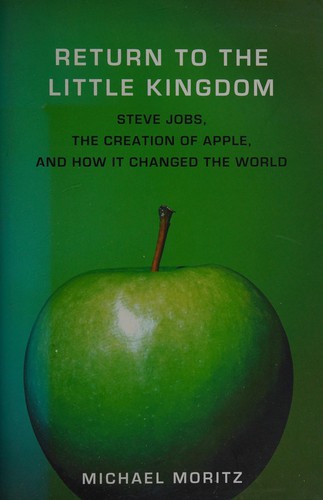
Implementation Playbook
A prescriptive, sequence-ordered guide to applying Return to the Little Kingdom to a startup's life. Each step gives the action, the mechanism (why it works), and the pitfall the Apple narrative demonstrates.
1. Found with a complementary partnership (builder + merchant)
- Action: Pair a builder who makes the thing with a merchant/aesthete who packages, prices, and sells it. Forge the pairing on a small real project before betting on the big one.
- Mechanism: Neither half ships a desirable product alone. The builder's prototype is "useful to himself, so he considers it finished" — commercially inert until a merchant turns it into a bill of materials, a case, a price, and a channel. The blue-box business was the proto-Apple template years before Apple existed. (Chapter: Stanley Zeber Zenskanitsky; The Little Blue Box)
- Pitfall: Genius trapped inside one unreachable person never becomes a product. Alex Kamradt had Wozniak's working terminal and "couldn't" extract it — "The genius is nothing unless you can get it out of him." A second genius does not fix this; a complementary operator does.
2. Make contrarian product bets where the herd is wrong about what matters
- Action: Bet against consensus precisely where the crowd is pricing in a risk you can see is absent. Choose the cheap, unfashionable component (6502 over 8080), the disputed technology (dynamic RAM), the unconventional form (plastic case, eight slots).
- Mechanism: "Don't think like everyone else." The orthodoxy was right about 8080 network effects but wrong about cost at the hobbyist price point; a 7x price gap captured the one buyer who mattered. A correct contrarian bet is rarely a leap of faith — the 6502 was wiring-compatible with Wozniak's existing design, so the move "cost nothing in rework." (Prologue; Chapter: Stanley Zeber Zenskanitsky; Half Right)
- Pitfall: Contrarianism for its own sake. The bet must rest on a real, visible asymmetry, not defiance. The luck in the DRAM bet was tolerable only because the downside was bounded.
3. Bootstrap capital-efficiently (net-30, float, subcontract everything)
- Action: Sequence the cash cycle: collect from customers before you pay vendors. Buy parts on net-30/45/60 trade credit, sell cash-on-delivery, and subcontract every capability you can buy more cheaply than build.
- Mechanism: Customer cash inside the supplier window is an interest-free loan that scales with growth — "keep our customers on a very short leash." Define the company narrowly ("designing, educating, and marketing") and let subcontractors absorb the demand whipsaw: "Capability you don't build, you don't have to finance." (Chapter: on Apple's 1976 founding; Up to Spec)
- Pitfall: Outsourcing concentrates risk into single points of failure you can't fix in-house. Soft tooling and an incompetent case vendor ("a bunch of plumbers") nearly killed Apple in Sept 1977 — "It was life and death for us. We'd have had a good product and not been able to ship it."
4. Manufacture credibility before scale (Impute, opinion-makers, the press)
- Action: Project the size and seriousness of a real company before the reality exists — polished address, answering service, a booth that looks substantial, blue-chip backers. Lavish attention on a few credible intermediaries (investors, impartial analysts, the press).
- Mechanism: "Empathy. Focus. Impute." — people infer substance from projected signals, so image is the product's leading edge. Credibility is literal finance: manufactured solidity is what made strangers extend net-30 terms to two men in a garage. Confidence signals compound transitively — the right first backer buys "the whole chain" (Rock → analysts → journalists → customers); "both money men and scribblers usually behave like sheep." Against a giant you can't outspend, "the press was the equalizer." (Introduction; Chapter: The Best Salesmen; on first venture financing)
- Pitfall: Image works only up to the limit of verifiable truth — past it, the same press you cultivated takes you apart (the dishonest Lisa/Mac "family" story). And the multiplier must stay independent: the moment an "impartial" analyst takes a stake, he stops being a multiplier. Pure Impute with no product eventually collapses.
5. Find the killer app and open a platform
- Action: Identify the one application that makes people buy your hardware to get it, then lock a distribution/exclusivity advantage around it. Open the platform (slots, programmer discounts) and subsidize, don't strangle third-party developers.
- Mechanism: "The software tail that wags the dog" — VisiCalc inverted sales logic and drove ~19% of Apple's machines in its ~12-month exclusivity window. Outsiders create most of a platform's value (80-column cards, modems, Apple Writer), so the maker bankrolls them. (Chapter: A Lot of Poop; The Bozo Explosion)
- Pitfall: Proximity is not insight — the people closest to the product (Markkula read VisiCalc as "a checkbook program") systematically misjudge what the market will buy; the outsider analyst grasped it first. And builders chronically undervalue software: "Software is the glass through which the majority of our users see the Apple."
6. Ship with discipline but avoid premature commitment
- Action: Hold three mottos in tension — "It's Not Done Until It Ships," "Don't Compromise," "The Journey Is the Reward." Ship over polish, but never announce a date or quality you cannot reliably hit.
- Mechanism: The failure modes are never finishing, shipping mediocrity, and burnout; the mottos counter each. Experience tempers impulse, innocence questions convention — "discipline without audacity ships nothing new; audacity without discipline ships nothing at all." (Chapter: Can We Ship Your Party?; Up to Spec; Apple III/Lisa/PARC)
- Pitfall: "Hoist with its own petard." Announcing the Apple III before it could ship converted marketing optimism into engineering catastrophe. A premature public commitment turns the bad-news filter on: bottom says "We're in trouble," top says "It will be okay. Let's ship."
7. Manage hypergrowth as an organization problem, not a demand problem
- Action: Treat the transition from "business" to "company" as deliberate work. Hire slowly and overqualified, screen hard, and actively manage the resentment professionalization creates.
- Mechanism: A "business" improvises money; a "company" has systems and structure, and building one is "arduous and protracted." The Bozo Explosion is recursive: hires hire more hires, so "one early misjudgment could be amplified" — mediocrity compounds geometrically. (Chapter: The Bozo Explosion; Apple Values/Black Wednesday)
- Pitfall: Importing clashing corporate "blood types" (HP/National/Intel) creates warring enclaves, not a blend; bureaucracy and the egalitarian mirage drive the founding energy out the door (burnout: "It was almost inhuman").
8. Guard against success-bred arrogance
- Action: Treat applause as a leading indicator that masks lagging organizational rot. Audit how you treat suppliers, dealers, and competitors. Never underestimate a slow incumbent that out-executes via distribution.
- Mechanism: "The notion of empire" — success breeds a swagger that "threatened to unravel much of the earlier success." Arrogance propagates into operations; the gravest threat to a winner is its own conceit, not its rivals. IBM out-executed Apple in 13 months via outsourcing while Apple held it in contempt. (Chapter: Welcome IBM, Seriously —; Epilogue)
- Pitfall: The founder's irreplaceable instinct is also the unaccountable instinct — "his strengths were also his greatest weaknesses." Intuition-over-process plus a bad-news filter produced the committee-designed, schedule-rushed Apple III. Closing the platform that third parties had made valuable was self-sabotage.
Key Quotes
"The genius is nothing unless you can get it out of him. I couldn't." (Chapter: Stanley Zeber Zenskanitsky)
"My job was to collect money from customers before we paid our vendors. We kept our customers on a very short leash." (Chapter: Up to Spec)
"Empathy. Focus. Impute." (Chapter: on first venture financing)
"It was the classic story of people at the bottom saying, 'Things aren't working here...' and the people at the top would say, 'It will be okay. Let's ship.'" (Chapter: Welcome IBM, Seriously —)
Related References
- The Core Framework: Accident, Partnership, Productization
- The Builder + Merchant Partnership
- Contrarian, Non-Consensus Bets
- Capital-Efficient Operating Model
- Manufactured Image & Reputation-First Marketing
- The Killer App & Platform Strategy
- shipping discipline
- Growth Corrodes Culture (The Bozo Explosion)
- Success Breeds Arrogance & Underestimating Incumbents
- Productize, Don't Invent
- Founder vs. CEO — The Irreplaceability Thesis
- Rules of Thumb