Key Principle
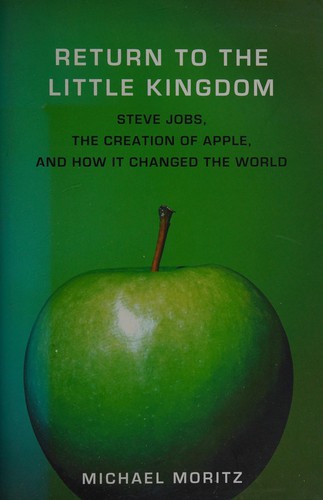
Apple was not a master plan executed by visionaries. It was a chain of contingent accidents — "haphazard breadcrumbs strewn along the trail of life" (Prologue) — funneled through one complementary partnership (Wozniak the builder, Jobs the merchant/aesthete), whose real and only durable edge was productizing and refining other people's ideas, not inventing them. The book's organizing argument rests on three interlocking pillars: accident (path dependence, not design), partnership (a builder/merchant pairing supplying what neither half could alone), and productization (value accrues to whoever ships and refines, not whoever invents).
How they interlock: the accident-chain delivers the partnership (a boyhood ultimatum put Jobs near Wozniak; Atari steered Jobs to Don Valentine); the partnership performs the productization (Wozniak's genius was inert until Jobs extracted, packaged, and sold it); and productization is what converts a string of lucky breaks into a durable company. Remove any one pillar and Apple dissolves — there is no plan underneath to catch it.
Why This Matters
If you read Apple as a designed strategy, you draw the wrong lessons: you look for the visionary master plan and the breakthrough invention. The book insists both are illusions. Apple inherited a talent pool the Pentagon paid to concentrate ("a new worker was arriving in Sunnyvale every sixteen minutes," Boomtown by the Bay); it borrowed its defining ideas from Xerox PARC; and it survived on execution and image, being "little more than an assembler of other people's work" (Apple III/Lisa/PARC). The stakes: misattributing Apple's success to invention hides its actual competence — disciplined productization through a rare complementary partnership — and makes it impossible to copy or to recognize when it is missing.
Good Examples
- The accident chain in miniature (Prologue): Los Altos boyhood → Wozniak a boyhood chum → summer at Atari (Pong) → Atari's Nolan Bushnell had raised money from Don Valentine → Bushnell steered Jobs to Valentine, Apple's first backer. Each link is phrased "Had I not... I would never have..."; remove one and the result dissolves.
- The partnership doing productization ("Stanley Zeber Zenskanitsky"): Alex Kamradt had a working terminal but couldn't extract it from Wozniak's head — "The genius is nothing unless you can get it out of him. I couldn't." Jobs stepped into exactly that operator slot: "The responsibility for seeing the design got done was Jobs's" (Way).
- Productization stated aloud (Lisa Sneak Preview): Apple credited Xerox with the concept, then named its own contribution — "We took those ideas... and we internalized them. We Apple-ized them" (Lewin). Xerox invented the GUI and shipped nothing; Apple refined and shipped it.
Counterpoints
- A technical idea is not a business (Super Secret Sky Spies): Jerry Wozniak co-founded a venture and ran out of money — "It was probably a good technical idea but we didn't understand what it took to put a business together." Invention without the productizing half produces nothing. The Woz-without-a-Jobs control case.
- Founder magic is not portable (Prologue): "NeXT took Steve out of his natural milieu. He was trying to sell computers to large companies—entities not swayed by products with visceral appeal." The same gift that built Apple converted nothing in a market that buys on rational criteria — only ~50,000 NeXT machines sold.
- Vision unanchored from feasibility floats (Apple III/Lisa/PARC): Jobs "decided what he wanted Lisa to look like before he was sure what technology would be in it" — the same method that produces breakthrough aesthetics also produced runaway cost and a ~5-year, ~$10,000 slip.
Key Quotes
"Such are the haphazard breadcrumbs strewn along the trail of life." — Michael Moritz, Prologue
"We took those ideas... and we internalized them. We Apple-ized them." — Dan'l Lewin, Lisa Sneak Preview
"The genius is nothing unless you can get it out of him. I couldn't." — Alex Kamradt, Chapter: Stanley Zeber Zenskanitsky
"There is no greater distance known to man than the single footfall that separates a CEO from a founder." — Michael Moritz, Prologue
Rules of Thumb
- Read a company's success as a chain of contingent links, not a plan; ask which single accident, if removed, would dissolve the outcome.
- Pair a builder with a merchant/aesthete; one without the other either runs out of money or never gets the genius out of the lab.
- Compete on productization and refinement, not on being first to invent — the returns go to whoever ships and refines.
- Treat a founder's gift as market-specific, not generic genius; place it where buyers purchase on desire.
Related References
- Founder vs. CEO — The Irreplaceability Thesis - the partnership pillar extended into the irreplaceability thesis
- Productize, Don't Invent - the productization pillar in full
- The Builder + Merchant Partnership - the builder/merchant pairing in depth
- Contrarian, Non-Consensus Bets - non-consensus thinking as the founder's shared root
- Manufactured Image & Reputation-First Marketing - "Apple-izing" the image as aggressively as the technology