Key Principle
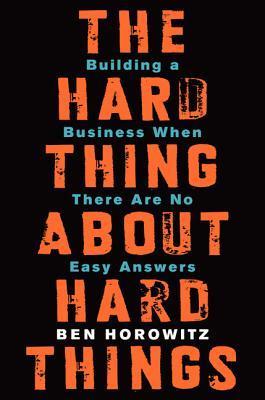
Most management frameworks assume stable environments. Chapter 8 exists to address what happens when foundational assumptions are violated — by a trusted partner, by market dynamics, by the constraints of growth itself. The governing principle is the Purple Sky Principle: when the environment invalidates your mental model, adapt immediately rather than argue. "Just when you think there are things you can count on in business, you quickly find that the sky is purple. When this happens, it usually does no good to keep arguing that the sky is blue." (Chapter 8: First Rule of Entrepreneurship)
Four related edge-case frameworks cluster around this principle: the Accountability vs. Creativity Paradox (and its resolution), the Freaky Friday Management Technique, Loyalty Inversion, and the when-to-sell framework.
Why This Matters
Standard accountability logic — hold people to what they commit — breaks down in creative, high-uncertainty technology work. Strict accountability silences risk-taking; zero accountability activates the Chump Factor, demoralizing the hardest-working employees who do meet their commitments. Neither pole is survivable. Similarly, the instinct to remain loyal to executives who helped build the company feels correct but is structurally misplaced: it protects the executive at the direct cost of everyone reporting to them.
Without frameworks for these edge cases, organizations collapse into one of two failure modes: cover-your-ass cultures that avoid hard problems, or consequence-free cultures that drive out their most reliable performers. The when-to-sell question fails for a different reason — founders conflate financial pressure with strategic reasoning, or confuse "multiple offers" as a negotiating position when it is actually a market signal.
Good Examples
Purple Sky in action — Ernst & Young reversal: With 48 hours' notice during the HP acquisition, E&Y reversed an audit approval that would have forced a revenue restatement destroying the deal. Horowitz did not argue. He mobilized his network overnight, amended three bank contracts, and preserved the deal at $14.25/share. The productive response was complete re-routing around the new constraint, not relitigating the assumption. (Chapter 8: First Rule of Entrepreneurship)
Freaky Friday resolving engineering/QA conflict: When two teams at Opsware with strong personnel were in chronic conflict driven by mutual incomprehension, Horowitz permanently swapped their heads. Within one week, both executives had diagnosed root causes that months of arbitration had failed to surface, and implemented process fixes. "The two organizations worked better together than any other major groups in the company from that point to acquisition." (Chapter 8: First Rule of Entrepreneurship)
The local maxima signal — Opsware sale: When eleven companies made simultaneous acquisition offers, Horowitz recognized this as a structural data point: the market had fully priced Opsware's value. BMC was about to acquire BladeLogic (Opsware's primary competitor), and virtualization was about to require expensive R&D. No additional premium was achievable. Opsware sold to HP for $1.65 billion. (Chapter 8: First Rule of Entrepreneurship)
Counterpoints
Freaky Friday with weak personnel makes things worse: The technique only works when both teams have strong managers and strong personnel. If the conflict has a clear underperformer, personnel action is the right instrument. Swapping heads of unequal teams amplifies the problem rather than resolving it — the stronger leader now inherits both the structural problem and the weaker team.
Selling at a false local maximum — Pointcast: Pointcast declined billion-dollar acquisition offers in the early Internet era, believing the market would continue expanding. Product architecture flaws caused customer attrition. The market collapsed and never returned. The error was treating offer volume as validation rather than examining whether market conditions genuinely supported continued independence. (Chapter 8: First Rule of Entrepreneurship)
The Accountability vs. Creativity Paradox — under-accountability failure: "If your hardest working, most productive employees feel like chumps and you are looking for the culprit, look in the mirror." (Chapter 8: First Rule of Entrepreneurship) The Chump Factor does not penalize your underperformers — they are already comfortable. It drives out the people you cannot afford to lose.
Key Quotes
"Just when you think there are things you can count on in business, you quickly find that the sky is purple. When this happens, it usually does no good to keep arguing that the sky is blue." — Ben Horowitz, Chapter 8: First Rule of Entrepreneurship
"In the technology business, you rarely know everything up front. The difference between being mediocre and magical is often the difference between letting people take creative risk and holding them too tightly accountable." — Ben Horowitz, Chapter 8: First Rule of Entrepreneurship
"The number-one way that executives fail is by continuing to do their old job rather than moving on to their new job." — Ben Horowitz, Chapter 8: First Rule of Entrepreneurship
"Your loyalty must go to your employees — the people who report to your executives." — Ben Horowitz, Chapter 8: First Rule of Entrepreneurship
Rules of Thumb
- When a foundational assumption is violated, the clock starts immediately — adapt now, argue never.
- Resolve the Accountability vs. Creativity Paradox across three dimensions: seniority (senior = higher forecast accuracy required), objective difficulty (some goals are genuinely hard), and quality of risk (well-reasoned risk ≠ reckless risk).
- Effort is non-negotiable. The three-dimension framework applies to results and creative uncertainty — not to effort. Leniency on effort failures destroys the organization for different reasons.
- Only swap team heads (Freaky Friday) when both teams have strong personnel. If there is a clear villain, use personnel action.
- Loyalty runs downward: to the engineers and salespeople owed a world-class management team, not upward to the executive who helped build the company.
- When multiple acquirers make offers simultaneously, this is a market signal (local maximum), not a negotiating position.
- Pay yourself a market salary once the company becomes a real business — financial stress contaminates sell/hold decisions.
- Communicate the logical framework for selling to employees (the conditions under which either decision is correct) rather than the binary answer.
Related References
- The Hard Thing About Hard Things — Core Framework - The Hard Thing Gap and wartime CEO mode that context Chapter 8's exception-handling
- Implementation Playbook — How to Apply the Hard Thing Framework - Practical sequence for applying these frameworks in crisis
- The Technical Founder Thesis and Andreessen Horowitz - Chapter 9 resolution of the founder loyalty and executive quality tensions