Key Principle
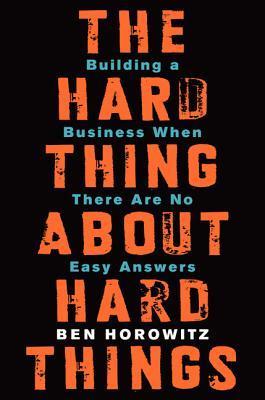
The central thesis: complex, dynamic situations resist formula. The hard thing is not the decision in the abstract — it is the execution reality when circumstances turn against you. Management literature addresses idealized versions of hard decisions; Horowitz's framework addresses what happens when those idealized conditions fail.
Two structural claims follow from this:
The Hard Thing Gap: The gap is not a failure of effort or intelligence. It is structural. Every framework for a hard decision is built from averaged prior experience, not from the specific, live situation in front of you. At the moment of existential crisis, the CEO reaches for a framework — and the framework fails precisely because it cannot encode the context that makes one response correct and another catastrophic.
The No Recipe Principle: Because the gap is structural, the correct format for useful guidance is narrative, not prescription. Narrative preserves contextual texture; frameworks strip it out. Horowitz narrates rather than prescribes throughout the book for this reason — and that choice is itself an argument about epistemology.
Fear vs. Gutlessness: Fear is universal. Gutlessness is a choice. Acting despite fear — not the absence of it — is the operational definition of courage that underlies every crisis decision in the book. A CEO who conflates feeling fear with a signal not to act will wait for certainty that never arrives. (Chapter 1: From Communist to Venture Capitalist)
Narrative Construction as an Operational Skill: Immersion in multiple incompatible social worlds — football culture and advanced mathematics, radical politics and venture capital — produces the capacity to generate alternative plausible interpretations of the same facts. This is not a personality trait; it is a learnable leadership skill. The alternative narrative does not need to be certain. It only needs to be credible. Hope is sustained by possibility, not probability. (Chapter 1: From Communist to Venture Capitalist)
Why This Matters
Without the No Recipe Principle, leaders treat crisis as a category error — "this shouldn't be happening" — and apply generic advice to specific situations with damaging precision. The framework gives false confidence in the wrong response at the moment when stakes are highest.
Without the Fear vs. Gutlessness distinction, leaders conflate emotional state with strategic signal. They wait for fear to subside before acting. Since fear in a genuine crisis never fully subsides, they never act — or they act too late. The ability to separate feeling frightened from yielding to that fear is the precondition for every difficult decision the book describes.
Without narrative construction skill, a CEO facing an audience of worried employees cannot offer anything but shared despair. The workforce collapses emotionally before the actual business does. A single credible alternative interpretation of the facts — even if its probability is low — is often sufficient to maintain function.
Good Examples
Loudcloud's public offering under collapse: Horowitz took Loudcloud public in 2001 with minimal trailing revenue and six weeks of cash. The decision was made while frightened. The fear did not disappear; acting despite it was the only available path. The alternative narrative — that the company could survive long enough to find a different structure — was credible enough to hold the organization together.
The Berkeley formation: Horowitz describes moving between football culture and advanced mathematics at Berkeley, encountering radically different readings of identical events. This multi-world exposure was not incidental — it built the capacity to construct alternative interpretations under pressure. "Until you make the effort to get to know someone or something, you don't know anything. There are no shortcuts to knowledge, especially knowledge gained from personal experience. Following conventional wisdom and relying on shortcuts can be worse than knowing nothing at all." (Chapter 1: From Communist to Venture Capitalist)
The Joel Clark Jr. incident: The childhood encounter where Horowitz acted rightly despite being commanded otherwise — and despite being frightened — established the cognitive separation between feeling fear and yielding to it. This is the origin event for the Fear vs. Gutlessness principle that underlies the entire wartime CEO arc.
Counterpoints
Recipe-thinking under pressure: When circumstances are most threatening, the instinct is to reach for a proven framework. This instinct is strongest exactly when frameworks are least reliable — because the situation is, by definition, not the averaged situation the framework was built from. Leaders who cannot tolerate recipe-absence will apply the wrong instrument with great confidence.
Conventional wisdom as foreclosure: Relying on shortcuts and conventional wisdom does not simply fail to help — it actively forecloses the alternative interpretations that sometimes turn out to be correct. The leader who knows the "standard playbook" for a situation may be worse off than one who approaches it with no prior frame, because the playbook suppresses search for other answers.
Optimism vs. honest narrative: Constructing an alternative narrative is not the same as projecting false optimism. A CEO who tells employees everything is fine when it is not destroys the early warning systems that make survival possible. The honest alternative narrative acknowledges the real situation and offers a credible path — it does not deny the threat.
Key Quotes
"There's no recipe for really complicated, dynamic situations... That's the hard thing about hard things—there is no formula for dealing with them." — Ben Horowitz, Introduction
"The hard thing isn't setting a big, hairy, audacious goal. The hard thing is laying people off when you miss the big goal." — Ben Horowitz, Introduction
"It taught me that being scared didn't mean I was gutless. What I did mattered and would determine whether I would be a hero or a coward." — Ben Horowitz, Chapter 1: From Communist to Venture Capitalist
"The simple existence of an alternate, plausible scenario is often all that's needed to keep hope alive among a worried workforce." — Ben Horowitz, Chapter 1: From Communist to Venture Capitalist
Rules of Thumb
- When you reach for a framework during a crisis, stop and ask what context the framework cannot encode — that context is where the decision actually lives.
- Separate feeling frightened from the decision whether to act. Fear is information; gutlessness is a choice.
- If the situation looks uniformly bad, generate at least one alternative plausible interpretation before concluding there is no path. The alternative does not need to be probable — only credible.
- Avoid conventional wisdom in novel situations. It forecloses exactly the alternative readings that novel situations require.
- Tell people what is actually happening. An honest narrative that acknowledges the threat and offers a credible path is more stabilizing than false optimism.
Related References
- Wartime CEO vs. Peacetime CEO - the behavioral mode that Fear vs. Gutlessness makes possible under existential threat
- The Struggle - the internal condition the No Recipe Principle is designed to help navigate