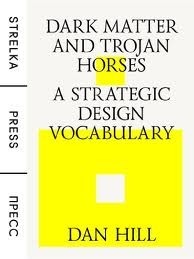
Key Principle
Strategic design is differentiated from six adjacent disciplines, each comparison isolating a specific capability gap that strategic design fills. Without explicit differentiation, strategic design collapses into whichever adjacent discipline is locally dominant -- becoming "just another consultancy" or "just another design studio" -- and loses the meta-matter zoom (the oscillation between strategic context and tangible artefact) that makes it effective at systemic scale.
The six contrasts:
- vs. Engineering: Strategic design adds problem reframing upstream of problem-solving -- "questioning the question" rather than accepting the brief as given.
- vs. Policy-making: Strategic design adds prototyping as a learning mechanism and stewardship through delivery, replacing abstract models with enacted strategy.
- vs. Content expertise: Strategic design adds cross-disciplinary integration, escaping path-dependent disciplinary thinking that locks solutions into one domain's assumptions.
- vs. Management consultancy: Strategic design adds embedded long-term positioning and production skills that generate learning through doing, rather than external analysis and reports.
- vs. One-off interventions: Strategic design adds systemic replicability by engaging the "dark matter" of organisations, policy, and culture -- without which interventions remain isolated successes.
- vs. Traditional design: Strategic design adds meta-level engagement (relationships, contexts, strategies) while maintaining the symbiotic link between meta and matter.
Why This Matters
Each contrast maps to one dimension of the policy-delivery gap -- the structural separation between policy intent and delivery outcome that Hill identifies as governance's central pathology. Engineering and policy-making fail at delivery learning. Consultancy fails at embeddedness. Content expertise fails at integration. One-off interventions fail at replicability. Traditional design fails at engaging invisible structure. Strategic design's claim is that it addresses all six gaps simultaneously.
The boundaries between strategic design and these adjacent disciplines are permeable -- strategic design borrows from all six. This permeability is precisely why the distinctions must be actively maintained. Without vigilance, the practice drifts toward whichever discipline exerts the strongest gravitational pull in a given institutional context.
Hill's ultimate argument is that the social contract between state, market, and civil society is itself a designed artefact -- "imagined, articulated, and stewarded into position" -- and its visible failure (austerity, unrest, democratic erosion) is a design failure requiring design methods. The six contrasts define the minimum specification for a practice capable of operating at that scale.
Good Examples
Problem reframing vs. engineering (Contrast 1): Cedric Price's provocation -- "Technology is the answer. But what is the question?" -- captures the upstream move. Where engineering optimises within a given problem frame, strategic design asks whether the frame itself is correct. The Barangaroo development in Sydney demonstrates what happens when this capability is absent: even world-class architects cannot challenge a flawed brief from the consultant position. (Sections 6, Concluding Chapter)
Embedded positioning vs. management consultancy (Contrast 4): Roger Martin's critique applies directly: "The idea that we have to choose between a mediocre, well-executed strategy and a brilliant, poorly executed one is deeply flawed." Management consultancy separates strategy from execution; strategic design insists "strategy is enacted through a focus on the quality of execution, rather than an abstract model." The Low2No project in Helsinki exemplifies this -- the team was embedded within Sitra, not contracted externally. (Concluding Chapter, Section 7)
Systemic replicability vs. one-off interventions (Contrast 5): Renew Newcastle placed 60+ ventures in 30+ empty spaces by engaging leasing arrangements (dark matter), not by producing a single showcase project. The Low2No building project changed Finnish fire codes permanently -- not as an exception but as a platform for others to build with timber. Without engaging dark matter, interventions remain "installations." The principle: "Think of everything as a platform" (Karsten Schmidt, cited in Section 7). (Sections 7, 8)
Counterpoints
The collapse risk is real and constant: Because strategic design borrows from all six adjacent disciplines, practitioners face continuous pressure to specialise into one. Institutional contexts reward legibility -- "Are you a consultant? An architect? A policy advisor?" -- and penalise the hybrid positioning that makes strategic design effective. The framework must be actively defended. (Concluding Chapter)
People in positions of influence may not recognise the problem: "It's all too possible to find people in positions of influence who don't even know what the social contract means." If decision-makers cannot see the designed nature of institutional arrangements, they cannot see why strategic design is needed. The six contrasts must be communicated in terms decision-makers already understand. (Concluding Chapter: And To What End?)
Social unrest as evidence of the gap: "The significant stress fractures of social unrest that have emerged on the streets of Athens, Cairo, London, Madrid, Toronto and New York are partly indications of poor social-contract design." The six capability gaps are not academic distinctions -- their aggregate failure produces real-world institutional breakdown. (Concluding Chapter: And To What End?)
Key Quotes
"As opposed to engineering, with its focus on problem solving, strategic design is oriented towards questioning the question, reframing if necessary." -- Dan Hill, Concluding Chapter: Strategic Design in Summary
"Strategy is enacted through a focus on the quality of execution, rather than an abstract model." -- Dan Hill, Concluding Chapter: Strategic Design in Summary
"The significant stress fractures of social unrest that have emerged on the streets of Athens, Cairo, London, Madrid, Toronto and New York are partly indications of poor social-contract design." -- Dan Hill, Concluding Chapter: And To What End?
"We need to believe that reorienting our various cultures of decision-making may be the only civilised way forward." -- Dan Hill, Concluding Chapter: And To What End?
"It's all too possible to find people in positions of influence who don't even know what the social contract means." -- Dan Hill, Concluding Chapter: And To What End?
Rules of Thumb
- If you cannot articulate how your work differs from each of the six adjacent disciplines, you are likely drifting into one of them
- The upstream move (questioning the question) is strategic design's most distinctive and most easily lost capability
- Embeddedness is non-negotiable: external positioning structurally prevents engagement with dark matter
- Replicability requires engaging policy, regulation, and organisational culture -- not just producing an exemplary artefact
- The meta-matter zoom (oscillating between strategic context and tangible project) must be actively steered; losing either end collapses the practice
- Strategy separated from execution is "deeply flawed"; insist on enacted strategy through quality of execution
- Cross-disciplinary integration is not optional -- path-dependent disciplinary thinking is itself a failure mode
Related References
- Wicked Problems and System Brittleness - The problem structure that demands all six capabilities simultaneously
- Why Design Thinking Fails: The Consultancy Trap - Detailed case for why Contrast 4 (vs. management consultancy) matters