entrepreneurship
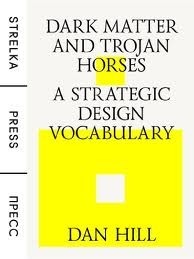
Dark Matter and Trojan Horses: A Strategic Design Vocabulary
Dan Hill 2012 10 references
Dan Hill's strategic design vocabulary for systemic intervention — use when designing at the intersection of policy, organisational culture, and tangible prototypes to address governance-scale problems.
strategic-design systems-thinking public-policy organisational-culture design-thinking governance
Overview
The Core Framework
- Strategic design = systemic redesign of decision-making cultures, not products or services
- The invisible dark matter (~83%) — organisational culture, policy, legislation, incentive structures — determines whether any intervention scales
- Use four plays to oscillate between the tangible and the systemic: MacGuffin, Trojan Horse, Platform, Layer
- Close the policy-delivery gap by treating strategy and execution as inseparable (the meta-matter zoom)
- Design must be embedded inside organisations — external consultancy addresses only ~5% of the problem space
Quick Lookup
| Situation | Do This | Avoid This |
|---|---|---|
| Starting a systemic intervention | Begin with a MacGuffin — a tangible project that creates gravitational pull | Starting with strategy documents that never touch reality |
| Prototype won't scale | Engage the dark matter — map the organisational culture, policy, and incentives around it | Building more prototypes without changing the institutional context |
| External consultancy engagement | Embed inside the organisation for long-term stewardship | Parachute in, deliver a report, leave |
| Post-crisis moment | Distinguish good failure (system learns) from bad failure (snaps back) | Rebuilding exactly what existed before |
| Designing policy | Prototype and iterate — treat policy as a design challenge | Separating policy ambition from delivery mechanism |
| Facing a wicked problem | Reframe: problem-definition IS the problem — use synthesis, not just analysis | Treating it as a bounded, departmental problem |
The Key Insight
"Everything around us is also the result of a choice, a design decision in effect. So when we see failure, we can only assume a breakdown between policy, the intended design, and delivery, the outcome." — Dan Hill, What is The Problem?
References
No references match your search.