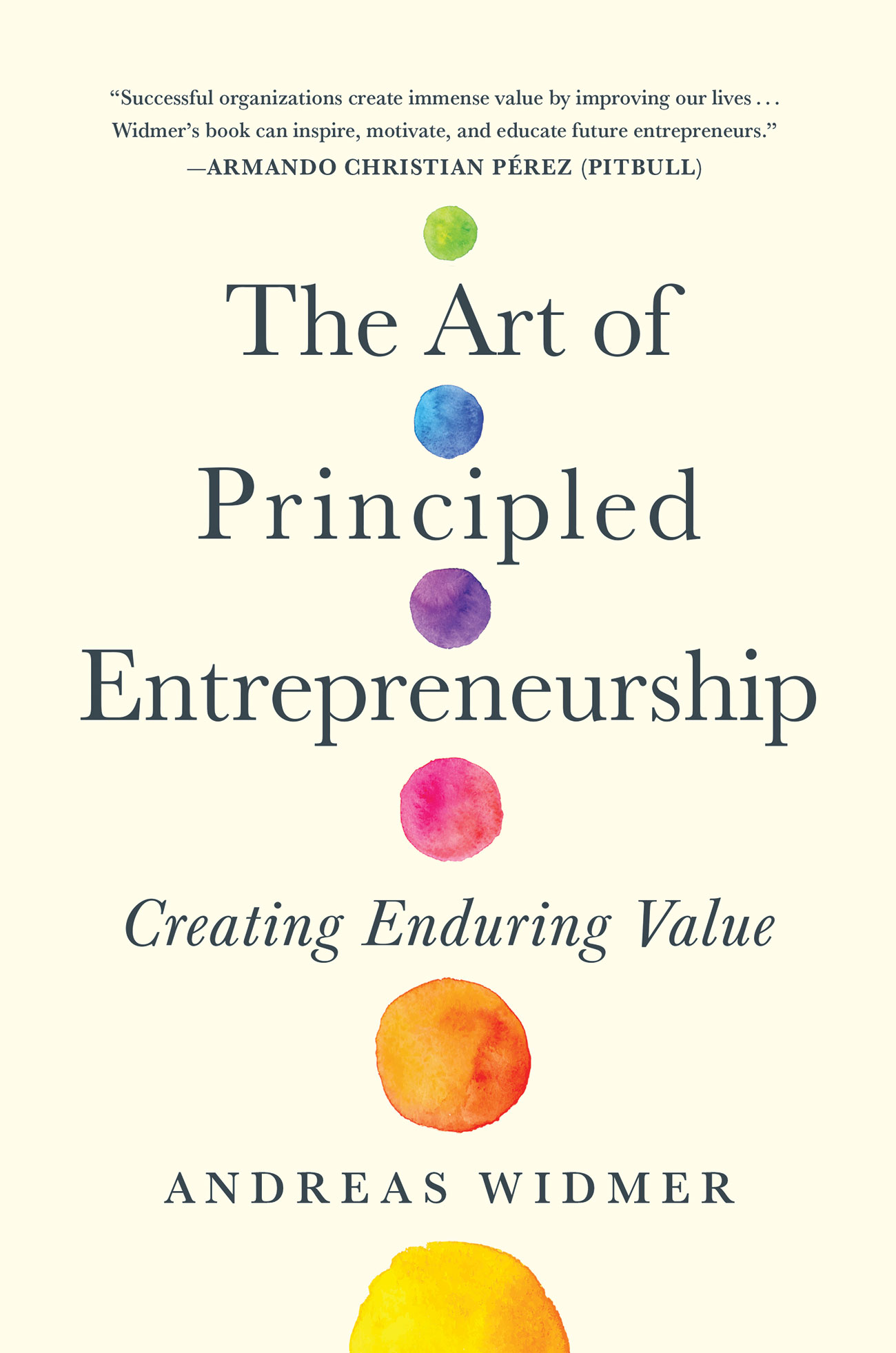
entrepreneurship
The Art of Principled Entrepreneurship
Andreas Widmer 2022 10 references
Andreas Widmer's five-pillar framework for building businesses that integrate values, creativity, and profit through long-term value creation. Use when advising on entrepreneurial strategy, company culture, hiring philosophy, or ethical business building.
principled-entrepreneurship company-culture value-creation ethical-business leadership hiring-philosophy long-term-strategy
Overview
The Core Framework
- Principled Entrepreneurship rejects the false choice between values, creativity, and profit — all three reinforce each other when profit comes from creating value for others
- Five Pillars: (1) Economy exists for people, (2) Work is creation, (3) Culture eats strategy, (4) Win-win solutions, (5) Think like an entrepreneur
- Creator vs. Harvester: Every strategic decision sits on a continuum — creators reinvest in long-term value; harvesters extract short-term profit
- The mechanism: Entrepreneurs capture only 2% of value created; 98% flows to employees and society (Nordhaus) — PE is inherently generative, not extractive
- PE is an art (Fingerspitzengefuhl) — intuitive judgment built through experience, not reducible to formulas
Quick Lookup
| Situation | Do This | Avoid This |
|---|---|---|
| Evaluating a strategic decision | Apply the creator-harvester lens: does this create long-term value? | Optimizing for quarterly metrics at the expense of capability |
| Hiring | Recruit for ergon (innate talent + character), train for skills | Over-indexing on credentials and technical skills |
| Building culture | Lead by example with explicit values; let culture self-select | Imposing culture through rules rather than demonstrated behavior |
| Defining company purpose | Order: Create good products → Support human flourishing → Reward stakeholders | Putting shareholder returns first |
| Facing competition | Seek co-opetition — competitors as collaborators in mutual perfection | Zero-sum war mentality that destroys shared ecosystems |
| Planning succession | Build structural mechanisms (equity timelines, successor-dependent redemption) | Assuming good intentions alone prevent harvester drift |
| Setting value proposition | Apply the "So What?" test — answer the customer's implicit question at first glance | Leading with features instead of customer benefit |
The Key Insight
"If profit is generated by Principled Entrepreneurship — by creating value for others — then your success is in harmony with the success of your customers, employees, suppliers, communities, and society at large." — Andreas Widmer, Preface (Charles Koch)
References
No references match your search.