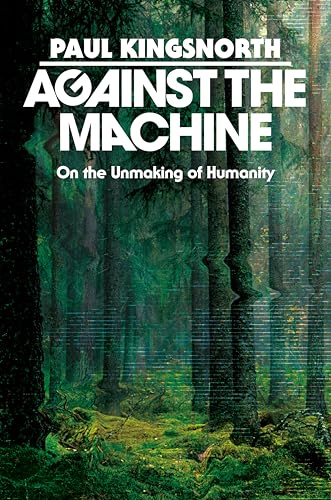
Key Principle
The West deviated from every other civilisation by dismantling its own sacred order from within, then failing to replace it with anything but money and self-worship. Chapter I traces the causal chain: Christendom provided "a throne at the heart" -- a source of ultimate authority and meaning -- for roughly 1,500 years. The Enlightenment attempted to build morality loosed from theology; this failed, devolving into emotivism where moral utterances express nothing more than personal preferences (Ch. I). The empty throne was not left vacant -- "every revolution from 1789 to 1968 ultimately failed, but in destroying the old world and its sacred order they cleared a space for money culture to move in and commodify the ruins" (Ch. I).
Chapter II identifies the operating condition this collapse produces: rootlessness. Drawing on Simone Weil, Kingsnorth defines rootedness as "real, active and natural participation in the life of a community which preserves in living shape certain particular treasures of the past and certain particular expectations of the future" (Ch. II). The Machine needs rootless populations because they are easier to mobilise, manipulate, and monetise. The process is self-reinforcing: "Whoever is uprooted himself uproots others" (Ch. II).
Chapter III supplies the structural explanation for why this happened in the West specifically. Spengler's concept of Faustian culture names Western civilisation's defining impulse: "expansion, curiosity and an endless forward drive" -- a restless need for conquest, invention, and exploration that believes its values are universal (Ch. III). This Faustian impulse is the Machine's spiritual engine. Spengler's distinction between Culture (organic, bottom-up, spiritually alive) and Civilisation (hardened, urbanised, money-dominated) reframes "progress" as decline: "What was once animal has become machine" (Ch. III).
Why This Matters
Without this genealogy, resistance to the Machine is either nostalgia or protest -- both impotent. The three chapters together explain why neither social conservatives nor economic leftists can mount an effective challenge: conservatives cannot articulate why marriage or biological categories should hold once the theological framework is removed; leftists cannot argue against greed once the sacred order that underwrote moral realism is gone. The culture war is, as Kingsnorth puts it, "two bald men fighting over a comb" (Ch. I). You cannot diagnose the Machine without first understanding the void it filled.
The genealogy also matters because it reveals uprooting as the precondition for tyranny, not merely a source of personal sadness. Weil showed that Hitler and Stalin led nations "already uprooted -- by the Industrial Revolution, by Bolshevism, by the Great War, by the Depression" (Ch. II). Uprooted people are desperate for meaning; the Machine and its demagogues supply ideological substitutes. Understanding the Western deviation is understanding why the twenty-first century keeps producing the political pathologies it does.
Good Examples
The Empty Throne: Dethroning Christianity did not eliminate the need for sacred order. Something always fills the vacancy. In the modern West, money and self-worship ascended to the throne -- not through conspiracy but through the vacuum left by Enlightenment failure. The throne is a structural position; only the occupant changes (Ch. I).
Toxic Imitations of Roots: When genuine rootedness dies, fake substitutes rush in -- identity politics, rigid racial labels, online-constructed identities, extreme nationalism. Both far-right identitarianism and far-left diversity politics are symptoms of the same rootlessness. The diagnostic marker: "The louder you have to talk about [identity], the more you have lost" (Ch. II).
Culture Hardening into Civilisation: Spengler's distinction reframes monumental achievements as symptoms of exhaustion. Megacities, global finance, Caesarist demagogues -- all signs not of vigour but of a dying life force. The West is deep in the civilisation phase, where "modern science became the servant of the technical Will-to-Power" (Ch. III).
Counterpoints
Is the West uniquely deviating? Spengler's model describes cyclical decline for every high culture -- Egyptian, Classical, Chinese. The Faustian specificity is the universalising drive, but uprooting and sacred collapse have happened elsewhere. Kingsnorth leans on Weil and Dawson to argue the Western case is distinctive in scale and global reach, not necessarily in kind.
Spengler's determinism vs. resistance: If cultures follow inevitable life-cycles, what room is there for agency? Kingsnorth counters Spenglerian fatalism with Campbell (via Toynbee): "Only birth can conquer death -- the birth, not of the old thing again, but of something new" (Ch. III). The prescription is patient creation on the margins, not civilisational rescue.
Spengler's own shadows: Spengler's rhetoric about "blood" and "vigour" fed the political context that produced Hitler, though he personally rejected Nazism (Ch. III). Using Spengler requires acknowledging this taint while salvaging the diagnostic framework.
Key Quotes
"The West, in short, was Christendom. But Christendom died. What does that make us, its descendants, living amongst its beautiful ruins? It makes ours a culture with no sacred order. And this is a dangerous place to be." (Chapter I)
"To be rooted is perhaps the most important and least recognised need of the human soul." (Chapter II, quoting Weil)
"Our age is so poisoned by lies that it converts everything it touches into a lie." (Chapter II, quoting Weil)
"What is a culture? It is a story that a people tells itself." (Chapter III)
Rules of Thumb
No throne stays empty. When you identify a sacred vacancy in a culture, ask what moved in to fill it. The answer is usually money.
Uprooting is self-replicating. Whoever is uprooted uproots others. Trace the chain: industrial displacement, colonial expansion, digital nomadism -- each generation's uprootedness creates the next's.
Loud identity signals weak roots. The more aggressively an identity must be performed or policed, the more likely it is a toxic imitation of genuine rootedness rather than the real thing.
Distinguish Culture from Civilisation. When you see monumental scale, global ambition, and money as sole arbiter of value, you are looking at civilisation -- the hardened late phase, not the creative early one.
Neither archaism nor futurism. The proper response to the Machine is not return to the past or projection of an ideal future, but patient re-rooting: "to light particular little fires -- fires fuelled by the eternal things" (Ch. III).
Related References
- The Machine — Core Thesis - the Machine thesis this genealogy explains
- Enclosure and the Great Unsettling - the material mechanism of uprooting