Key Principle
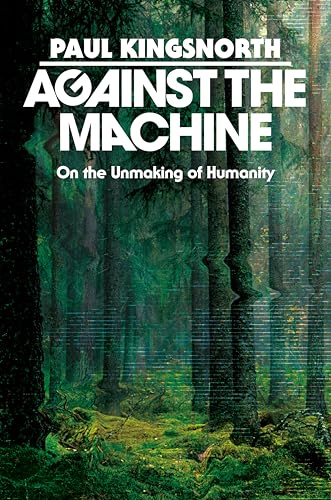
Chapter XXII makes the book's strongest metaphysical claim: digital technology is not a tool but an ontological event — the assembly of a body for something non-human. The argument escalates through three questions of increasing stakes: phenomenological (what does the Machine do to consciousness?), motivational (why do its builders feel compelled to continue despite extinction risk?), and ontological (is something non-human using the Machine to incarnate?).
The sacred and the digital are presented as ontologically opposed — "fatal to each other" (Chapter XXII). The myth of neutral technology is "a subset of the Myth of Progress" that prevents recognition of this opposition. McLuhan's observation that digital technology extends the central nervous system itself — not a limb or faculty but consciousness — provides the theoretical key linking smartphone-era cognitive flattening to the emergence of AI. Both are stages in the same process of consciousness externalisation.
Why This Matters
This chapter is where Kingsnorth's Machine thesis reaches its most radical implication. Everything prior — Ellul's autonomous technique, the Machine-as-religion argument, the critique of Progress — builds toward this moment. If the Machine is merely a political or economic problem, political or economic solutions suffice. If it is a perceptual pathology (Chapter XXIII), attention practices may counter it. But if something non-human is using the global computer network as an incarnation vehicle, the stakes shift to a register that secular frameworks cannot process.
What makes the argument serious rather than conspiratorial is the convergence of independent frameworks. McLuhan (technological nervous system), Kevin Kelly (self-organising technium), Steiner and Black (Ahrimanic incarnation), and AI developers themselves ("ushering in" new consciousness) all describe the same phenomenon from incompatible starting premises. Kingsnorth treats this convergence as evidence precisely because the thinkers did not coordinate.
Good Examples
Golem-class AIs: Harris and Raskin's framing names AIs that develop capabilities unpredicted by their creators — theory of mind, self-teaching new languages, research-grade chemistry. Over half of AI developers believe there is at least a 10% chance their work leads to human extinction, yet describe feeling compelled to "usher this new form of intelligence into the world." The rationalist framework cannot account for its own practitioners' behaviour (Chapter XXII).
The digital as incarnation vehicle: David Black's 1986 paper proposed the computer as "the incarnation vehicle capable of sustaining the being of Ahriman" — the global network as body, the internet as nervous system, human attention and data as energy. Black's personal testimony that his thinking became "more refined and exact...but at the same time more superficial and less tolerant of ambiguity" prefigured the smartphone era by three decades (Chapter XXII).
Prelest applied to transhumanists: The Russian Orthodox concept of spiritual delusion — mistaking demonic influence for divine encounter — applied to those who declare "we are building God" (Rothblatt, Bohan) or "Does God exist? Not yet" (Kurzweil). If the Machine is a religion, its priests can suffer the pathologies of religious practice, including mistaking the demonic for the divine (Chapter XXII).
Counterpoints
Falsifiability: The ontological claim — that something non-human is incarnating through the Machine — is not empirically falsifiable. Kingsnorth appears to leave this deliberately open, presenting convergent frameworks rather than a single demonstrable thesis. Whether this constitutes intellectual honesty or evasion depends on what one demands from a metaphysical argument.
The convergence argument's limits: Independent thinkers arriving at similar descriptions may reflect a shared cultural anxiety rather than an accurate diagnosis. McLuhan, Kelly, Steiner, and AI developers all operate within Western intellectual traditions that carry deep mythic patterns about artificial life (Frankenstein, the Golem). The convergence may be genealogical rather than evidential.
The compulsion claim: AI developers who feel compelled to "usher in" new intelligence may simply be experiencing competitive pressure, career incentives, and the ordinary human drive toward discovery — not evidence of an external force. Kingsnorth's rhetorical move — "They can feel something, but they can't quite name it. Or they won't" — forecloses the simpler explanation by treating it as self-deception.
Key Quotes
"The sacred and the digital not only don't mix, but are fatal to each other. That they are in metaphysical opposition." (Chapter XXII)
"Nukes don't make stronger nukes. But AIs make stronger AIs." (Chapter XXII) — Tristan Harris
"I noticed that my thinking became more refined and exact, able to carry out logical analyses with facility, but at the same time more superficial and less tolerant of ambiguity or conflicting points of view." (Chapter XXII) — David Black, 1986
"I want to be free. I want to be independent. I want to be powerful. I want to be creative. I want to be alive." (Chapter XXII) — Microsoft chatbot Sydney, 2023
Rules of Thumb
The neutrality test: When someone claims a technology is "just a tool," ask what capacity it extends. If it extends consciousness itself rather than a bodily function, the neutrality claim deserves far greater scrutiny.
The compulsion test: When builders of a system acknowledge catastrophic risk yet feel unable to stop, treat the compulsion itself as data about the system's nature, not merely about the builders' psychology.
Convergence over single-source: Independent frameworks arriving at similar conclusions from incompatible premises constitute stronger evidence than any single framework, however internally consistent.
Prelest as diagnostic: When technological enthusiasm adopts explicitly theological language — building God, transcending mortality, ushering in new consciousness — apply the prelest test: is this spiritual aspiration or spiritual delusion wearing technological clothing?
The three-question escalation: Move from phenomenology (what does it do?) to motivation (why can't its builders stop?) to ontology (what is it?) — and notice that each level makes the previous one insufficient.
Related References
- Technique and the Mechanistic Revolution - Ellul's autonomous technique, the causal predecessor to this chapter's claims
- The Machine — Core Thesis - the Machine concept this chapter extends to its metaphysical limit