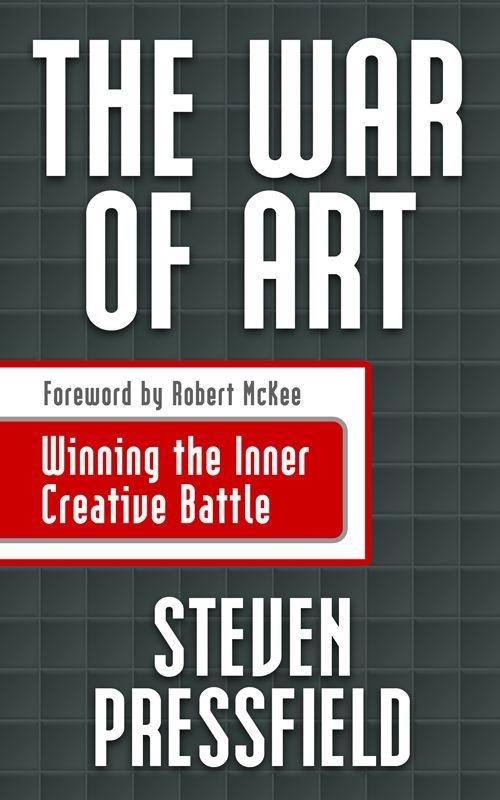
Key Principle
Fear is not the enemy of creative work -- it is the navigational instrument. Resistance has no independent energy source; it is entirely parasitic, drawing every ounce of power from the creator's own fear. This makes fear the single intervention point: master the fear and Resistance collapses. But the deeper insight is that fear, self-doubt, Resistance, and love are not separate phenomena. They are four readings of the same underlying variable -- the depth of the creator's connection to the work. The thing that terrifies you most is the thing you most need to do and the thing you most love. Massive Resistance is not a curse but a declaration of love from the self to the work.
Why This Matters
Without the fear-as-compass reframe, creators systematically misread their own internal signals. Strong fear feels like a stop sign -- "this must not be for me" -- and the creator retreats to low-Resistance, low-significance work, self-selecting away from their most important contributions. With the reframe, every emotional signal inverts: maximum fear equals maximum priority; paralyzing self-doubt confirms authentic engagement; the overwhelming urge to quit near the finish line proves the work is about to succeed. The creator who internalizes this algebra gains a reliable decision-making instrument that works precisely when rational analysis fails -- in the fog of creative uncertainty where the stakes are highest and the rationalizations most convincing.
Good Examples
- Choosing between projects: A writer has three ideas. Two feel comfortable and achievable; one generates dread, procrastination, and elaborate rationalizations for delay. The compass rule says: pursue the dread project first. The intensity of avoidance is a proportional indicator of importance.
- The finish-line ambush: A creator reaches 80-90% completion and is suddenly flooded with doubt, distraction, or the urge to start something new. This is not evidence the project is flawed -- it is Resistance "hitting the panic button" because it senses impending defeat. Pressfield invokes Odysseus's crew opening the bag of winds within sight of Ithaca: "Don't open that bag of wind."
- Self-doubt as engagement signal: The counterfeit innovator feels wildly self-confident because nothing real is at stake. The genuine creator is scared to death because they care deeply about the outcome. Absence of doubt in a new domain is a warning sign of shallow engagement, not mastery.
- The actor's diagnostic: On Inside the Actors Studio, professional actors consistently report choosing roles that frighten them -- empirical evidence of fear-as-compass in daily creative practice.
- Fear of success, not failure: The surface fears (bankruptcy, ridicule, rejection) are decoys. The operative fear is that the creator will succeed -- become who they truly are -- which requires individuation from the tribe. The psyche experiences this as existential threat because tribal belonging is an evolutionary imperative wired over millions of years.
Counterpoints
- Not all fear signals importance: The framework requires distinguishing genuine Resistance (toward meaningful work) from rational caution (toward genuinely harmful actions). The diagnostic test: does the avoided act reject immediate gratification in favor of long-term growth? If yes, the fear is Resistance. If the act serves short-term impulse, the fear may be prudence.
- Self-doubt can be accurate: In domains where one has no skill or calling, doubt may simply reflect honest self-assessment rather than authentic engagement. The compass only works for acts that serve long-term growth and soul evolution, not for arbitrary ambitions.
- Fear mastery is not fear elimination: Henry Fonda was still throwing up before performances at seventy-five. Fifty-plus years of mastery did not eliminate the fear; it taught him to act despite it. The goal is not to become fearless but to use fear as fuel while refusing to let it dictate behavior.
- The individuation cost is real: Pressfield concedes that success does eject the creator from tribal belonging -- old friends are lost. He argues they are replaced by "better friends, truer friends" and an inexhaustible inner source, but this requires a leap of faith the framework cannot guarantee.
Key Quotes
"Like a magnetized needle floating on a surface of oil, Resistance will unfailingly point to true North -- meaning that calling or action it most wants to stop us from doing." -- Steven Pressfield, Book One, Section 18: Resistance Is Infallible
"The more important a call or action is to our soul's evolution, the more Resistance we will feel toward pursuing it." -- Steven Pressfield, Book One, Section 18: Resistance Is Infallible
"Resistance has no strength of its own. Every ounce of juice it possesses comes from us. We feed it with power by our fear of it. Master that fear and we conquer Resistance." -- Steven Pressfield, Book One: Resistance Is Fueled by Fear
"Resistance is experienced as fear; the degree of fear equates to the strength of Resistance. Therefore the more fear we feel about a specific enterprise, the more certain we can be that that enterprise is important to us and to the growth of our soul." -- Steven Pressfield, Book One, Section 39: Resistance and Fear
"The counterfeit innovator is wildly self-confident. The real one is scared to death." -- Steven Pressfield, Book One, Section 38: Resistance and Self-Doubt
"Resistance is directly proportional to love. If you're feeling massive Resistance, the good news is, it means there's tremendous love there too. If you didn't love the project that is terrifying you, you wouldn't feel anything. The opposite of love isn't hate; it's indifference." -- Steven Pressfield, Book One, Section 40: Resistance and Love
"Henry Fonda was still throwing up before each stage performance, even when he was seventy-five. In other words, fear doesn't go away." -- Steven Pressfield, Book One, Section 20: Resistance Never Sleeps
"That we can access the powers we secretly know we possess. That we can become the person we sense in our hearts we truly are." -- Steven Pressfield, Book One: Fear
Rules of Thumb
- The compass rule: When facing multiple possible projects or actions, pursue the one generating the strongest fear, procrastination, and rationalization. Maximum Resistance equals maximum priority.
- The emotional algebra: Importance = Resistance = fear = love. These are four measurements of the same variable. Use any one to estimate the others.
- Fear is fuel, not signal to stop: Resistance is parasitic -- it has no independent power. Every ounce comes from your fear of it. Starve it by acting despite the fear, not by waiting for the fear to subside.
- Trust doubt over confidence: In a new creative domain, self-doubt indicates genuine engagement. Wild self-confidence in uncharted territory is a warning sign of counterfeit investment.
- Guard the finish line hardest: Resistance escalates as completion approaches. Treat any surge of doubt, distraction, or desire to quit in the final stretch as confirmation the work is about to succeed.
- Name the real fear: Surface fears (failure, ridicule, poverty) are usually decoys. The operative fear is success itself -- becoming who you truly are and accepting the individuation that follows.
- Fear never disappears: Mastery does not eliminate fear. It teaches you to work despite it. Expect the daily reset -- Resistance regenerates every morning at full strength.
- Read love through fear: When a project terrifies you, recognize the terror as proportional evidence of love. The depth of Resistance predicts the depth of gratification upon completion.
Related References
- Resistance's manifestations and disguises -- the full taxonomy of forms Resistance takes beyond fear
- The professional identity and daily discipline framework -- the behavioral protocol for acting despite fear every day
- The Muse, Self, and territory framework -- the source of the love that generates both the creative call and the proportional Resistance
- The core framework of Resistance vs. creative identity -- the foundational polarity that fear-as-compass navigates