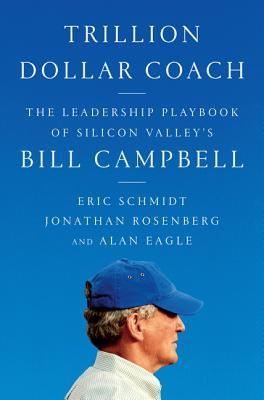
Key Principle
Trust is the prerequisite for all coaching. Before a coach can give feedback that lands, challenge assumptions that are wrong, or surface the real problem beneath the stated one, the person being coached must believe that the coach genuinely wants them to succeed. Without that envelope of trust, candor reads as aggression and Socratic questioning feels like interrogation. Bill Campbell built this envelope quickly and deliberately — it was not incidental to his coaching but the structural foundation of it.
Why This Matters
A 2000 Cornell study found that task conflict (productive disagreement about substance) is highly correlated with relationship conflict (destructive interpersonal friction). Trust is the mechanism that decouples them — it allows people to disagree on substance without concluding the other person is an enemy. Without trust, teams in low-trust environments avoid surfacing real problems because honesty feels dangerous. Every "agree in public, undermine in private" dynamic is a trust failure.
Coaching specifically requires a higher degree of vulnerability than ordinary business relationships. The coachee must be willing to expose their actual thinking, their uncertainties, and their failures — not the version they would present to a board. If trust is absent, the coachee manages the impression they make on the coach rather than working on the real problem. The coaching is then happening on a fiction.
Good Examples
Bill's four trust behaviors in practice: Bill's trust was built through behavioral consistency across four dimensions — keeping his word (if he said he would do something, he did it), loyalty to people and teams, integrity (honesty plus demonstrated competence), and discretion (keeping confidences even from the CEO when a team member trusted him with sensitive information). Each behavior was load-bearing; a breach in any one of them would have collapsed the envelope.
Jonathan Rosenberg's job interview: Bill's opening question to Jonathan was "Are you coachable?" Jonathan answered "it depends on the coach" — demonstrating hubris that signaled he was filtering for whether the coach was worthy, not whether he himself was open. Bill stood up to leave. Jonathan recovered by citing Tom Landry's definition of a coach: someone who tells you what you don't want to hear, who has you see what you don't want to see, so you can be who you have always known you could be. The episode illustrates that coachability is assessed before coaching begins — it is a prerequisite, not something that develops through the coaching relationship.
Free-Form Listening as trust-building mechanism: Bill gave complete, undivided attention — not planning his response while the other person was speaking — and asked Socratic questions rather than supplying answers. A 2016 Harvard Business Review article identifies question-asking as essential to great listening; people perceive the best listeners as those who periodically ask questions that promote discovery and insight. This approach signaled to the coachee that their actual problem mattered more than the coach's opportunity to demonstrate expertise.
Counterpoints
Starting coaching before trust is established: Feedback delivered without an established relationship of care produces defensiveness, not change. The formula is not "be honest" — it is "be honest after earning the right to be heard." Candor without that infrastructure is criticism. The same words land differently depending on whether the recipient believes the speaker wants them to succeed.
Coaching an uncoachable person: Bill would not waste a coaching relationship on someone who could not receive it. The cost is not just ineffective sessions — it is that the coach loses credibility with everyone who watches the coachee not change. An uncoachable person who appears to be receiving coaching provides cover for non-improvement and signals to the team that the coaching relationship is performative.
Self-deception as structural disqualifier: A person who generates enough BS eventually believes their own narrative. At that point, neither feedback nor reality can penetrate — the coachee's self-report is unreliable, and the coach cannot trust what they are hearing. Coaching is structurally impossible when the coachee cannot accurately report their own situation. This is not a matter of attitude or motivation; it is an epistemic problem that closes off the coaching channel entirely.
High-status instinct to provide answers: The natural reflex for experts in a coaching role is to demonstrate competence by having answers. Withholding answers and asking questions instead runs against the grain. Coaches who cannot suppress this instinct convert coaching conversations into advice sessions — which address the stated problem rather than the real one.
Key Quotes
"Bill would build an envelope of trust very quickly. It was a natural thing for him, this ability to build rapport, a sense of comfort and protection. It's the cornerstone of any coaching in business." — Dean Gilbert, Chapter 3
"Bill would never tell me what to do. Instead he'd ask more and more questions, to get to what the real issue was." — Ben Horowitz, Chapter 3
"People who generate a lot of BS aren't coachable. They start to believe what they are saying." — John Hennessy, former Stanford president, Chapter 3
"I only have one question: Are you coachable?" — Bill Campbell, Chapter 3
Rules of Thumb
- Build trust through behavioral consistency in four areas: keeping your word, loyalty, integrity, and discretion. A breach in any one collapses the envelope.
- Ask "Are you coachable?" before investing in a coaching relationship — it is a filter question, not a warm-up.
- The three attributes of a coachable person: honest and humble, hardworking, perpetually open to learning. All three must be present.
- Self-deception is a structural disqualifier, not a behavioral one — it closes the channel through which coaching operates.
- Listen to find the real issue, not the stated one. People who ask for advice often ask for approval; Socratic questioning surfaces what is actually going on.
- Coaching without trust produces impression management, not change — the coachee works on what they show the coach, not on their actual problem.
Related References
- The Throne Behind the Round Table - The Throne Behind the Round Table framework depends on trust; without it, pre-meeting conversations feel like manipulation and post-decision commitment feels coerced rather than genuine.