Key Principle
Management at scale is a coaching problem, not a directing problem. The higher a leader climbs, the more their outcomes depend on other people's performance — not their own. The skills that earned the promotion (individual technical or analytical excellence) are not the skills that determine success at the next level (making others excellent). Coaching is the structural bridge. It is not a personality style or a supplement to management — it is a distinct mechanism that compounding team capacity rather than merely extracting performance from a pre-existing baseline.
Why This Matters
The Tension in the Machine paradox: High-performing organizations require smart, aggressive, opinionated people with strong egos — Patrick Pichette, Google's former CFO, called this "the tension in the machine" that drives creative output and prevents stagnation. But those same traits — ego, ambition, strong conviction — are precisely what makes community formation difficult. Selfish individuals can outcompete altruistic ones in certain team environments; intragroup conflict consistently degrades outcomes.
The coach is the structural resolution to this paradox. Without a coach actively smoothing friction, nurturing relationships, and keeping people aligned around shared goals, the tension that produces innovation curdles into rivalry that destroys it. This is why coaching cannot be outsourced to an external specialist — the tension is continuous and embedded in daily team dynamics. It requires someone inside the operating rhythm.
Without coaching, high performers optimize for themselves. Smart, ambitious people are especially prone to this because their track record of individual success reinforces the strategy. The result is intragroup competition that produces measurably negative effects on team outcomes.
Community is a competitive advantage, not just culture. A community of people who trust each other and work toward shared goals is not a nice-to-have — it is the precondition for sustained high performance. The lack of community is a leading factor in job burnout. Organizations that mistake culture (shared values) for community (shared accountability and trust) miss the operational lever.
Good Examples
Campbell coaching despite domain ignorance. Bill coached people doing technical work he didn't understand. His expertise was not domain knowledge — it was relational and team-dynamics observation. He could see what was happening between people even when he couldn't evaluate what they were building. This illustrates the distinction from mentoring: the coach does not need to know more than the coachee about the subject matter.
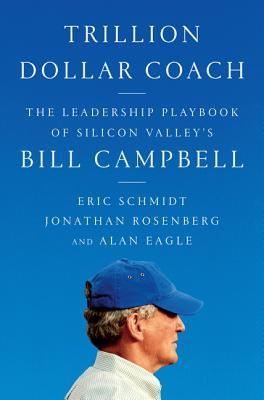
The coaching multiplier in practice. Campbell's most durable impact was not the direct advice he gave but the coaching behaviors he modeled — which coachees internalized and applied to their own teams. "Time and time again, they note that whenever they face an interesting situation, they ask themselves, what would Bill do?" (Chapter 1). The causal chain: Campbell coaches leader → leader internalizes approach → leader applies it to their team → coaching capacity propagates without Campbell's direct involvement.
The four learnable pillars. Campbell's method organized into four components: (1) management mechanics — 1:1s, staff meetings, handling difficult employees; (2) trust-building; (3) team construction and community cultivation; (4) love — making genuine care an explicit management tool. Both what he coached and how he coached were required. The behavioral discipline each pillar demands is consistently underestimated.
Counterpoints
Coaching as a specialty function does not scale. Organizations that treat coaching as a specialty (hire an external coach for the CEO, perhaps a few senior leaders) get point improvements with no systemic propagation. The teams below the coached leaders remain uncoached. The only solution to the scalability problem is managers becoming coaches — not seeking coaches.
Mentoring is not coaching. Mentors give advice at a distance. Advice at a distance can only address the issues a person already knows to articulate — it cannot surface blind spots, and it arrives too infrequently to shape behavior at the moments that actually matter. Coaches are embedded, observe directly, and give feedback in context. The coach "holds up a mirror so we can see our blind spots and holds us accountable for working through our sore spots" — a function structurally unavailable to remote advice-givers.
Compassion is not universally a liability. Campbell identified his football coaching failure as lacking "dispassionate toughness" — the willingness to prioritize performance over feelings. But in collaborative business contexts (compound, not zero-sum), that same compassion became an asset: it built trust and loyalty that enabled risk-taking, free information sharing, and sustained effort. Leadership traits are context-dependent in predictable ways tied to whether the environment is zero-sum or compound.
The 2014 study finding: Most insecure managers are threatened by coaching suggestions. Publicly accepting a coach is a signal of confidence, not weakness — making coaching adoption itself an organizational health diagnostic.
Key Quotes
"To be a great manager, you have to be a great coach. After all, the higher you climb, the more your success depends on making other people successful. By definition, that's what coaches do." — Authors, Chapter 1 (Foreword)
"Whereas mentors dole out words of wisdom, coaches roll up their sleeves and get their hands dirty. They don't just believe in our potential; they get in the arena to help us realize our potential." — Authors, Chapter 1 (Foreword)
"There is something that I would say is called dispassionate toughness that you need [as a football coach], and I don't think I have it. What you need to do is not worry about feelings. You've got to push everybody and everything harder and be almost insensitive about feelings... I just think I wasn't hard-edged enough." — Bill Campbell, Chapter 1
"Bill Campbell has been very helpful in coaching all of us. In hindsight, his role was needed from the beginning. I should have encouraged this structure sooner, ideally the moment I started at Google." — Eric Schmidt, Chapter 1
Rules of Thumb
- Coaching compounding capacity; supervising extracts from existing capacity. Know which mode you are in.
- The tension that produces innovation and the dynamics that destroy community come from the same people. Managing that tension is not optional — it is the job.
- A coach does not need to know more than the coachee about the subject. They need to see what is happening between people.
- Every manager who internalizes coaching and applies it to their team multiplies coaching capacity without adding headcount.
- Coaching adoption in an organization is a health signal: leaders who resist it are usually defending a self-image, not protecting their team.
- Community is not the same as culture. Culture describes shared values; community describes shared accountability. Only the latter produces the trust required for sustained high performance.
Related References
- Management Mechanics - operational playbook that implements the coaching framework in daily practice