Key Principle
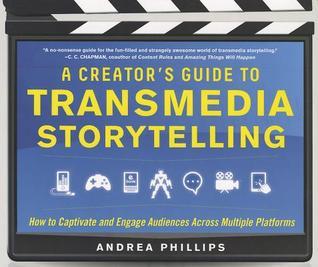
The more immersive and realistic a transmedia project becomes, the greater the creator's legal and ethical obligations. Phillips calls this the Authenticity Trap: creators so focused on building a totally immersive experience that they never pause to assess the real-world consequences of their fiction bleeding into reality.
"We wind up making bad ethical choices not on purpose, but because we are so focused on the totally immersive player experience that we never stop to think about the potential consequences." -- Andrea Phillips, Chapter 27
Immersion and responsibility scale together. Every technique that makes fiction feel more real -- fictional websites, social media characters, staged live events -- also increases the chance that someone will mistake fiction for fact and act on it with real consequences.
Why This Matters
Transmedia content lives on real-world platforms where non-participants inevitably encounter it. Unlike a novel or a film, there is no physical container that signals "this is fiction." A fabricated pharmaceutical website appears in Google results alongside real ones. A staged kidnapping prompts genuine 911 calls. A personalized threatening message arrives in a real inbox. The fiction-reality boundary is the creator's responsibility to manage, not the audience's responsibility to detect.
Two distinct harm vectors demand attention: players without consent (even enthusiastic ARG players feel betrayed, not excited, by undisclosed fiction) and bystanders without context (people who stumble into fiction with no framework to recognize it).
Good Examples
Martin Aggett case: Steve Diddle created a social media character who built genuine friendships over months. Upon reveal, the community felt betrayed. Diddle's own admission: "I thought...they would be excited to participate in the game. In hindsight, I realize that was a very naive hypothesis." (Chapter 27)
Toyota Matrix "Your Other You": Personalized threatening messages sent to unsuspecting recipients as a marketing stunt. One recipient sued Toyota and Saatchi & Saatchi for $10 million. (Chapter 27)
Nothing So Strange (Brian Clark, 2002): A transmedia documentary about a fictional assassination of Bill Gates, set in 1999 to satisfy the misperception layer. A fan remixed material to appear current; Korean television broadcast it as real news, impacting the Korean stock market and triggering a Secret Service investigation. Clark would still do it "the same way" -- the ethical framework held even though it could not prevent third-party misuse. (Chapter 27)
Improv Everywhere (Grand Central freeze, food court musical): The surprise is the art; bystanders' eventual reaction is delight, not anger. This passes the delight-not-betrayal test and represents the narrow exception where informed consent would nullify the experience. (Chapter 27)
Counterpoints
Reality hacking has the highest artistic ceiling: Brian Clark argues transmedia can "create a sense of wonder about the world around us, to wake people up from plodding through life with a little moment that can start to open the doors of perception." The ethical risk is real, but so is the unique artistic potential. (Chapter 27)
You cannot fully control remix: Even a responsibly designed project can be repurposed by third parties into something harmful. Ethical responsibility extends to anticipating remix potential, but cannot eliminate it entirely. The Nothing So Strange case proves that a sound framework can coexist with uncontrollable downstream misuse. (Chapter 27)
The delight-not-betrayal test creates a narrow exception: Not all surprise requires prior consent. If the reveal produces genuine pleasure rather than anger, the misperception risk is contained. But this is a narrow exception, not a general license. (Chapter 27)
Key Quotes
"Make sure your players know where the edges of your fiction lie; it's akin to getting informed consent." -- Andrea Phillips, Chapter 27
"People like surprises. But they don't like to be fooled." -- Andrea Phillips, Chapter 27
"There's a fine line between fiction and outright fraud." -- Andrea Phillips, Chapter 27
"Breaking that trust even in little ways can have cascading effects on how the audience interprets other elements." -- Brian Clark, Chapter 27
"If you stage a kidnapping in public, you can't just think about the impact on your story participants; you have to think about how random bystanders might react." -- Brian Clark, Chapter 27
Rules of Thumb
- Run the four pre-launch questions: (1) Can this get me sued or arrested? (2) What happens if someone thinks this is real? (3) Can somebody get physically hurt? (4) Who else does stuff like this -- and are they spammers or con artists?
- Apply Clark's four-layer ethics model: Legal/liability at the base, then trust, then non-audience misperception, then ethics at the top. Each layer builds on the one below; you cannot skip to the top without satisfying the lower layers.
- Informed consent is the default: The delight-not-betrayal exception is narrow. When in doubt, disclose.
- Trust is structural, not courtesy: Audience trust is load-bearing infrastructure for transmedia. Breaking it -- even in small ways -- cascades through how the audience interprets everything else.
- Anticipate bystanders: Every piece of public-facing fiction will be encountered by people who have no idea it is fiction. Design for them, not just for your players.
- Anticipate remix: Your content will be decontextualized, remixed, and redistributed. Build ethical safeguards that survive separation from your original framing.
- Physical safety is non-negotiable: A West Coast live game resulted in a player falling down an abandoned mine shaft, becoming a paraplegic, and a $10 million settlement. No narrative payoff justifies physical harm. (Chapter 27)
Related References
- audience-management.md -- Trust mechanics and community expectations that the ethics framework protects
- core-framework.md -- The fragmentation-and-integration model whose expansionist design philosophy the four-question framework counterbalances
- characterization-and-voice.md -- Fictional characters on real platforms as a specific vector for the bystander problem