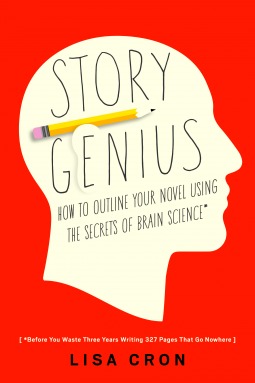
Key Principle
A What If is only the seed of a story when paired with a point -- what the author wants to say about human nature. Without a point, What Ifs are neutral and paralyzing. A neutral What If posits a surprising external event but lacks internal stakes: "What if a wizard's terror bolt lances overhead?" could lead anywhere, which means it leads nowhere. The missing element is the point -- the author's take on human nature that tells you what kind of internal problem the story will be about. Point plus What If equals the beginning of a story. "All stories make a point, beginning on page one." -- Lisa Cron, Chapter 3
Once the What If and point are established, the writer must choose the right protagonist -- the specific someone whose past makes the story's events inevitable. The protagonist is the reader's neural portal into the novel, the filter through which external chaos acquires internal significance. Without one, "the reader has no skin in the game, and everything remains utterly neutral." Events mean nothing by themselves; meaning comes from what they mean to someone. -- Lisa Cron, Chapter 4
This is why the question is never "Whose plot is it?" but always "Whose story is it?" The protagonist is not selected for external drama but for internal alignment with the point. A What If about technology's double-edged sword needs a protagonist whose life will be transformed internally by that sword, not merely the person with the most dramatic external role.
Why This Matters
Without a point, writers given a What If produce "a string of equally dramatic, random, pointless events" -- whether they are kindergartners or adults. The result is the same dead end: "and then Freddy woke up and discovered it was a dream." The point is what makes the What If generative rather than arbitrary, because it identifies the internal terrain the story will explore. (Chapter 3)
Choosing the wrong protagonist -- typically the one with the most external drama -- disconnects the story from its point. The right protagonist is the one whose transformation most sharply embodies the story's theme. External drama is not the selection criterion; internal alignment with the point is. (Chapter 4)
Good Examples
Romeo and Juliet -- Point: holding a grudge can have tragic unforeseen consequences. What If: two teenagers fall madly in love only to discover their parents are mortal enemies. The external conflict triggers unavoidable internal conflict because the point ensures the What If touches real human stakes. (Chapter 3)
The vanishing Internet -- Robin the medical researcher has a bigger external story, but Mike (who has never left his parents' basement) embodies the point about technology's double-edged sword more sharply. The protagonist with the less dramatic external situation is the right choice because his internal journey aligns with the point. (Chapter 4)
Multi-POV novels -- Eduardo Santiago's Tomorrow They Will Kiss has three first-person narrators with equal page time, but Graciela is the alpha-protagonist -- everything the others think about relates to her quest. Even in ensemble structures, one character's story gives meaning to the others. (Chapter 4)
Counterpoints
Mistake: Waiting for an original theme. At the outset, nearly every point sounds like a cliche. Common everyday things -- love, loyalty, trust -- are exactly what people care about because they are universal navigation problems. The story's specifics transform the cliche into something fresh. Paralysis from waiting for originality is misguided. (Chapter 3)
Mistake: Trying to nail the What If perfectly on the first attempt. That is "like trying to lay the foundation, build, paint, and sell a house all in one fell swoop." The What If is not for readers -- it is a tool that tells the writer what they need to discover. It develops iteratively. (Chapter 3)
Mistake: Choosing the protagonist with the most external drama. "No one ever asked, 'Whose plot is it?' The question you need to answer before you can develop the plot is the one writers are always asked: 'Whose story is it?'" The selection criterion is internal alignment, not external spectacle. -- Lisa Cron, Chapter 4
Key Quotes
"All stories make a point, beginning on page one." -- Lisa Cron, Chapter 3
"No one ever asked, 'Whose plot is it?' The question you need to answer before you can develop the plot is the one writers are always asked: 'Whose story is it?'" -- Lisa Cron, Chapter 4
"It's not the plot that reins in the protagonist; it's the other way around." -- Lisa Cron, Chapter 4
"All stories are by definition character driven regardless of genre." -- Lisa Cron, Chapter 4
Rules of Thumb
- Pair every What If with a point about human nature before developing further. If you cannot state the point, the What If is not yet a story.
- Develop the What If iteratively: (1) identify the first pinprick, (2) burrow into why you care, (3) identify your point, (4) draft a What If that includes context, surprise, and conflict leading to internal consequences.
- When multiple characters could serve the What If, choose the one whose transformation embodies the point most sharply -- not the one with the most dramatic external circumstances.
- All stories are character driven regardless of genre. The protagonist's internal struggle is the story; the plot serves it, not the reverse.
- In multi-POV novels, identify the alpha-protagonist -- the one whose story gives meaning to all the others. Equal page time does not mean equal story weight.
- Accept that your initial point will sound like a cliche. Universality is a feature, not a bug. The specifics of your protagonist's struggle will make it original.
Related References
- The Third Rail: Story Is Internal Struggle - The foundational thesis that story is internal struggle
- Desire, Misbelief, and the Third Rail in Practice - Next step: unearthing the protagonist's desire and misbelief from the What If and point
- Worldview and the Origin Scene - Grounding the protagonist's internal conflict in a specific past moment