Key Principle
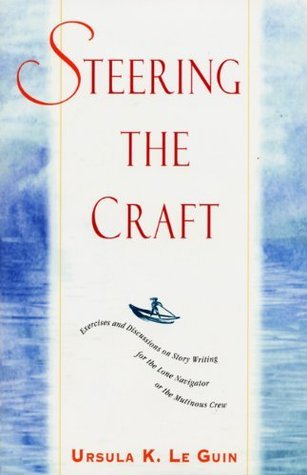
Sound is the foundation of all prose quality. The physical properties of language — the noise words make, the rhythms marking relationships between them — carry both meaning and beauty. The writer controls these properties by hearing prose as they write it, either aloud or through the trained "mind's ear." Punctuation is the mechanical infrastructure that reconstructs this auditory shape for the silent reader, and sentence length variety is the rhythmic engine that drives narrative forward.
Why This Matters
Most common criticisms of prose — dull, choppy, droning, jerky, feeble — are faults in sound, not in content or logic. Writers deaf to their own prose's sound cannot diagnose these problems because they don't recognize them as sound problems. They chase fixes in content, structure, or word choice when the failure is rhythmic.
The sound thread runs through the entire book. Chapter 1 establishes sound as primary. Chapter 2 reveals punctuation as the notation system that controls sound on the page. Chapter 3 shows sentence length variety as the rhythmic engine. Chapter 4 demonstrates repetition as the mechanism for building rhythmic accumulation. Without the perceptual foundation — the mind's ear — none of these techniques are accessible, because the writer cannot hear what they are doing.
Good Examples
The mind's ear causal chain — Le Guin traces a developmental sequence: childhood sound-love leads to deliberate reawakening through reading aloud, which trains the mind's ear, which enables hearing prose while writing, which produces rhythmic control, which creates narrative momentum. The chain is sequential; skipping the perceptual training means the later skills never develop. — Chapter 1
Punctuation as musical notation — Punctuation marks function as rests and phrasing marks that tell the reader how to hear prose. Periods stop, semicolons pause, commas shift. Le Guin demonstrates by presenting passages unpunctuated, correctly punctuated, and incorrectly punctuated to show how each version produces a different sound and therefore a different meaning. Wrong punctuation does not merely "break a rule" — it alters or destroys meaning. — Chapter 2
Four modes of gorgeous prose — Kipling's exuberance, Twain's dialect cadence, Hurston's hypnotic repetitive drive, Gloss's quiet precision. All four achieve forward movement through completely different sonic means, proving that sound mastery is a spectrum. This prevents writers from narrowing their conception of good sound to one register. — Chapter 1
Counterpoints
The writer-reader gap — The writer hears their prose correctly in their own head but delivers garbled rhythm to the reader. Without mastery of punctuation-as-notation, the writer's intended rhythm never reaches the reader. The gap between intended and received sound is invisible to the writer and fatal to the prose. — Chapter 2
Outgrowing sound-love — Many writers "outgrow" their childhood love of word-sounds, treating it as unsophisticated. Le Guin calls this "a dead loss." Without the mind's ear, a writer loses access to the most fundamental control over prose quality and must rely on rules and abstractions rather than direct perception. — Chapter 1
Writing vs. speech — Writing demands more precision than speech because the reader lacks tone, expression, and intonation. "We have only the words. They must be clear." Internet communication is particularly treacherous because mechanical ease creates the illusion of speech-like transparency. — Chapter 2
Key Quotes
"The sound of the language is where it all begins. The test of a sentence is, Does it sound right?" — Ursula K. Le Guin, Chapter 1
"Dull, choppy, droning, jerky, feeble: these common criticisms of narrative are all faults in the sound of it." — Ursula K. Le Guin, Chapter 1
"The chief duty of a narrative sentence is to lead to the next sentence — to keep the story going." — Ursula K. Le Guin, Chapter 1
"It's childish to assume people will understand unexpressed meanings. It's dangerous to confuse self-expression with communication." — Ursula K. Le Guin, Chapter 2
Rules of Thumb
- Read your prose aloud regularly to train the mind's ear; silent reading alone is not enough
- Treat punctuation as performance directions, not grammar obligations — ask what sound each mark produces
- If a passage feels flat, check the sound before checking the content
- Concentrating on sound can "release or enable anything unusual or surprising, a voice you haven't often used"
- Character and place names are sound effects — choose them for sonic resonance, not just meaning
Related References
- Core Framework - Sound is the first application of the craft-enables-art principle
- Sentence Craft - Sentence length variety as the rhythmic engine
- Repetition - Repetition as the mechanism for rhythmic accumulation