Key Principle
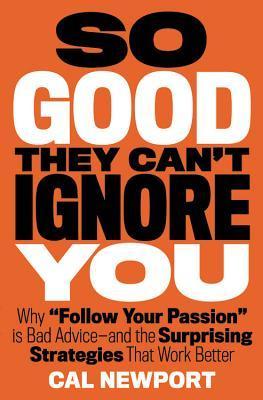
The passion hypothesis -- "figure out what you're passionate about, then find a job that matches" -- is empirically wrong and actively dangerous. Satisfaction depends on competence, autonomy, and relatedness (Self-Determination Theory), none of which are produced by passion-matching. Passion is not an input to discover but an output that develops from mastery. (Introduction, Ch. 1-3)
Why This Matters
The passion hypothesis creates a specific failure mode: people treat career dissatisfaction as evidence they picked the wrong passion rather than as a signal they haven't yet built sufficient skill. This produces serial job-hopping and chronic self-doubt -- the "magic right job" fallacy. The advice has become ubiquitous (Google Ngram data shows "follow your passion" usage tripled between 1990 and 2000, spiking first at 1970 with Richard Bolles's What Color Is Your Parachute?), yet over the same period job satisfaction declined, not improved.
The hypothesis also assumes a supply of work-relevant passions that empirically does not exist. When researchers actually measure what people are passionate about, the vast majority of identified passions have nothing to do with work. The entire foundation of "match your passion to a career" collapses when there is no work-relevant passion to match.
The replacement engine is Self-Determination Theory (SDT), a roughly 40-year-old framework (referenced via Daniel Pink's Drive). SDT identifies three drivers of intrinsic motivation: autonomy (control over your day), competence (being good at what you do), and relatedness (connection to others). Pre-existing passion is simply absent from the list. Competence and autonomy are interlinked -- as you improve, you earn more control -- which is why the book's Rule 2 (career capital via skill) feeds directly into Rule 3 (control). (Ch. 2)
Good Examples
- Steve Jobs's Actual Biography: Jobs's pre-Apple life consisted of Zen retreats, commune living, and small-time electronics deals. Apple's founding plan was to sell 100 circuit boards at $25 profit each -- "their plans were circumspect and small-time" (Young, Steve Jobs: The Journey Is the Reward, 1988). Jobs grew passionate about Apple after competence and market traction developed, directly contradicting his own Stanford commencement advice to "follow your heart." (Ch. 1)
- Wrzesniewski's Administrative Assistants: College administrative assistants were roughly evenly split between viewing their work as a job, career, or calling. The strongest predictor of the "calling" classification was not passion-matching but number of years on the job. Experience builds competence; competence builds satisfaction. Published in the Journal of Research in Personality. (Ch. 2)
- Vallerand's Passion Survey (2002): A survey of 539 Canadian university students found 84% had identifiable passions, but fewer than 4% of those passions related to work or education. 96% were hobby-style interests like dance, hockey, and skiing. The passion hypothesis assumes a supply of career-relevant passions that does not exist. (Ch. 2)
Counterpoints
- "But Jobs said follow your passion": Jobs's biography refutes his own advice. His path to Apple was opportunistic and small-scale, not passion-driven. The commencement speech is retrospective narrative construction, not a description of his actual decision process. (Ch. 1)
- "I just haven't found my passion yet": This framing assumes passion pre-exists and awaits discovery. SDT research shows motivation emerges from competence, autonomy, and relatedness -- qualities that develop through sustained effort in almost any field, not through matching to a pre-existing interest. (Ch. 2)
- "More passion advice will fix declining satisfaction": The macro data shows the opposite. As "follow your passion" advice proliferated (1970-2010), the Conference Board survey found satisfaction dropped from 61% to 45%, with 64% of young workers actively unhappy -- the highest dissatisfaction ever measured for any age group. The advice spread; satisfaction dropped. (Ch. 3)
Key Quotes
"The passion hypothesis is not just wrong, it's also dangerous. Telling someone to 'follow their passion' is not just an act of innocent optimism, but potentially the foundation for a career riddled with confusion and angst." -- Cal Newport, Chapter 3
"The key thing is to force yourself through the work, force the skills to come; that's the hardest phase." -- Ira Glass, Chapter 2
"Don't follow your passion; rather, let it follow you in your quest to become... so good that they can't ignore you." -- Cal Newport, Introduction
Rules of Thumb
- When you feel career dissatisfaction, ask "have I built enough skill here?" before asking "is this the wrong field for me?"
- Beware retrospective passion narratives: successful people reframe opportunistic paths as passion-driven stories after the fact.
- If someone's career advice relies on courage or self-knowledge alone (without skill-building), treat it with suspicion.
- The longer someone has worked in a field, the more likely they are to describe it as a calling -- this is competence producing passion, not passion producing persistence.
- Pre-existing passions are overwhelmingly hobby-based, not career-relevant. Expecting to find a career that matches a hobby passion sets up inevitable disappointment.
Related References
- Career Capital Theory - Career capital theory, which replaces the passion hypothesis with a supply-and-demand model of great work
- Deliberate Practice for Knowledge Workers - The mechanism for building the competence that SDT identifies as a core driver of satisfaction